

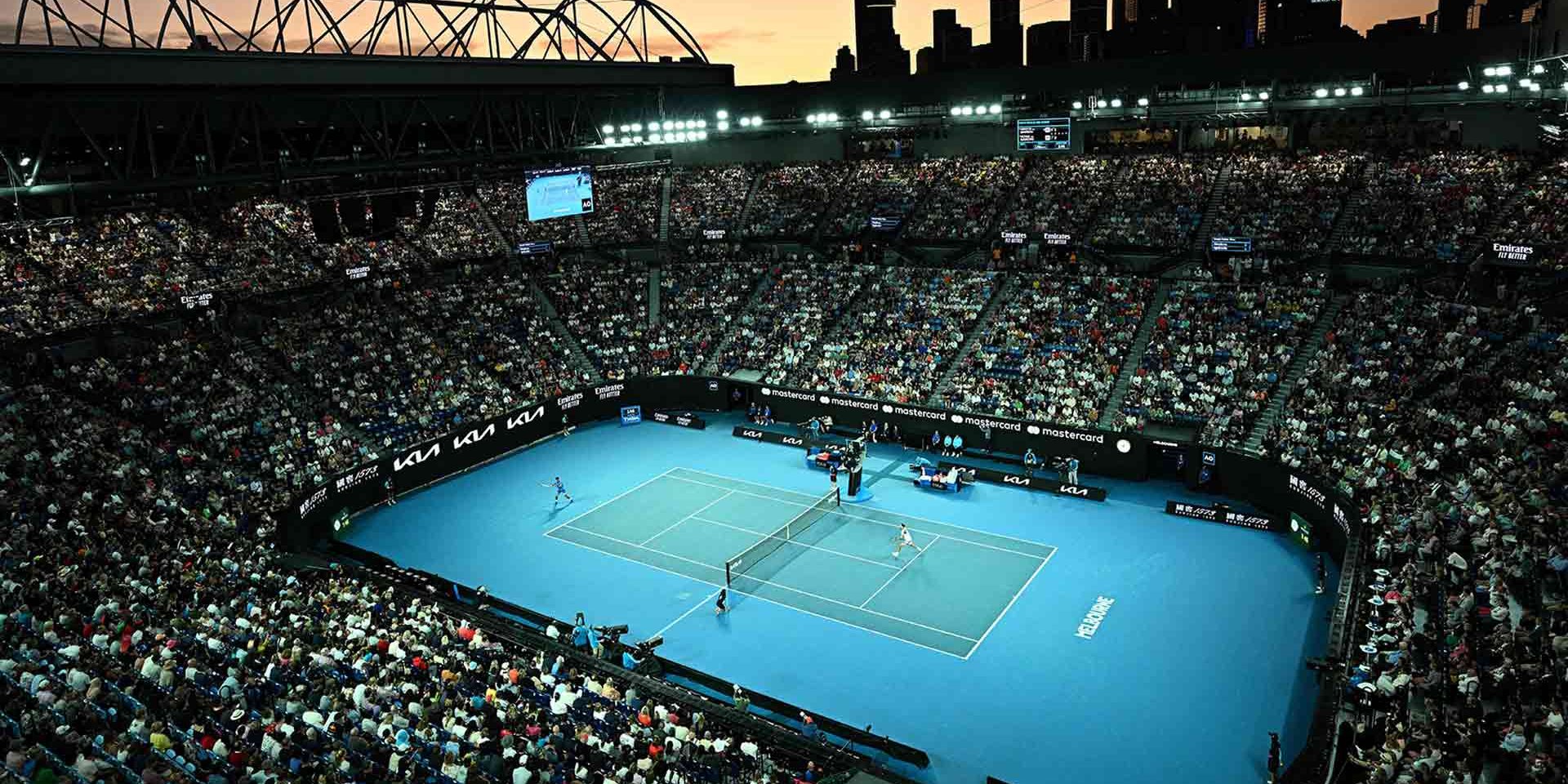
The first day of the Australian Open usually delivers two kinds of content:
- someone heroically drags themselves through a match,
- someone simply tries not to melt.
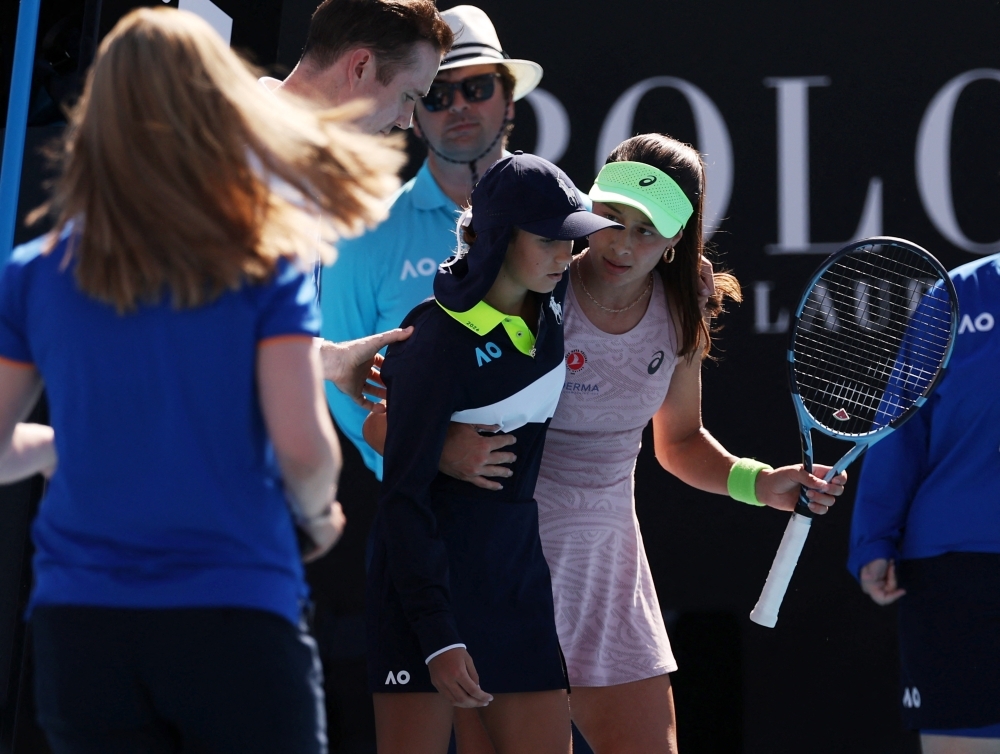
This time, the strongest moment didn’t happen in a rally, but next to the net: during the match between Zeynep Sonmez and Ekaterina Alexandrova, a ball girl started to feel faint from the heat. Sonmez noticed instantly, caught the girl, and led her into the shade. No theatrics. Just basic human decency. And that — right there — is the perfect symbol of Melbourne in January.
Because the AO has its “eternal” things: beer in the stands, conversations about sunscreen… and heat that becomes less and less of a joke every year.
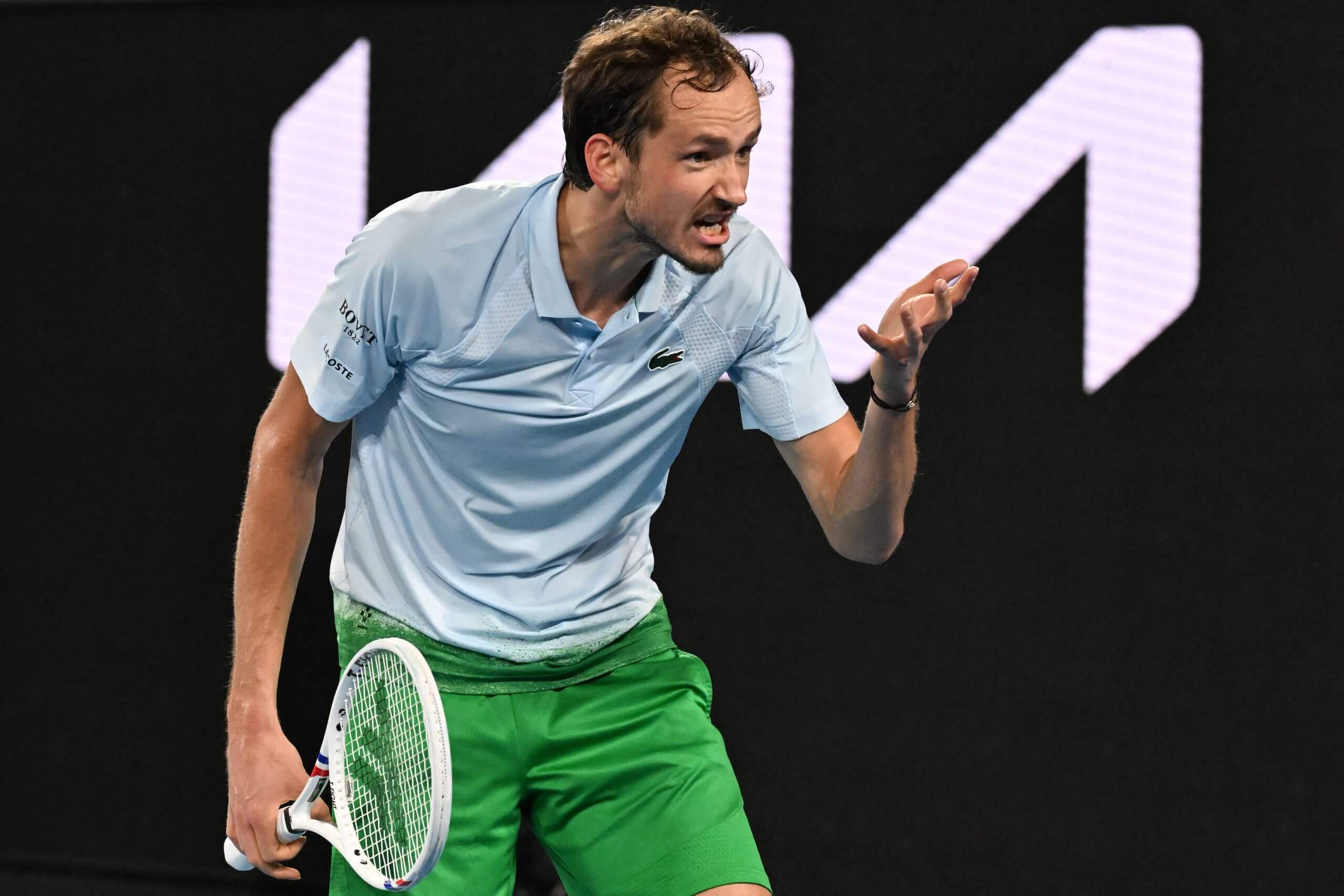
“Give me water, not beer” — why Medvedev’s line still works perfectly
Two years ago, Daniil Medvedev, arguing with the chair umpire, dropped a line you could print on the tournament’s official bottles: he needed cold water — “it’s over 30°C right now” — and this isn’t the time you ask for beer. This is the time you ask for your body not to shut down.
And the worst part is: stories like this at the AO aren’t isolated. In Melbourne, there’s regularly a moment when tennis stops being a “sport in the sun” and turns into a “way to survive in the sun.”
Yes, in the Southern Hemisphere, January is summer. Yes, heat at the Australian Open is logical.
What isn’t logical is the intensity and the duration. Australian summers in recent decades have genuinely “turned the dial up.” The country’s average temperature has risen by roughly 1.5°C since observations began, and severe heatwaves have become longer. For Melbourne (in the state of Victoria), figures like these are often cited: it now averages around 11 summer days above 35°C, with further increases projected — up to doubling by mid-century.
In plain language: this is no longer “a couple of brutal days.” It’s the new normal you have to live with.
What heat does to tennis in practice
The most obvious thing is the risk of heatstroke. And an important point: you don’t have to wait for +40°C to overheat. Even +30°C under heavy load can become a problem — especially if the humidity is unpleasant and the match drags on.
The Australian Open has seen truly extreme days, too:
- there have been tournaments when temperatures shot past 40°C;
- in 2009, there was a day recorded at 45°C+, and even top players retired mid-match;
- in 2014, the heat was so intense that players later described the tournament as “dancing on a scorching frying pan” — and that’s not a metaphor, it’s practically an instruction manual for the sensation.
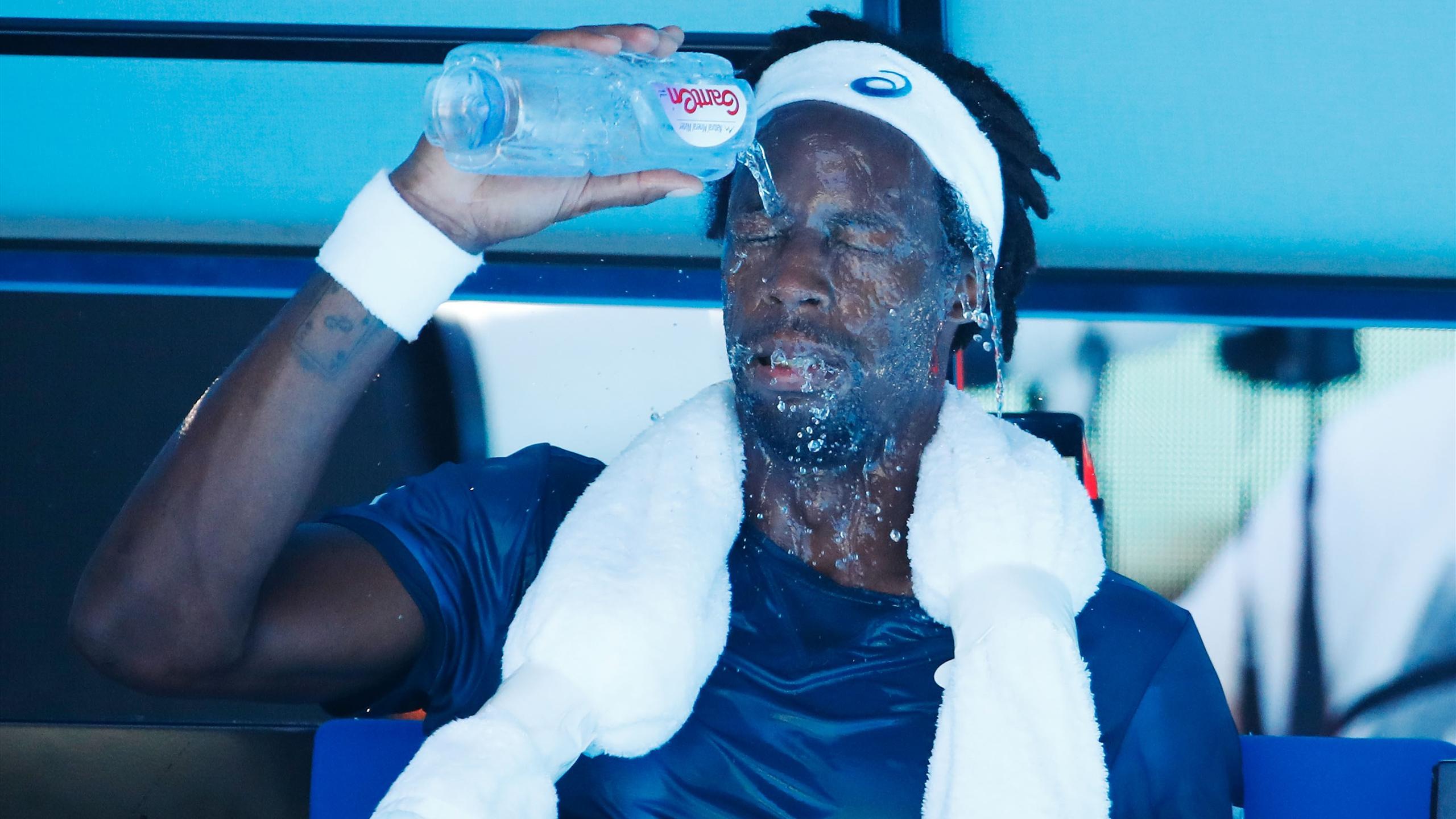
It’s not only players who suffer. Spectators do, too: on those “peak” days, hundreds of people end up with heat-related collapses. And the ball-girl incident isn’t a “one-off.” It’s simply a moment that made it into the frame.
The tournament has a long history of compromises with the climate.
Back in the day, the AO used to “run away” from the conditions
Up until the 1970s, the tournament changed cities and dates much more freely. The logic was simple: make it so tennis could be played at all, instead of waiting out the sun like it was a natural disaster.
They changed surfaces — because they literally couldn’t cope
In the heat, grass burned out and turned into an expensive problem.
Hard courts turned out not to be eternal either: some surfaces became “sticky” in extreme heat, deformed, and players complained they were injury-prone. The AO went through multiple surface changes — in part because heat dictates materials.
They introduced “extreme heat” rules — but with gray areas
For a long time, everything came down to a simple question: what temperature counts as a stop signal, and who decides — the umpire, the doctor, the meteorologist? Players raised this publicly again and again: give us clear criteria, so it doesn’t feel like decisions are made “based on mood.”
Since 2019, the AO has moved away from a single number “on the thermometer” and uses a heat-stress scale: it considers temperature, humidity, radiation, and wind. And measures depend on the level — from recommendations to drink more, to pauses/suspension of matches and closing the roof where it exists.
That’s a step forward. But in truly extreme scenarios, the conflict still remains: the sport wants a schedule, TV wants a time window, players want clear conditions — and the weather doesn’t want anything.
What could be done next (and why it’s not about ideas, but reality)
Every January, the same options resurface:
- stretch the tournament to avoid daytime peaks — but the calendar is already packed;
- move the dates — but that disrupts the season and commercial deals;
- move the tournament elsewhere — which sounds like fantasy, because Melbourne has had enormous investment, and the AO is a massive economic engine for the state.
On top of that, the contract to host the tournament in Melbourne has been extended through 2046. So “relocation” isn’t a matter of desire — it’s a matter of scale that no one can pull off quickly.
Most likely, the real path will be more mundane: more night sessions, more matches under a roof, more breaks, stricter protocols, more cooling zones, and tighter monitoring for kids/volunteers. Not the romance of “open air,” but “anti-heat” infrastructure.
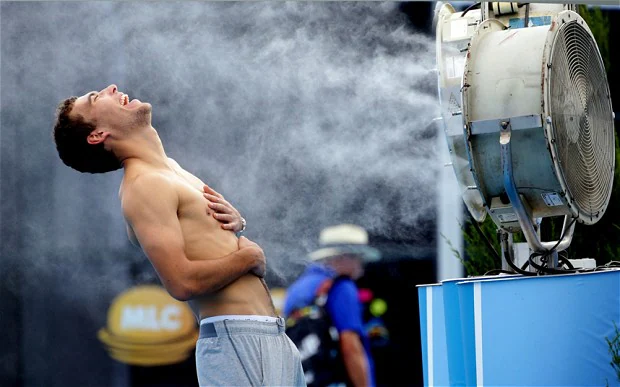
And here’s why the ball-girl episode hit so hard
Because it isn’t about Sonmez being heroic (even though she did the right thing).
It’s about the fact that the Australian Open increasingly becomes a tournament where the important question sounds like this:
“Are we still playing tennis — or are we already constantly saving ourselves from the weather?”
And it feels like there will be more moments like this going forward — simply because January in Melbourne is no longer pretending to be “tolerable.”