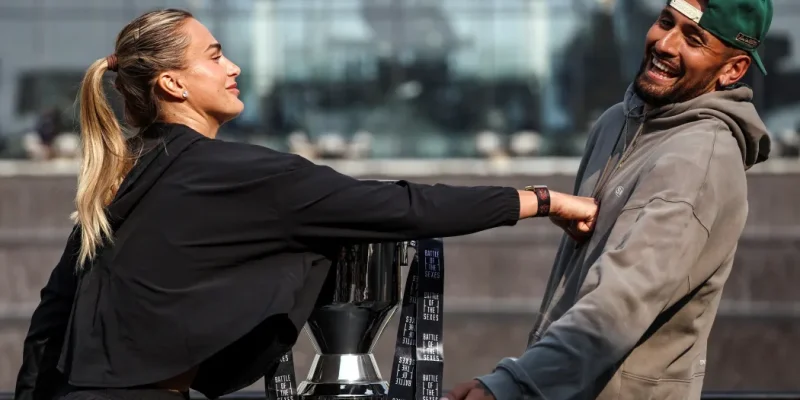


If you blinked, you might’ve thought this was just another “star vs showman” exhibition. But nope. In Dubai, they served us a “Battle of the Sexes” format: world No. 1 Aryna Sabalenka versus Nick Kyrgios, who hasn’t really played since spring and was sitting somewhere way down the ATP rankings. The result was both predictable and weird: Kyrgios took it 6:3, 6:3, and sure, it all seems logical… if not for the “hey, let’s also tilt the court a little, just a tiny bit” level of rules.
The organizers clearly wanted a show and “balance”, so they added three special ingredients:
- two sets, and if needed — a 10-point tie-break;
- only one serve (meaning no second attempt, at all);
- Sabalenka’s half of the court was 9% narrower and shorter, because “women’s speed is on average 9% lower than men’s”.
And this is where it gets juicy: two big layers affected the match equally — sport and the thing people call “sport” mostly out of habit.
On Court, Everything Was Fair… as Fair as It Gets in This Kind of Ride
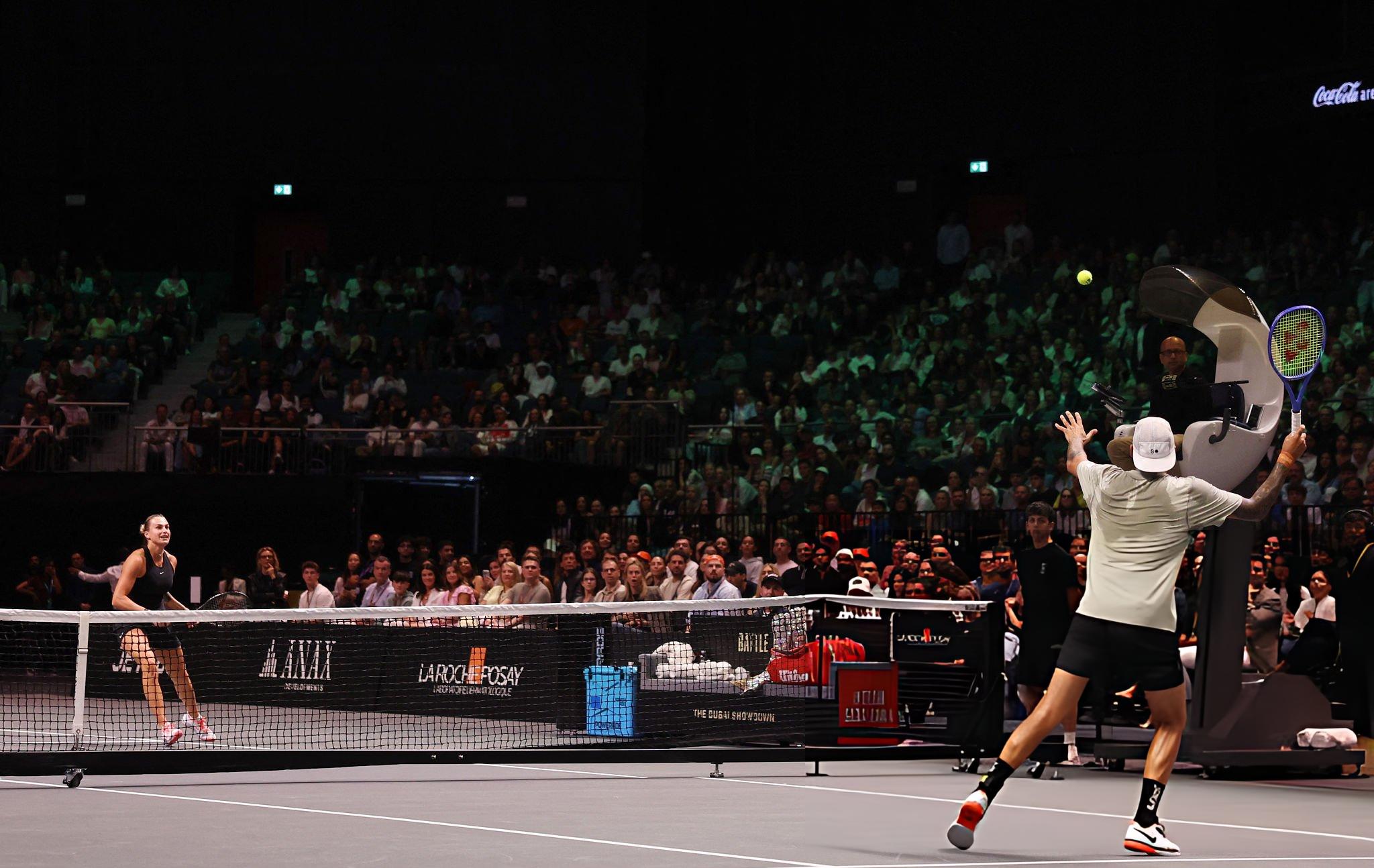
After the match, Sabalenka summed up what happened out there with perfect accuracy: she moved great, came to the net, hit drop shots, and Nick served great. That’s the entire script of those 1 hour and 17 minutes.
Kyrgios played pragmatically, like someone who didn’t come for a marathon — he came to “make it look good and go home”:
- served almost the same pattern over and over — awkward, into the deuce box toward Sabalenka’s backhand;
- didn’t drag things into long baseline slugfests, cutting the tempo with drop shots and keeping points short.
Sabalenka, meanwhile, tried to switch on the full arsenal — and at times it genuinely worked:
- as the match went on, she got better at the net and used drop shots more often;
- in the second set, Aryna even led with a break, because she took control specifically by moving forward and throwing in flashy drop shots;
- overall, she used the fact that Kyrgios was, let’s put it gently, not exactly the most mobile human on the planet right now: she redirected down the lines, attacked the corners, and Nick struggled whenever he had to take 3–4 extra steps.
But all of that ran straight into one problem — one that wouldn’t have been nearly as fatal in a normal match.
When Your Biggest Weapon Suddenly Fires Blanks
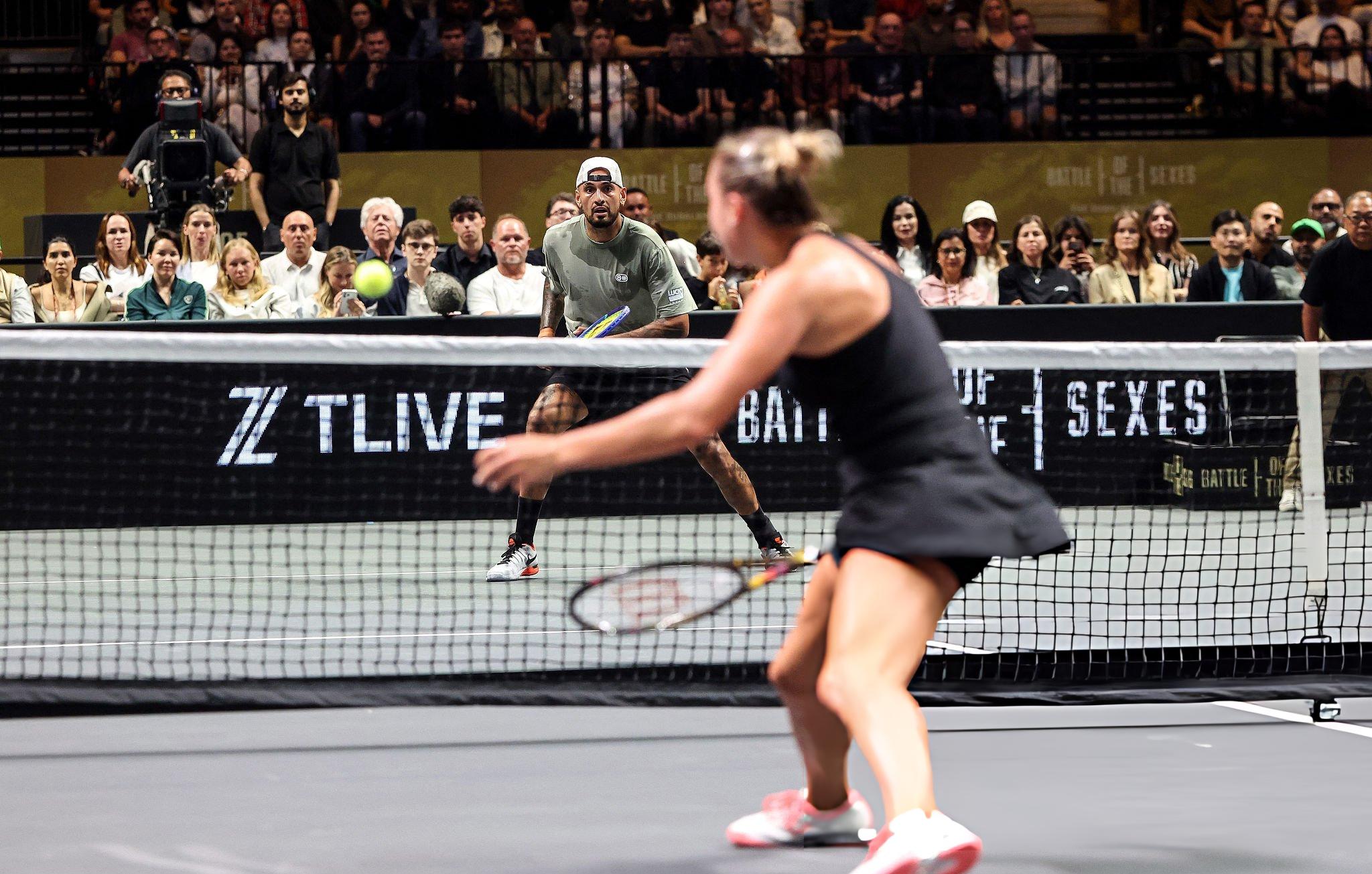
The most annoying part for Aryna was that this format took oxygen away exactly where she usually dominates: on serve.
She:
- made errors (and yes, it looked painful);
- sometimes took pace off just to land it in the box;
- and Kyrgios happily got chances to get into rallies and attack instead of simply surviving her first serve.
The irony is that the “one serve” rule was supposedly meant to “neutralize Kyrgios’ advantage”, but by feel it hit Sabalenka harder. Because in real tennis, a second serve isn’t a “bonus” — it’s insurance for your nerves, rhythm, and tactics. Here, they just canceled the insurance, like a streaming subscription after a price hike.
A Show Match Where the Rules Played Against One Side
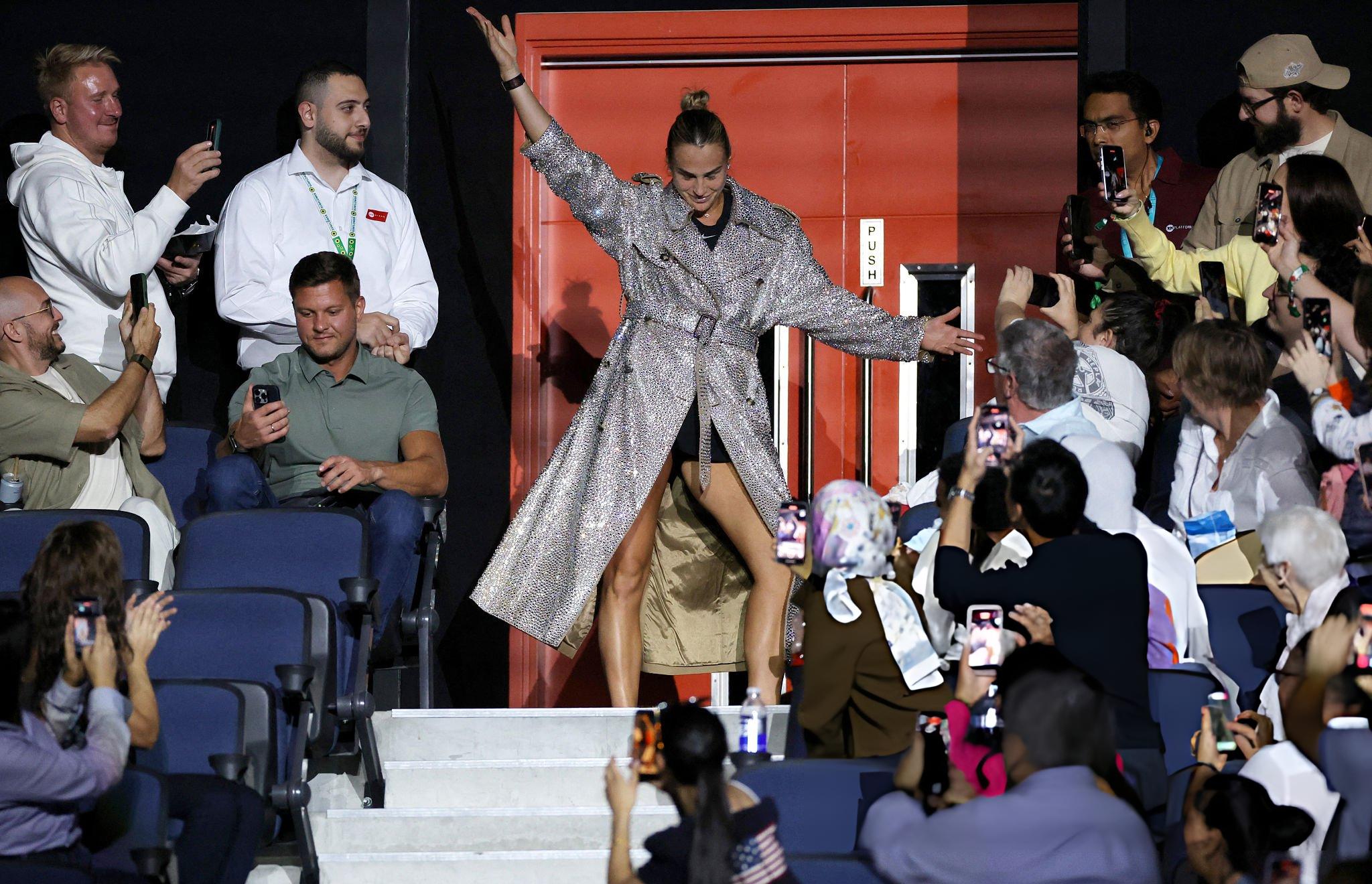
If you compare this to the legendary 1973 story (Billie Jean King vs Bobby Riggs), today’s “Battle of the Sexes” isn’t an ideological grudge match — it’s a straight-up entertainment show. And the show wasn’t only before the match, with Sabalenka walking out like a boxer in a blindingly shiny cape to “Eye of the Tiger” (yes, that was epic). The show was right there on court, too.
At times it felt like Sabalenka wasn’t playing Kyrgios so much as she was playing the conditions:
- Kyrgios spent most of the first set walking, limping, and performing a whole “my body is falling apart” storyline;
- he returned softly at times, putting the ball back into the middle — which was convenient for Sabalenka to attack;
- he didn’t serve at full blast all the time (the only serve faster than 200 km/h came at 5:3, 0:15 in the second set);
- and he basically gifted Sabalenka a few “handed-to-you” service games.
And still, Sabalenka looked like everything felt unfamiliar:
- serving on a half-court shortened by 9% clearly didn’t feel natural — she often served while standing far behind the line, like her body didn’t trust the markings;
- and the lack of a second serve turned every miss into a mini-disaster: no room for error, no breathing space, no calm.
So the show ended up a bit odd: they were supposedly “leveling” things, but it felt like they were celebrating one specific gender — and not the female one.
The Bottom Line: Nick Won, but the Score Isn’t the Main Topic

After the match, Kyrgios said the right (and pretty respectful) thing: he didn’t feel like some kind of champion, he didn’t have much energy, the scoreline could’ve swung, and most importantly — he “took away Aryna’s main strength — her serve”. That’s the key.
Because the match will be remembered not for Kyrgios winning (yes, a male pro with a big serve beats a female pro — shock level: “water is wet”), but for how it was set up: rules that tried to look “fair”, but ended up simply feeling “weird”.
In short: Sabalenka was lively, varied, and sport-angry in the best way, while Kyrgios was efficient, economical, and very serve-first. But the real stars of the night weren’t the players — they were that famous 9% and the one serve, which turned the exhibition into a little experiment: “what happens if we slightly break tennis?”
And yes, it was interesting to watch. But please — let’s not do this too often.