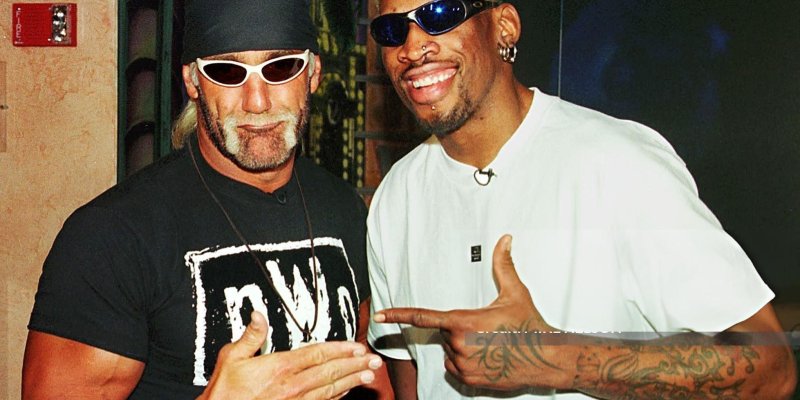

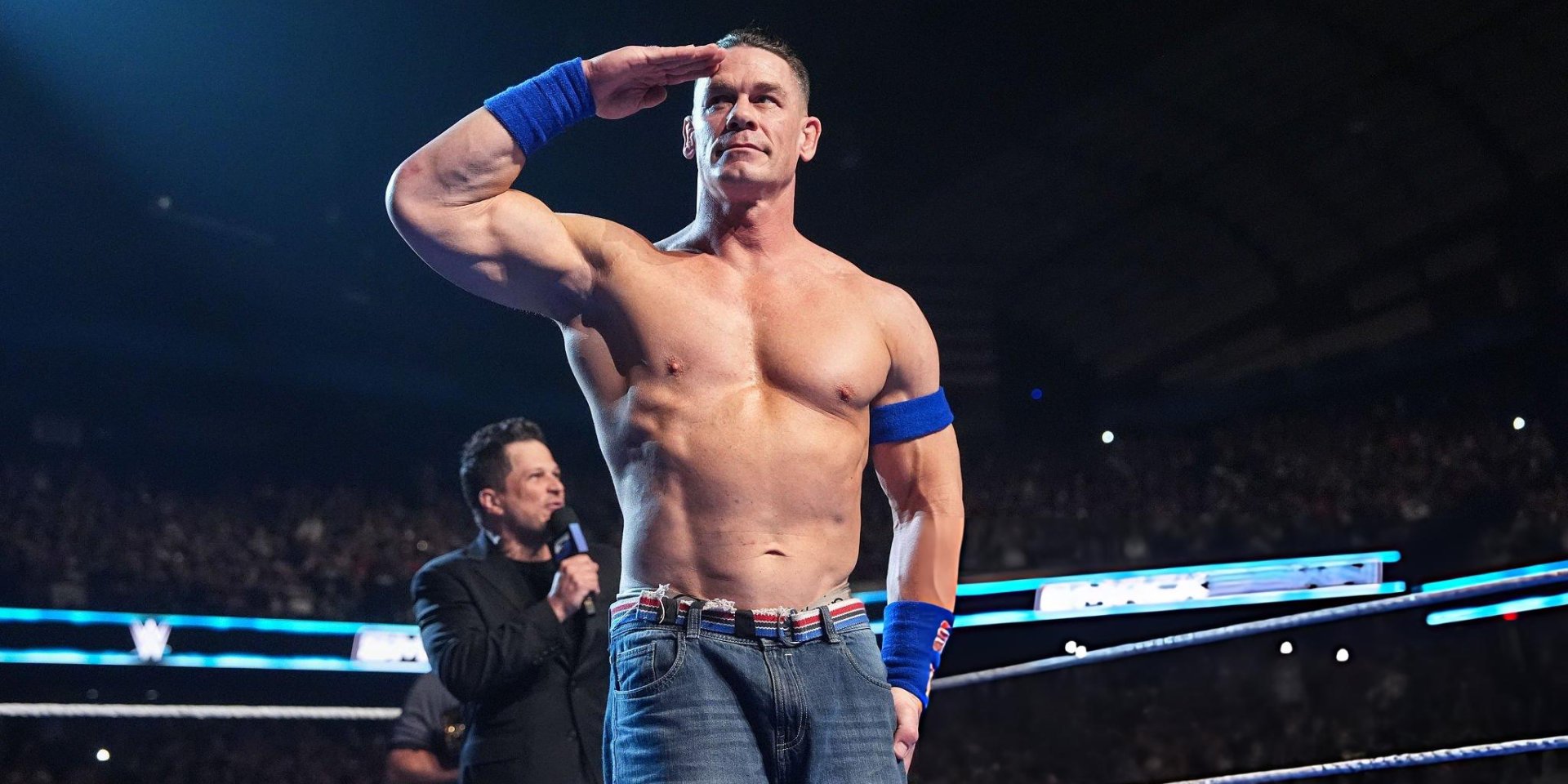
John Cena is a man who, for two decades, stood as WWE’s symbol of grit, discipline, and the signature slogan Never Give Up. He knew how to turn arenas into a roaring sea of chants, how to be a hero to some and a lightning rod to others, yet always remain the beating heart of the show. That’s why his final walk to the ring at 48 didn’t feel like a simple retirement — it felt like an era taking its last bow.
The Last Match No One Expected
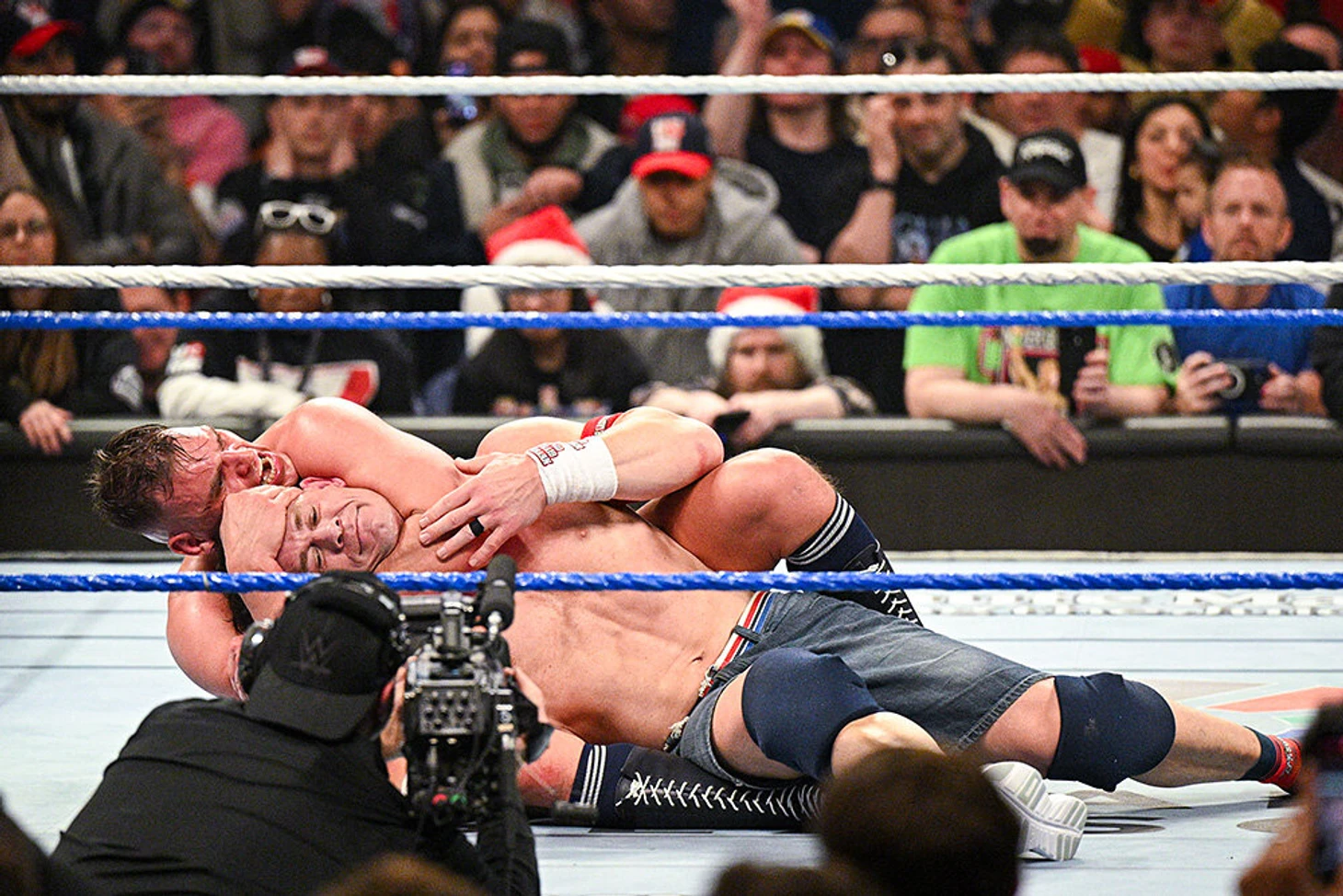
Cena’s farewell match took place at Saturday Night’s Main Event XLII in Washington, at Capital One Arena. Across from him stood the heavyweight champion Gunther — a cold, “machine-like” wrestler whose calling card has long been dominance and total control of the pace.
Fans, of course, expected a classic send-off with the legend’s hand raised, but the story was told differently — in a far more symbolic way. After a grueling 25-minute battle with Gunther, Cena surrendered for the first time in his career: he tapped out after being caught in a choke. A paradox? More like precision storytelling. WWE seemed to place the final period exactly where it would sting most — in direct contrast to the “Never Give Up” image.
A Slogan That Became a Personal Code
“Never Give Up” wasn’t just something printed on merch. It was the framework of the character, a way of life, and a message Cena had delivered to audiences for years. He didn’t pretend to be perfect — he preached a simple truth: as long as you’re breathing, you’ve got a chance. Put in the work every day, hold yourself together with persistence and enthusiasm, and don’t fall apart when times get tough.
That’s exactly why the final tap-out doesn’t read as a collapse of character, but as an adult acknowledgement: everything has its time. Sometimes “not giving up” doesn’t mean dragging it out forever — it means walking away on your own terms, without turning a legend into an endless rerun.
A Guard of Honor and The Rock’s Words
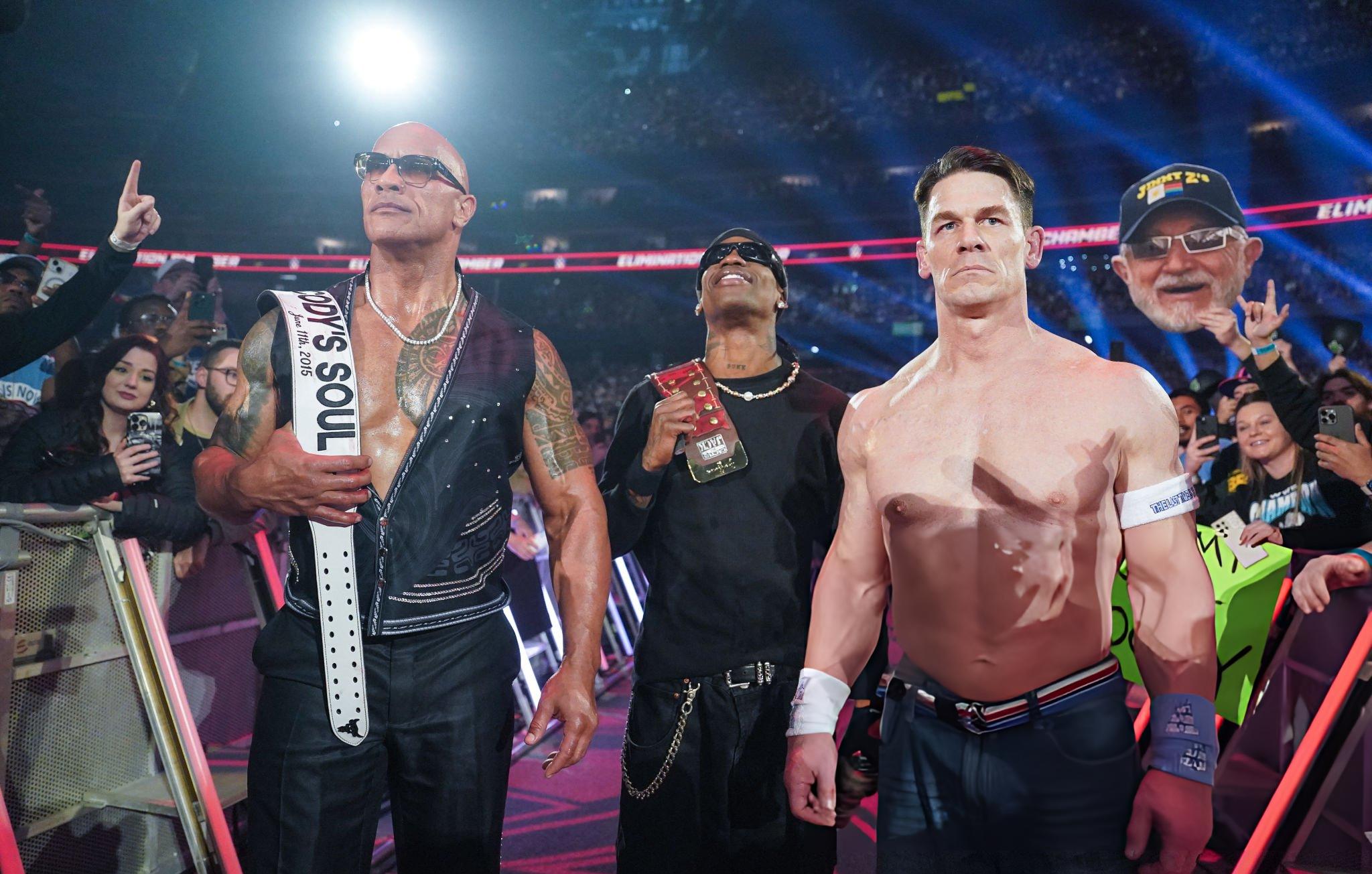
After the farewell bout, Cena was sent off the way the true changemakers are. Dwayne “The Rock” Johnson paid tribute, emphasizing that what matters most isn’t status, but the kind of person you remain along the way. Those words landed with special weight: for WWE, Cena has long been more than a champion — he’s been a moral compass for both fans and the next generation of wrestlers.
From The Prototype to a 17-Time World Champion
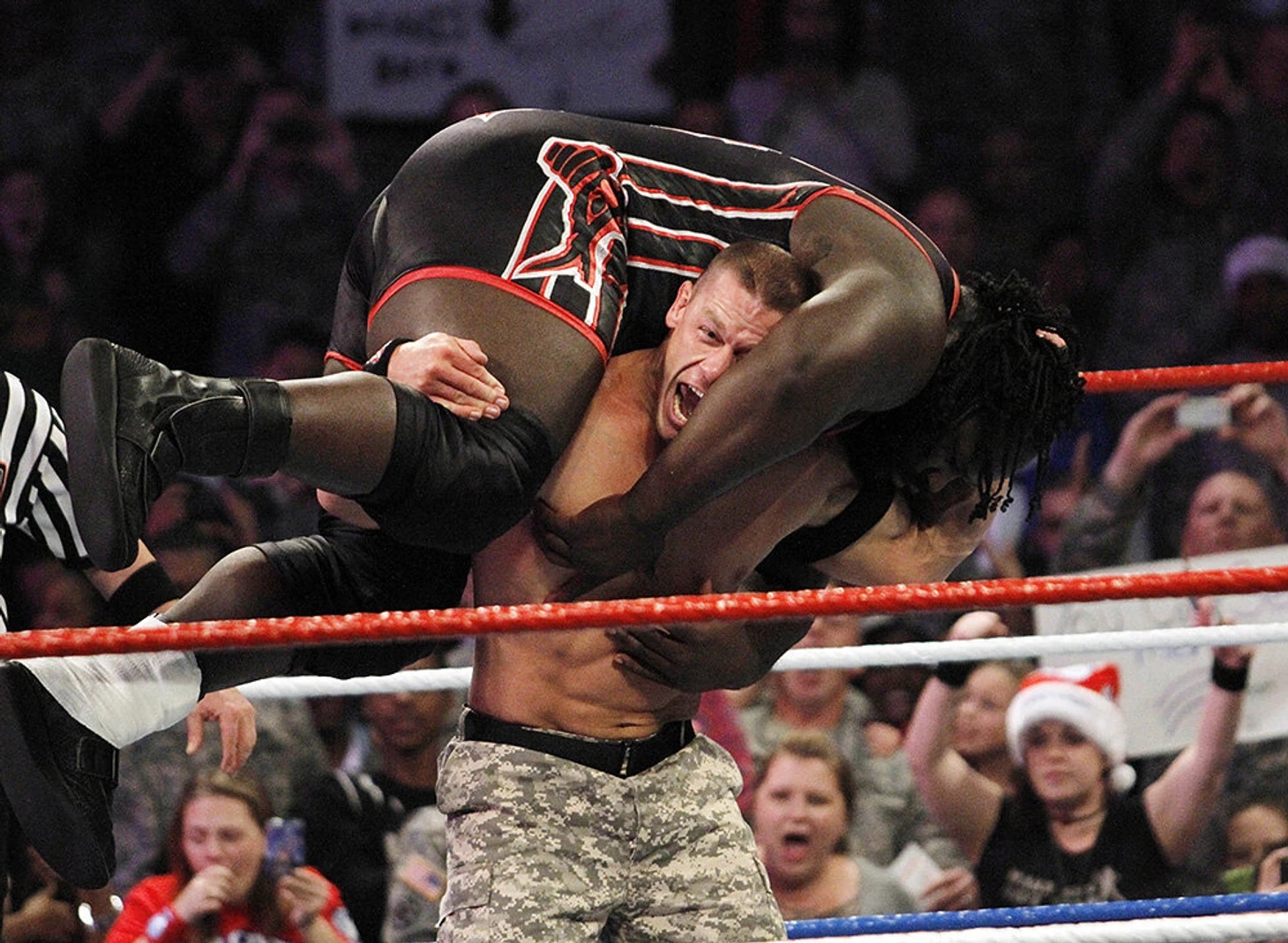
Cena signed with WWE in 2001, first appearing under the nickname The Prototype. His official debut under his real name came on SmackDown on June 27, 2002 — and it began with a loss to Kurt Angle. Cena wasn’t beloved early on; he searched for the right persona until he reinvented himself as the “Doctor of Thuganomics”, cutting promos with freestyle rap. That was the turning point: the crowd finally saw not just an athlete, but a charismatic character.
What followed was a rise into one of the roster’s most beloved stars, six WrestleMania main events, and a record 17 world titles. Cena became the marker of an entire era: where he was, the headline story was, too.
The Farewell Tour: Role Changes, a Title Peak, and Final Rivals
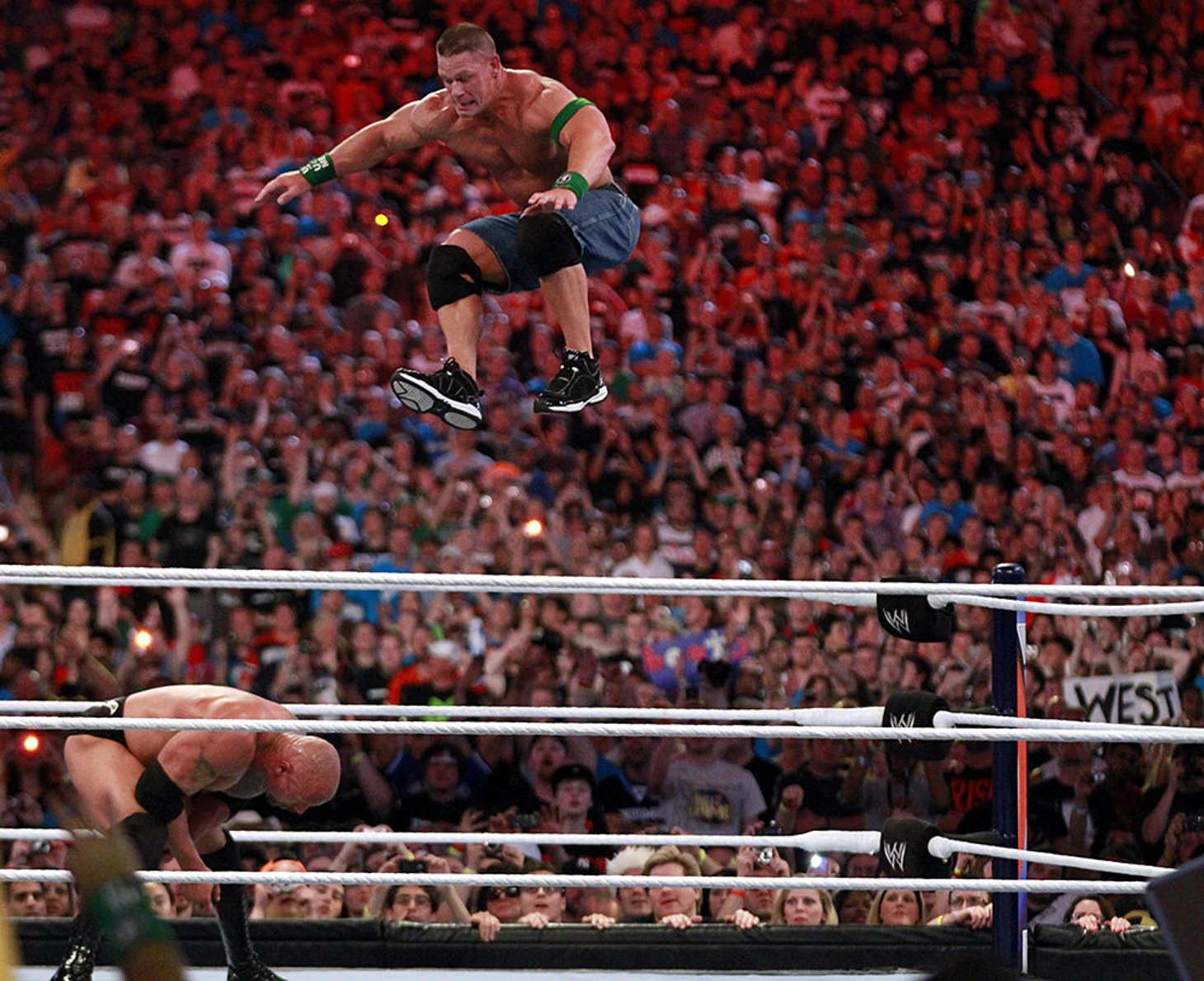
He announced the end of his career in the summer of 2024 at Money in the Bank, naming the end of 2025 as the finish line. The farewell tour began at the Royal Rumble in January — not with a triumph, but with a loss to rising WWE star Jey Uso, as if to signal: now it’s the new generation’s turn.
In the spring, at Elimination Chamber, Cena took on a heel role for the first time in a long while. Then, in April, he won his 17th world title by defeating Cody Rhodes at WrestleMania. At SummerSlam in August, Rhodes got his revenge. After that, Cena squared off with Brock Lesnar, AJ Styles, and Sami Zayn — a run of marquee clashes that felt like a collection of final chapters, each one closing another page of his career.
No Speech, Just a Symbol: Sneakers and Armbands
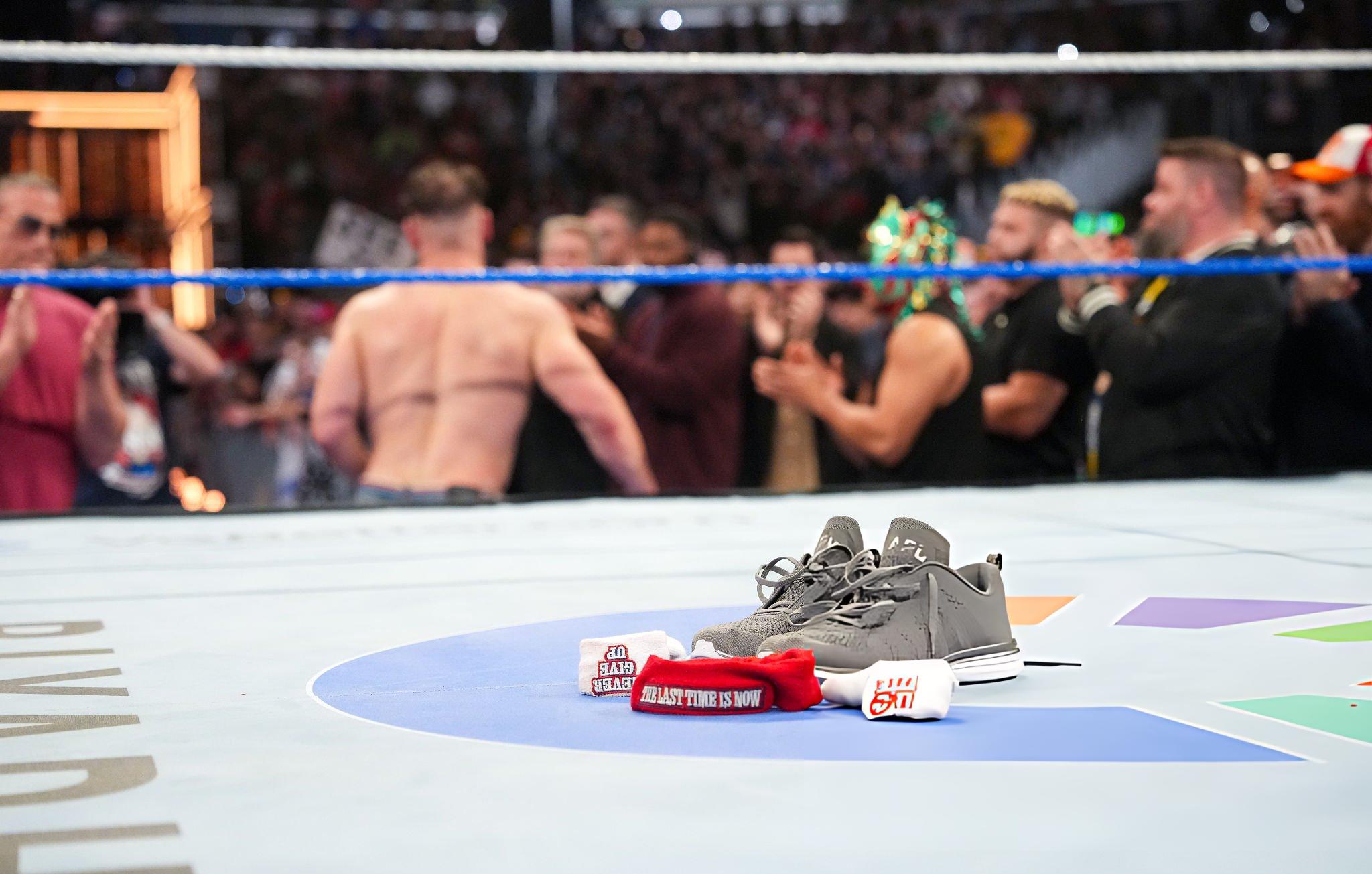
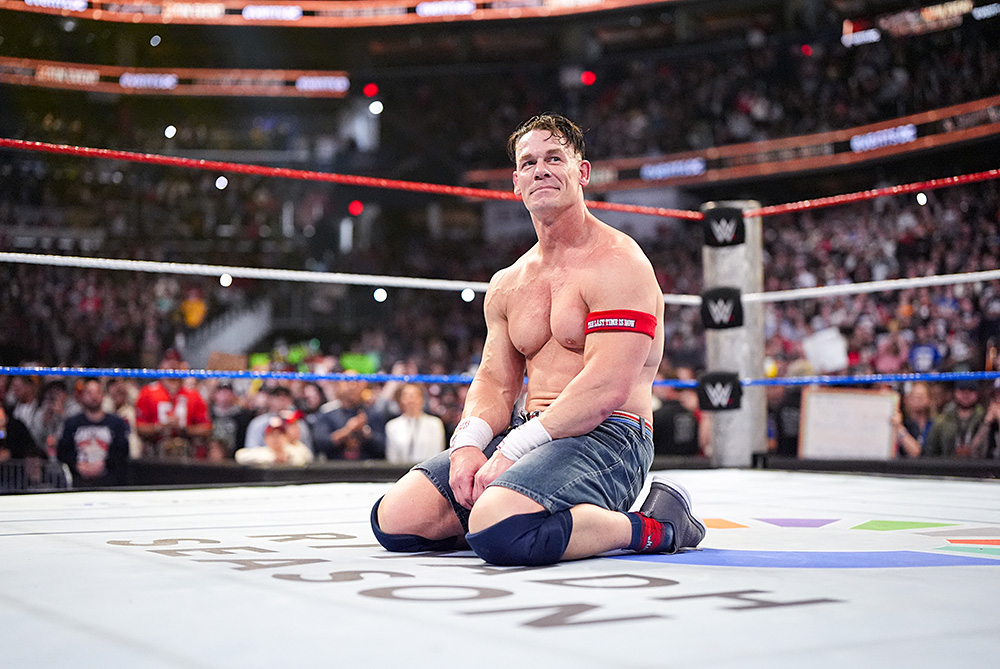
The night’s most powerful moment came after the bell. As everyone from the locker room came out to congratulate Cena, and as WWE World Heavyweight Champion CM Punk and Undisputed WWE Champion Cody Rhodes presented him with title belts, Cena chose not to deliver a long farewell speech.
He did something else. He left his armbands and sneakers in the middle of the ring — a gesture in pro wrestling that speaks louder than any words. It wasn’t just gear: it was part of the character, his visual signature, the “equipment of an era”. On his way out, he turned back one last time to the camera and the fans and said, with soldier-like simplicity: “It was an honor to serve you all these years, thank you.”
A Legacy That Doesn’t End With a Tap-Out
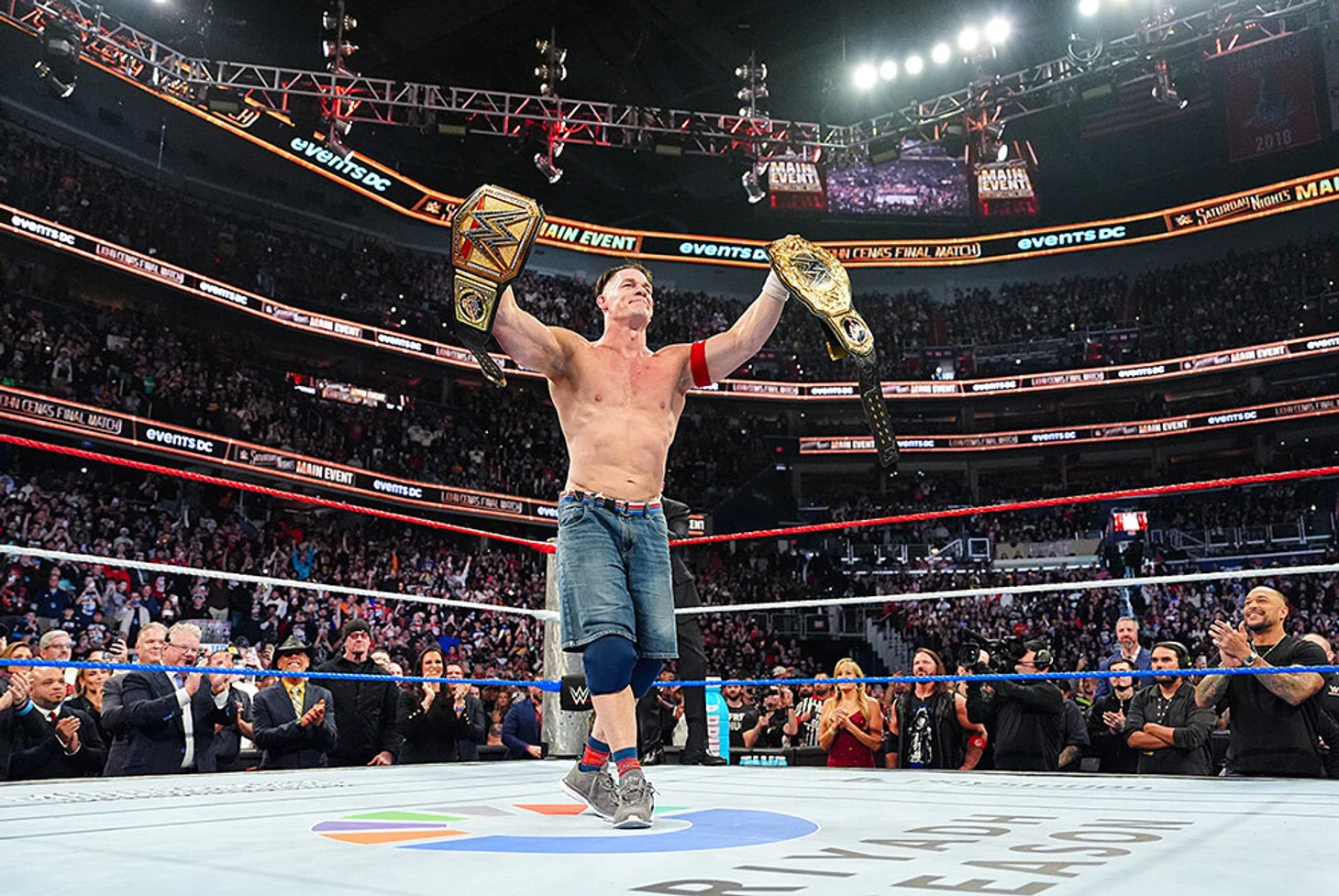
Cena didn’t leave broken or “worn down” by time — he left complete. That final submission doesn’t erase the slogan; it deepens its meaning: sometimes courage isn’t endless fighting, but recognizing the exact moment you’ve done what you were meant to do — and putting a period on it. If WWE ever needs a blueprint for how to close out a legend, it now has a reference script — understated, but with a thunderous final dot in the ring.