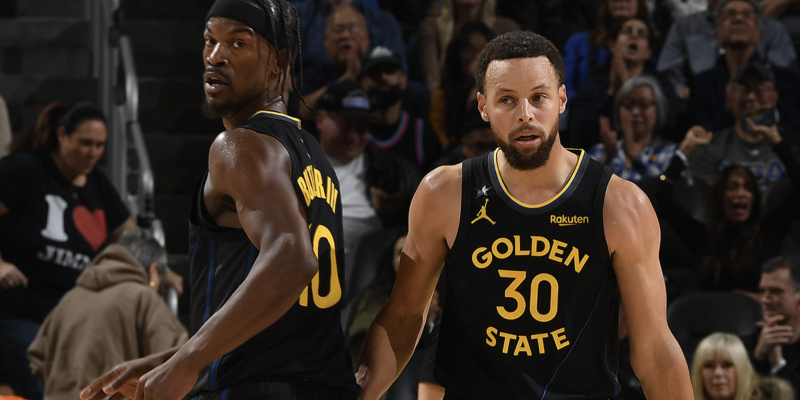

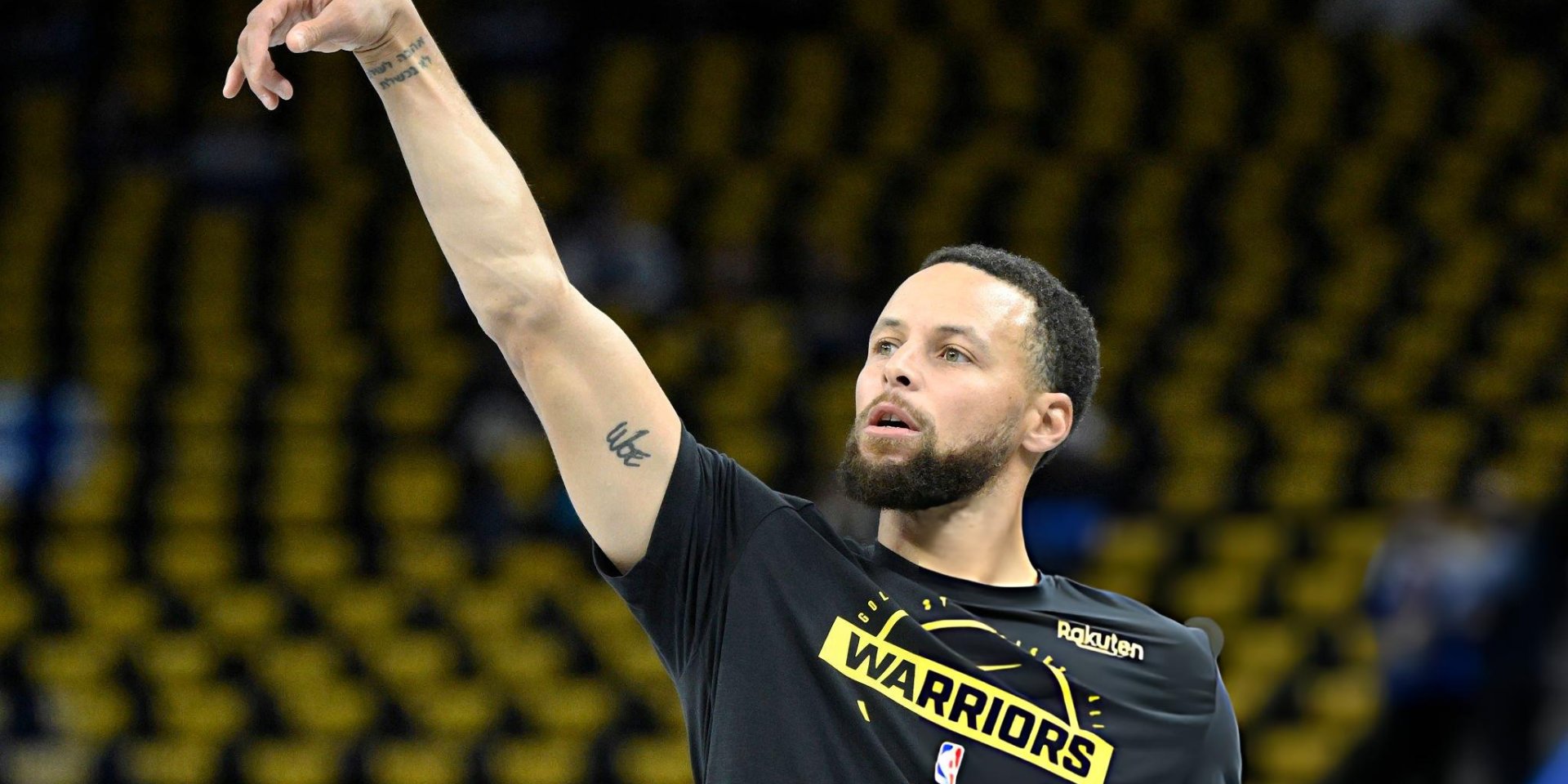
Fall 2025 turned into a real series full of unexpected plot twists for Golden State Warriors point guard Stephen Curry. A record ninth straight year atop the list of the NBA's highest-paid players, a headline-grabbing appearance on LeBron James's podcast, the first flagrant foul of his 17-year career… And on top of all that came the news that truly shook the industry: Curry is ending his partnership with Under Armour. With the very company with which he did not just have a signature sneaker line, but almost a family-like relationship and plans for a lifetime deal.
From Basketball Fairy Tale to an Unexpected Split
The story of this partnership began in 2013. Back then, 25-year-old Curry was not yet the symbol of an era: an incredible shooter, yes, but with fragile ankles and not a single All-Star Game on his resume. Nike allowed itself the luxury of underestimating him, and Under Armour poached the guard for a relatively modest 4 million dollars a year.
From there, everything unfolded like a textbook case of sports marketing. The Curry signature line, rising sales, Steph becoming the face of the brand, and the brand itself turning into a serious player in the basketball footwear market. In 2023, the sides signed a new contract that was supposed to remain in force even after Curry's playing career ended and, if certain financial conditions were met, could turn into a lifetime agreement.
Those conditions, it seems, were never fully met. Otherwise, there would have been no need to step in front of the press with carefully worded but rather hollow phrases like "a decision made in the interests of both parties", "the right step in the long term", and "the opportunity for Steph to develop the brand on his own terms".
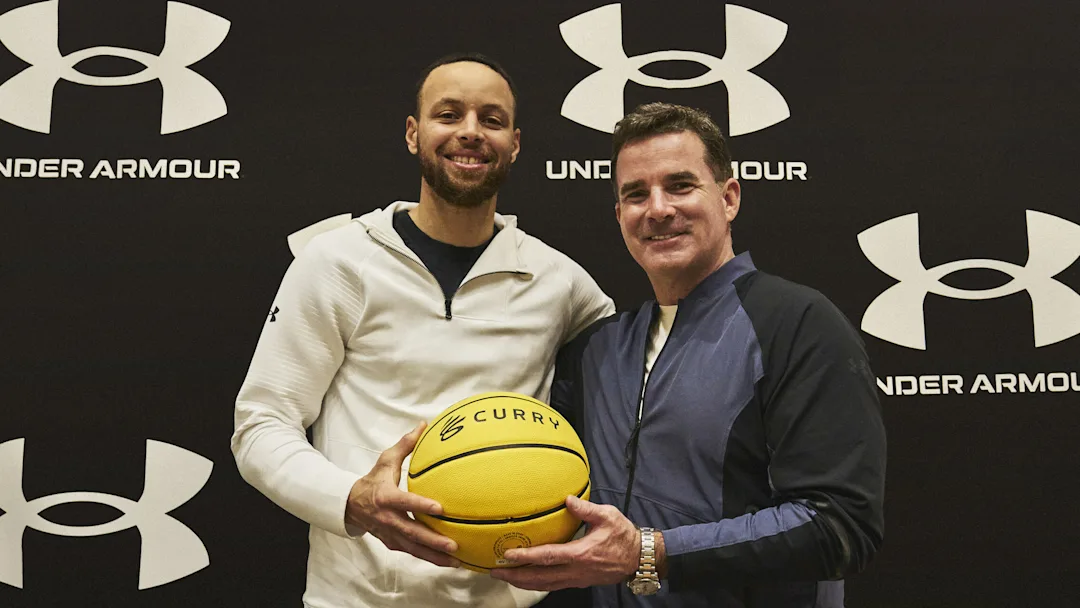
This sounds especially striking against the backdrop of what Under Armour founder Kevin Plank said in 2023: at the time, he admitted that he could not imagine UA without Steph, or Steph without UA. Now he will have to.
A Cold Financial Shower for Under Armour
To understand why the company let its main star go so easily, it is enough to look at the financial statements. At the beginning of 2025, management announced a restructuring program worth 160 million dollars. By the time the split with Curry became official, that amount had already grown to 255 million, due to compensation for terminated sponsorship deals, severance for laid-off employees, and project shutdowns.
In the last quarter, Under Armour's revenue fell by 4%, and the net loss reached 19 million dollars. Since the beginning of the year, the company's market capitalization has almost halved, dropping by 47.3%. The shares with which Curry was generously rewarded under the 2023 contract (8.8 million shares worth about 75 million dollars at the time) are now worth significantly less. Since the 2015 peak, their value has plunged by roughly a factor of ten.
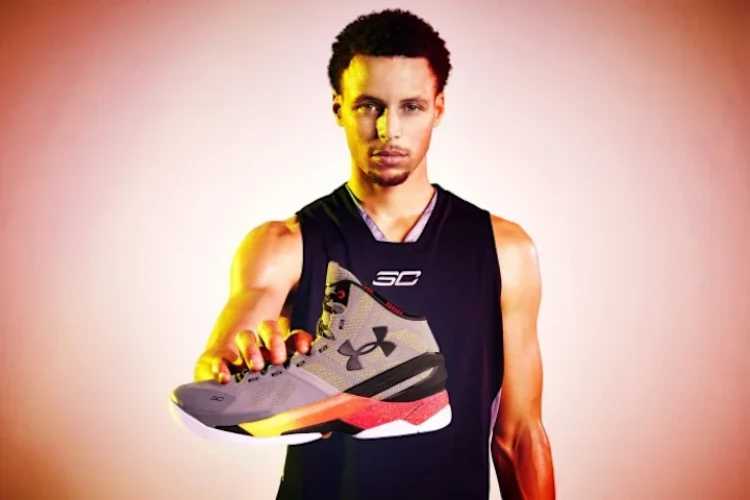
The irony is that 2015 was precisely the moment of maximum glory for this partnership. The first signature model, the Curry 1, received rapturous reviews, and the subsequent Curry 2 coincided with a dream season: an NBA MVP title, a Finals win over LeBron James's team, and the first championship ring of Curry's career. The stock price rose in sync: Under Armour's market capitalization approached the 22 billion dollar mark, and Curry's status rapidly shifted from "promising star" to "face of a generation".
How a Market Newcomer Tried to Become the Next Nike and Got Lost in Its Own Ambitions
In 2013, Under Armour was a fast-growing but still niche company: American football equipment, thermal and compression underwear, products well understood by Plank himself, who had once played college football and started the business developing moisture-wicking fabric.
The company could not break into the NFL or top college leagues; its partnership with the XFL looked more like a curiosity than a claim to leadership. The strategy then shifted to focus not on teams, but on individual brands. That is how Tom Brady (with an equity stake in the company) and later Stephen Curry appeared in the Under Armour portfolio. They were followed by Dwayne "The Rock" Johnson, Joel Embiid, Anthony Joshua, and baseball stars Bryce Harper and Juan Soto.
Curry's success on the court took the partnership to a whole new level: Curry Brand was spun off into a separate sub-brand, mirroring what Nike had once done with Jordan, and thanks to Steph's love for golf, the company tried to extend the Curry Brand onto the fairways as well.
But at some point the company decided to play a different game. Plank wanted to reinvent Under Armour as an IT holding company: massive investments in projects at the intersection of sports, gadgets, and digital services were burning through hundreds of millions. At the same time, UA took on large-scale initiatives that ultimately turned into failures:
- backing out of a promised deal to supply uniforms for all MLB teams (the contract ended up with Nike);
- renting a huge space on Fifth Avenue for a flagship store and later being forced to sublet half of it;
- expensive contracts with college programs (Auburn, South Carolina, UCLA, Texas Tech, and others) that then had to be terminated;
- problems with financial reporting and an investigation by the U.S. Securities and Exchange Commission due to inflated figures.
Plank initially stepped down as CEO, but the crisis continued, and two years ago he returned to day-to-day management, this time as a crisis manager tasked with cutting costs rather than building an empire. Basketball turned out to be one of the casualties of this austerity course.
When Supporting a Player's Brand Becomes a Luxury
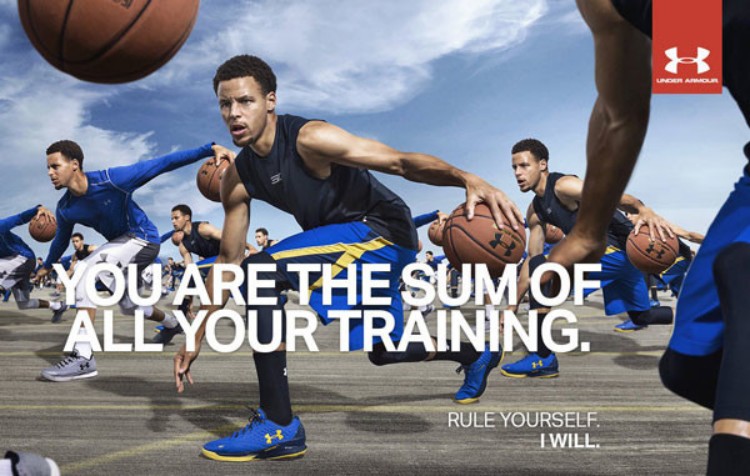
At the height of their popularity, Curry's signature sneakers brought Under Armour up to half of its revenue in the basketball footwear category. Now their share has dropped to around 2%. Analysts also pointed to the extremely painful dependence of UA's stock price on the market's reaction to each new Curry model: a successful release meant a small spike, and a misfire meant a hit to the share price.
For a company with total annual revenue of around 5 billion dollars, the forecast of 100–120 million for the basketball segment in 2026 no longer looks like a growth engine, but more like an expensive hobby. Especially when compared to Jordan Brand, which consistently brings in 7–8 billion dollars a year.
Against a backdrop of falling shares and cost-cutting, it simply became unprofitable to support a loud but increasingly less profitable sub-brand. For Curry, the partnership also stopped being a gold mine: the value of the shares he had received dropped, and the marketing activity around his line noticeably declined – the bright campaigns disappeared, and the sneakers were no longer accompanied by viral collaborations like commercials with Jamie Foxx or projects with "Sesame Street".
A New Life for Curry Brand: Who Will Win the Race for Curry's Signature
Formally, Curry's contract with Under Armour will remain in effect for about another year. The last model in the line, the Curry 13, is scheduled for release in February. Additional colorways and a capsule apparel collection are planned as well, although in an environment of budget revisions it is quite possible that some of those plans will be cut back.
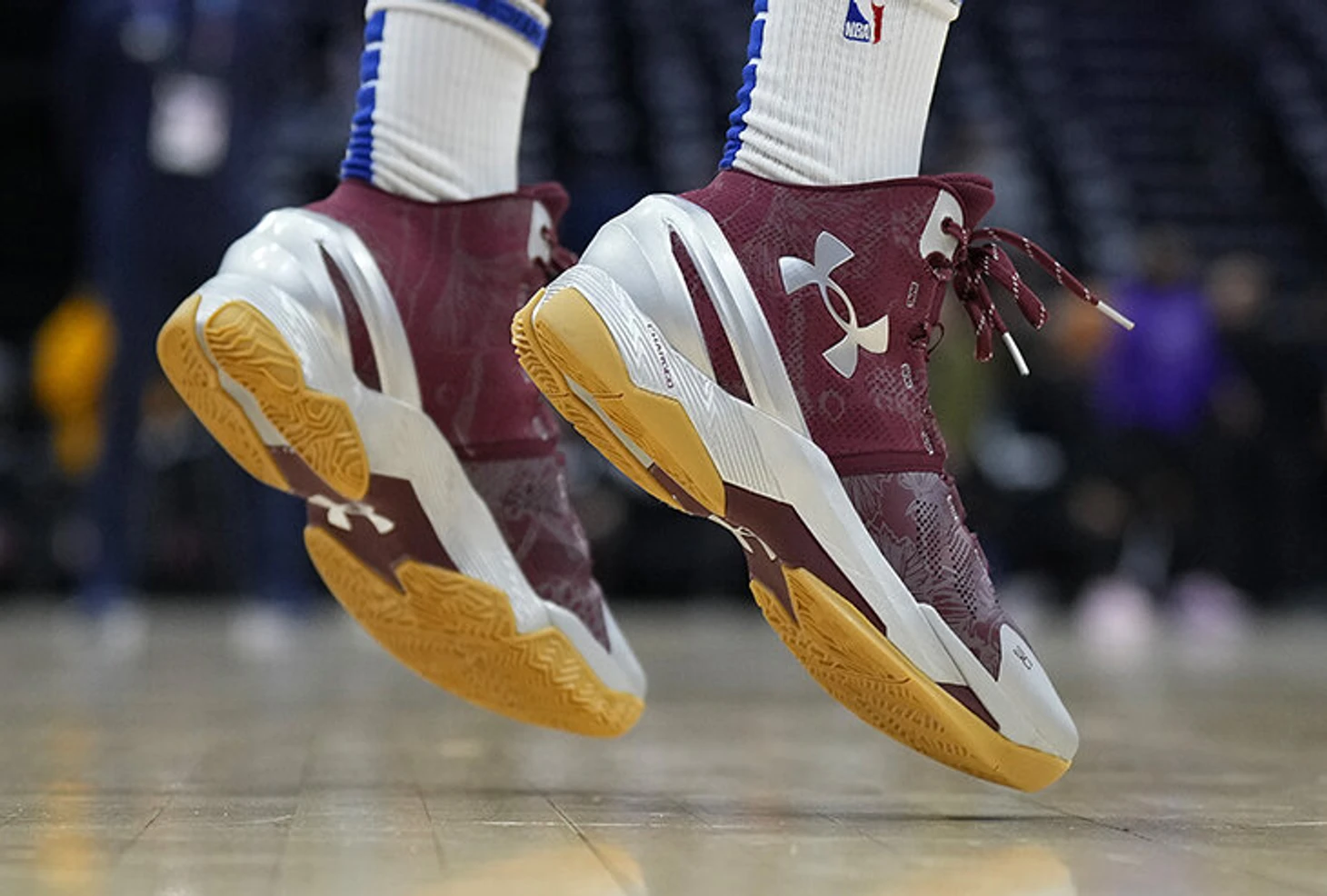
After that, Curry Brand will pass fully under Steph's control. The logical scenario is to find a major partner to handle production, logistics, and global marketing. Curry is already dropping subtle hints about which direction he might go: his choice to warm up in Mambacita Kobe 6 sneakers was no accident, clearly winking at Nike and fans of Bryant's legacy.
At the same time, potential suitors can be found beyond the usual Nike–Adidas–Puma trio. Tom Brady's example showed that a superstar can tie his name to a far less conventional brand: after retiring and letting his UA deal expire, Brady signed on with CrossFit brand Nobull, becoming its co-owner.
It is entirely possible that in the summer of 2026, the most sought-after free agent in the NBA will not be a player changing teams, but Stephen Curry's feet – and the logo that ends up on his sneakers.
The Main Lesson: One Superstar Is Not Enough
Under Armour dreamed of retracing Nike's path: bursting into the sneaker market from scratch, betting on a player's personality, turning performance footwear into an element of everyday style and, from there, into a cult object. The company had its own "Phil Knight" in Kevin Plank, its own technological innovations, and even its own "Michael Jordan" in Stephen Curry, who changed the way people think about long-range shooting in basketball.
But UA did not have its own Sonny Vaccaro, George Raveling, Tinker Hatfield, Peter Moore, its own Spike Lee, or an agency on the level of Wieden+Kennedy – the people and teams who turn sneakers into cultural code rather than just sports equipment. The company tried to "repeat the legend" instead of creating its own.
The story of Curry and Under Armour parting ways is a powerful reminder to the entire industry: the name of a great athlete is a strong but not self-sufficient resource. Without a well-thought-out long-term strategy, a strong product, and an original brand story of its own, even the brightest little leaping logo eventually loses its power. And when that happens, it is not thirty-foot three-pointers that take center stage, but the numbers in the financial reports.