
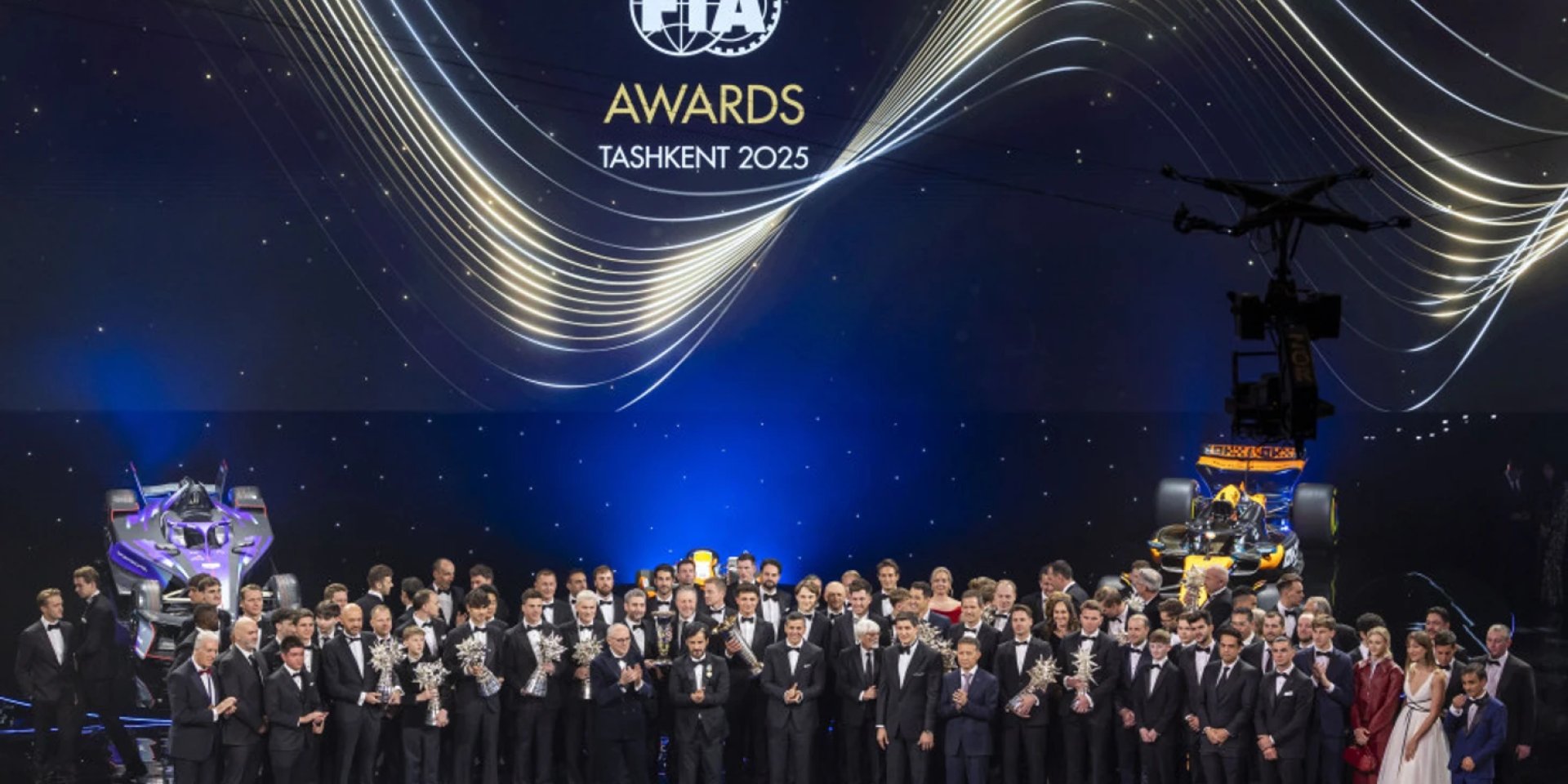
December usually wraps up the season on familiar stages, but this time the motorsport map shifted sharply east. On December 12, Tashkent—until recently associated with racing mostly at the amateur karting level—hosted the FIA gala ceremony and, for one day, turned into a magnet for “Formula 1” stars and guests from other series. It was a symbolic move: the world federation is increasingly bold about testing “less obvious” regions—and it looks like this is no longer a one-off experiment.
Central Asia on the Calendar of Major Events
The post-Soviet space is not new territory for FIA season-ending events: ceremonies have previously been held in Baku and St. Petersburg. But Tashkent became the first city in Central Asia to be entrusted with an evening of this stature. The contrast is stark: the country lacks a modern, permanent circuit that meets international requirements, and it has very few teams and professional drivers with a steady presence in top-tier series. That is precisely why the idea was so intriguing—bringing a “parade of champions” to a place where the infrastructure is still trying to catch up with ambition.
FIA General Assembly: An Election Without Suspense, but Not Without Aftertaste
Alongside the awards, Tashkent also hosted the FIA General Assembly, where Mohammed ben Sulayem was re-elected for a second term. On paper, it was routine; in practice, it was a vote without real competition: the registration rules required a complex set of conditions, including a list of vice-presidents drawn from World Motor Sport Council representatives, with mandatory coverage across several regions. In the end, no alternative candidate emerged, yet even in that scenario ben Sulayem did not secure a full consensus, receiving about 91.5% support. It looked like a signal: there is alignment within the federation, but it is not absolute.
Politics and Pace: A High-Level Meeting and a Conversation About Racing’s Future
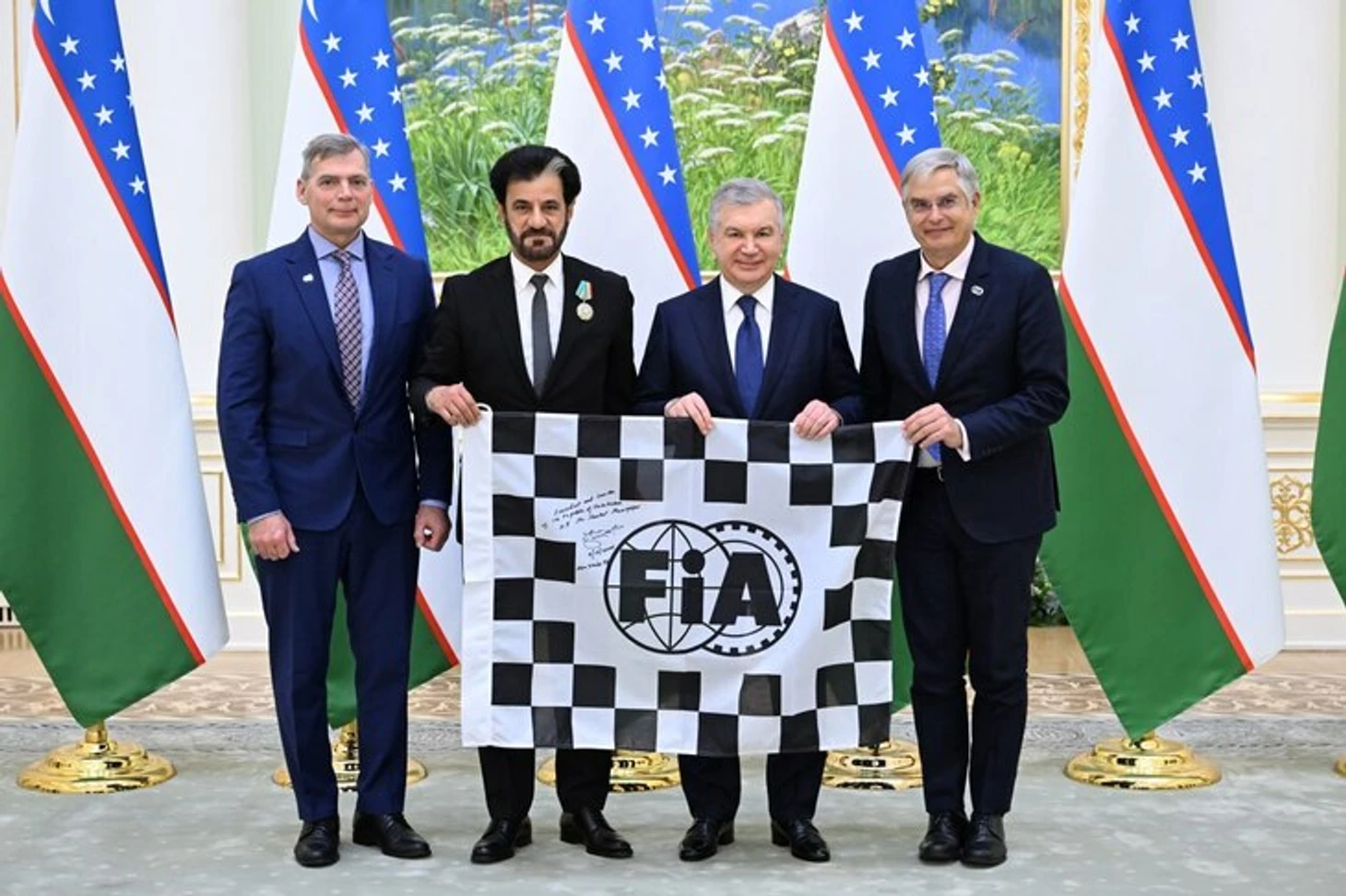
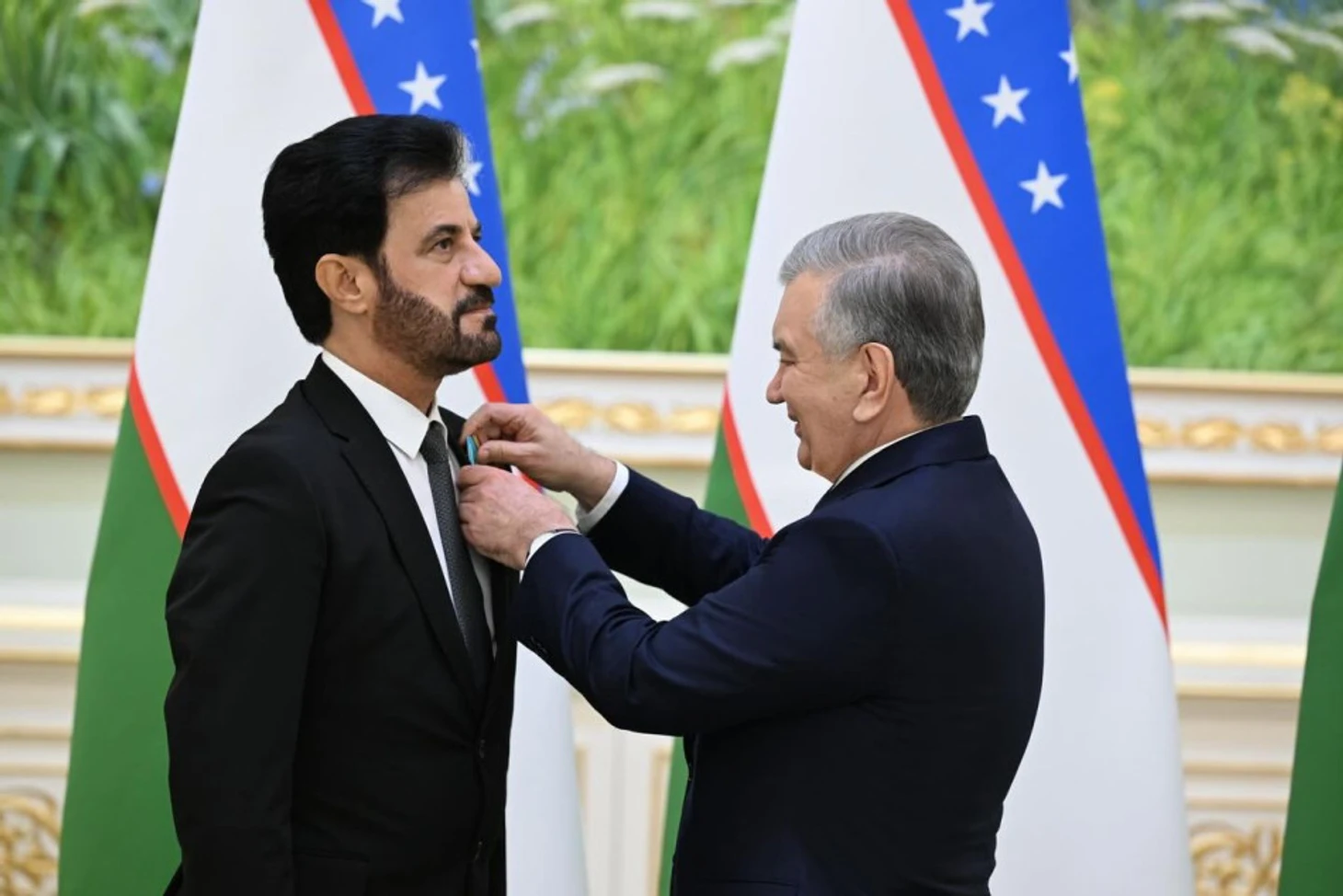
Before the main events, the FIA President met with Uzbekistan’s President Shavkat Mirziyoyev and received the “Do‘stlik” (Friendship) order for his contribution to cooperation and the popularization of motorsport. After the protocol, the discussion turned practical: the country needs talent (drivers, engineers, mechanics), it needs a base, and it needs a foundation—from karting to formula-type disciplines.
After statements about developing motorsport, the media immediately ran with loud headlines about an impending Grand Prix. In reality, the road to a “Formula 1” round is measured not in press releases but in years: transport and sporting infrastructure takes time, and even under the most optimistic scenario the horizon is still several years away. If the project does materialize, the most likely format would be a street circuit—like Singapore—where you can move forward without a classic permanent facility.
Charles Leclerc as the Headliner: Ferrari’s Emotional Diplomacy
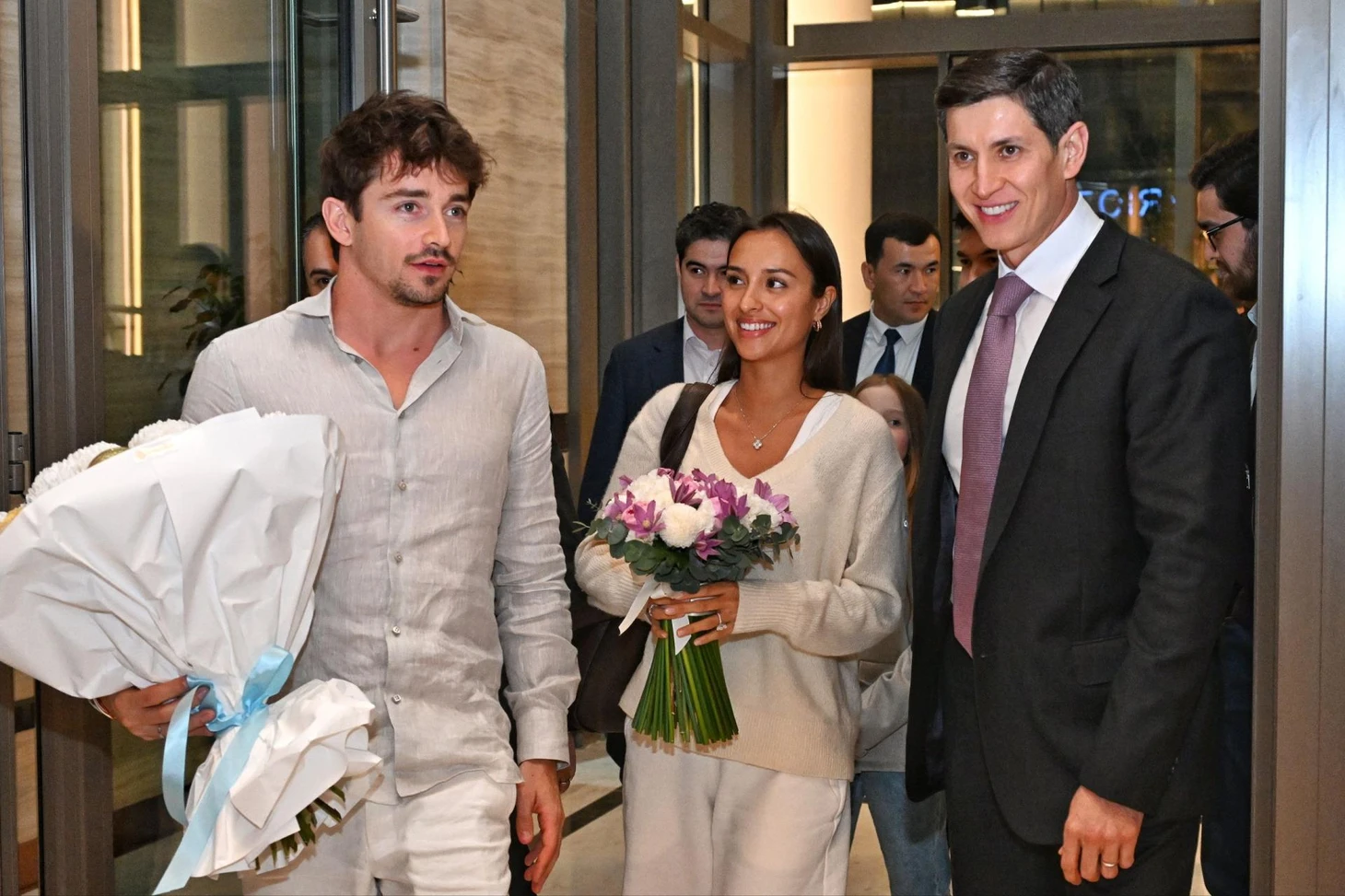
The evening’s biggest star, unexpectedly, was Charles Leclerc. He arrived not as the season’s champion, but as a figure capable of drawing cameras and public attention. In Tashkent, he received an especially warm welcome: the invitation came at the highest level, the escort matched his status, and the trip itself looked like a curated mini-tour of the city complete with a cultural program.
Moreover, Leclerc is no longer a “passing guest” in Uzbekistan: he has been here before, and this visit felt like a continuation of that connection. Ferrari also fielded a notably visible delegation, and the presence of members of the brand’s founding family added symbolism—as if the Scuderia had come not only for the ceremony, but to reinforce its profile in a region still searching for its own big motorsport story.
McLaren and a Family-Style Triumph: Norris, Domenicali, and One Slipped Filter
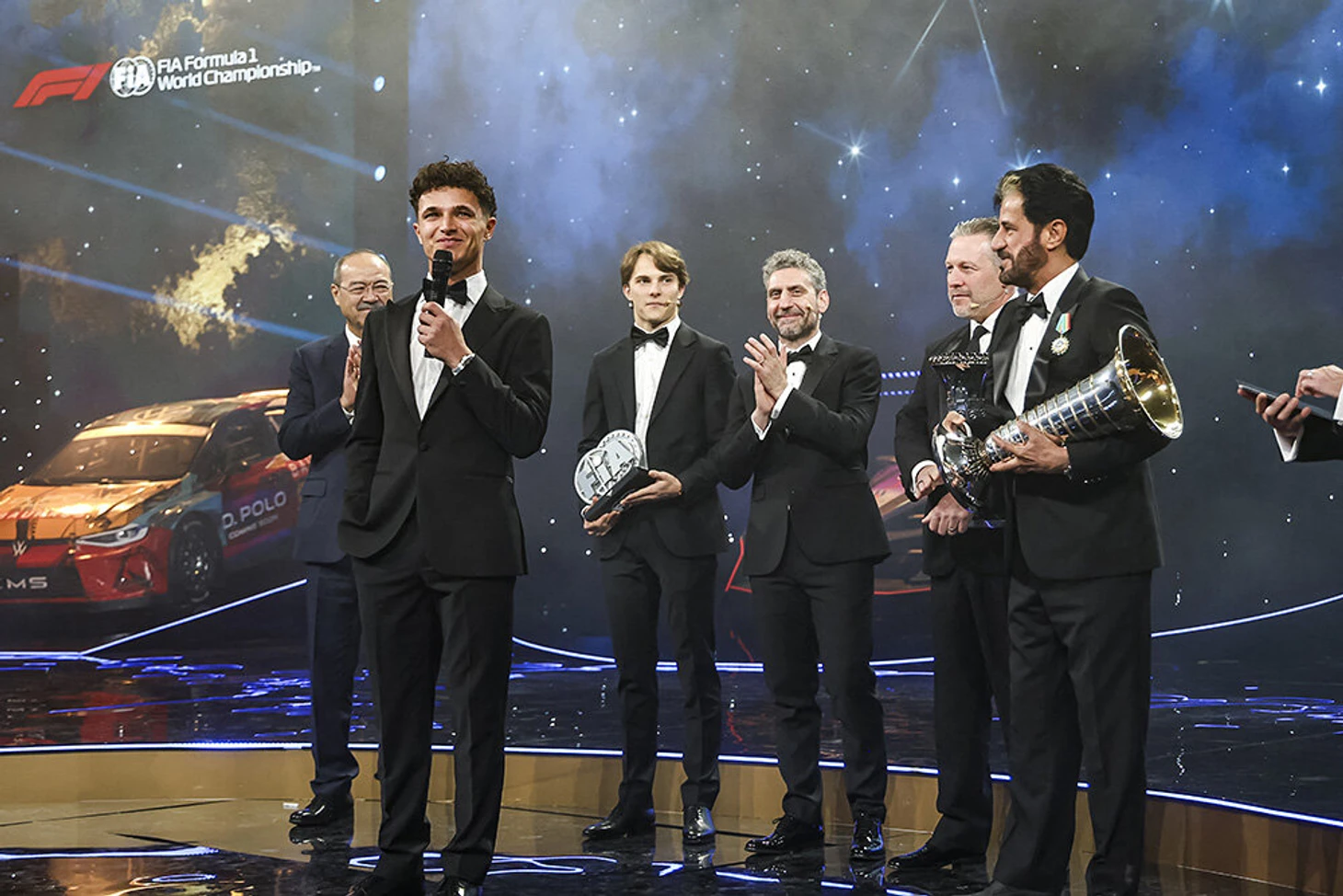
If Ferrari stood out on the “showcase” side, the sporting mood of the night largely belonged to McLaren. The team flew in with a sizable group, including leadership and partners, and Stefano Domenicali’s presence only strengthened the sense of a “Formula 1 summit” in a new location.
The picture was further shaped by Max Verstappen’s absence: he skipped the trip due to illness, limiting his participation to a message. As a result, McLaren figures dominated the stage, and the key awards turned into a steady stream of team applause. Lando Norris delivered a speech that was noticeably more candid than protocol usually allows—right down to a swear word that slipped out while describing the season’s challenges. Ben Sulayem responded by defusing the moment with a joke and, in a distinctly fatherly way, “grounding” the episode—a gesture that quickly spread across social media.
“Humo Arena”: A Hockey Palace Turned Motorsport Stage
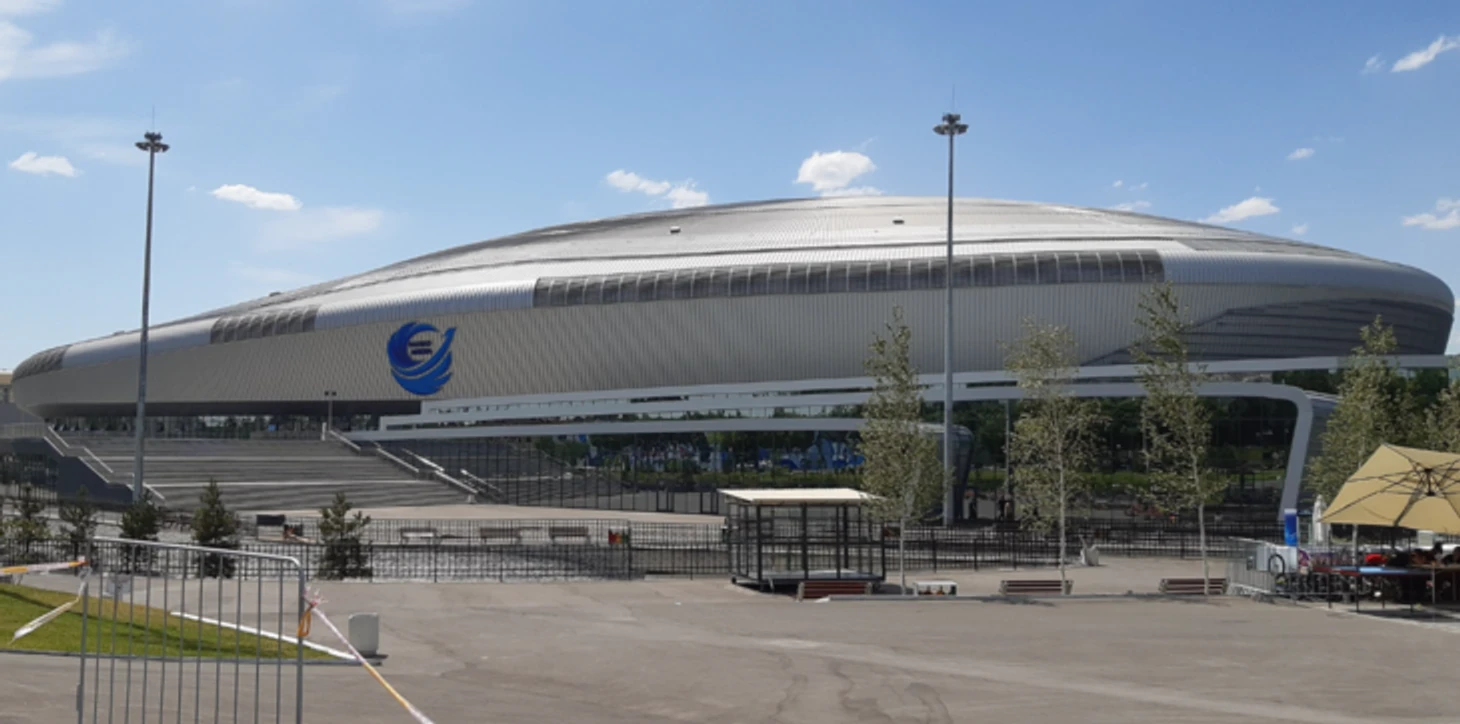
The venue itself also amplified the sense of novelty: the gala took place at “Humo Arena,” the region’s largest ice palace, normally home to hockey. The space was transformed for the ceremony, showcasing machinery and symbols from multiple FIA championships—from “Formula 1” to endurance series and rally disciplines.
Uzbekistan added a recognizable national pulse to the program: live traditional instruments, dance performances, and an Eastern accent in both décor and cuisine. Judging by reports and photos, the banquet was not a “check-the-box” reception, but a full display of hospitality—plov, meat, herbs, vegetables—everything you serve when you want to be remembered.
A Russian Footprint at the Ceremony: Contacts, Awards, and Practical Interest
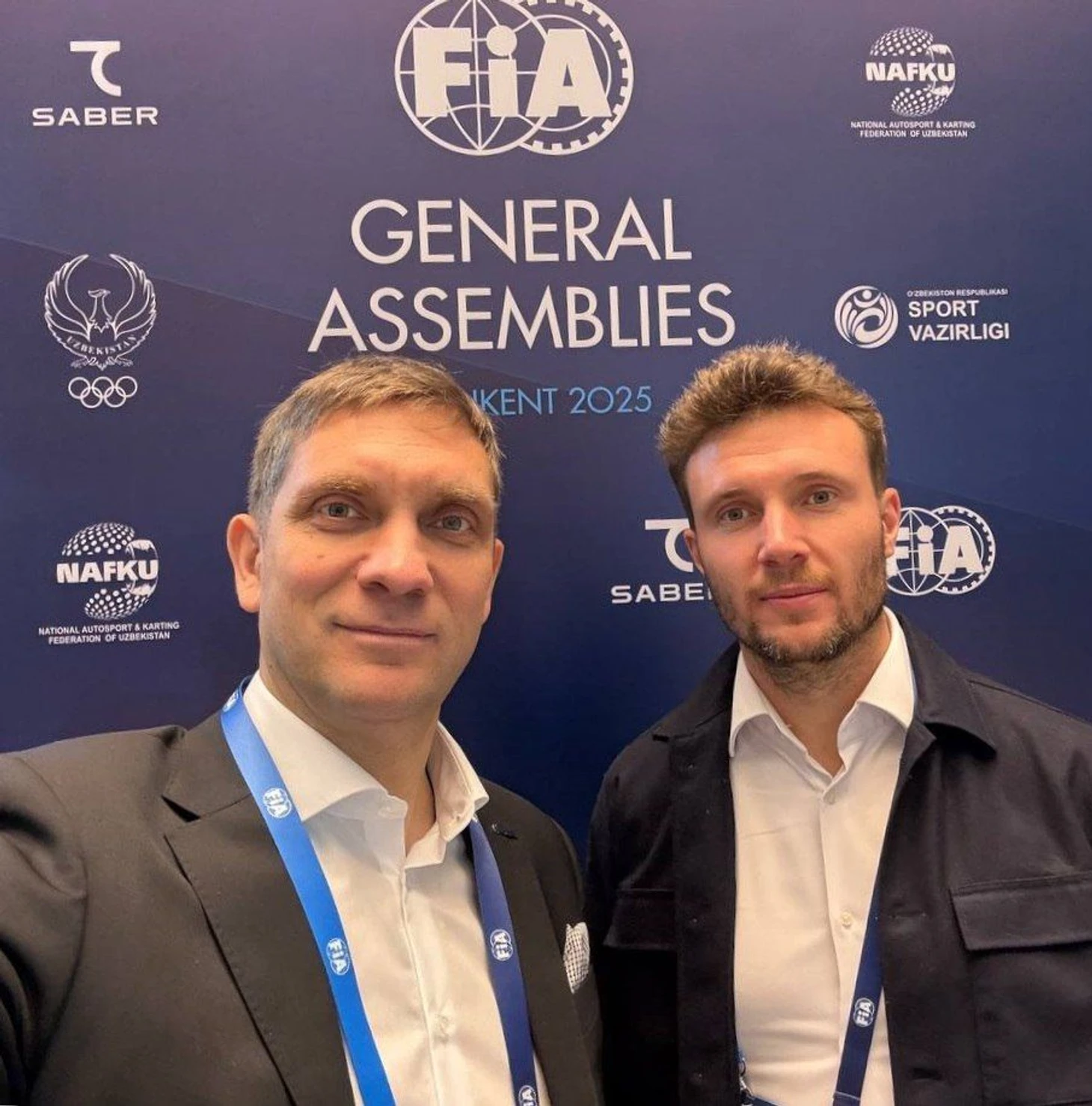
Despite recent restrictions, representatives from Russia also attended. Crews from disciplines outside the “formula” mainstream were highlighted separately: winners and podium finishers from cross-country categories and baja classes were among those recognized. At the same time, a world champion in one karting class was not included in the Tashkent ceremony—his award is scheduled for a separate date in Paris.
Among the more recognizable names were Vitaly Petrov and Sergey Sirotkin, both now working on the administrative side of motorsport. Their public comments were cautious—focused on meetings and potential cooperation. But the logic is clear: if the region genuinely starts investing in circuits, schools, competitions, and engineering programs, the experience of neighbors will be valuable—especially when the goal is not “glamour for one night,” but a long-distance project.