
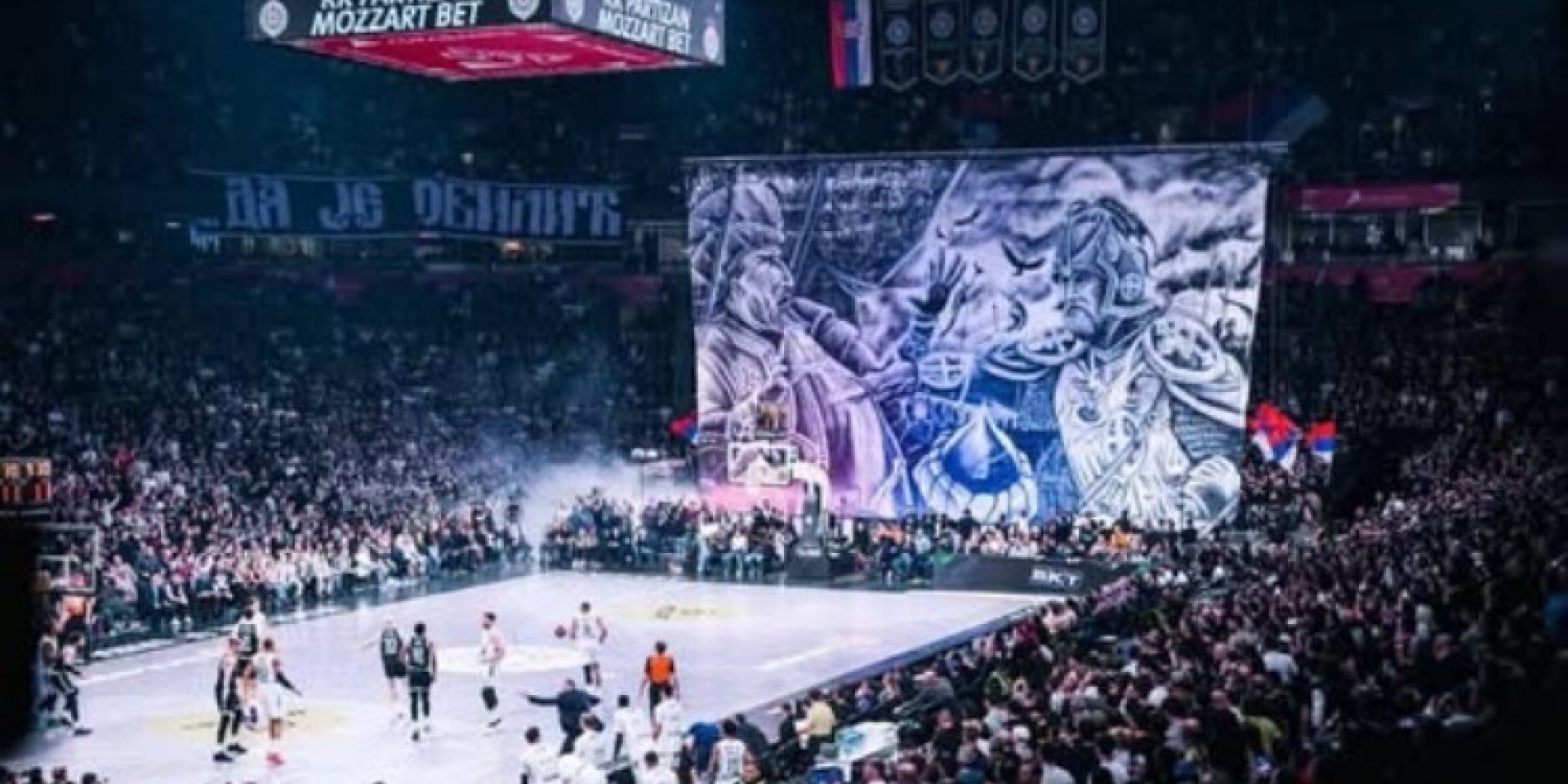
The fallout around the EuroLeague game between Partizan and Fenerbahce did not end with the score on the scoreboard. At the center of the scandal was a giant banner in the stands of the Belgrade arena depicting the moment of the death of Ottoman sultan Murad I at the hands of Serbian hero Milos Obilic in the Battle of Kosovo. For Serbian fans, this is a historical symbol; for the Turkish club, it is an outright provocation. The story quickly went beyond a purely sporting rivalry and reached the offices of the EuroLeague.
Historical Scene in the Belgrade Arena Stands
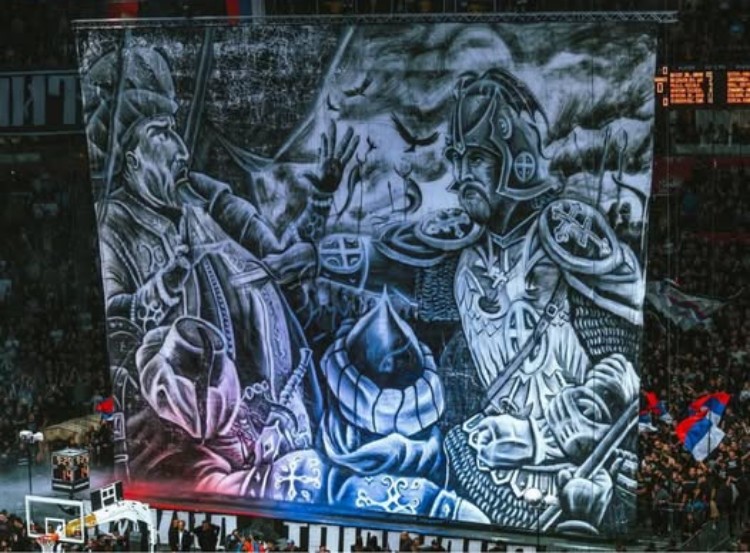
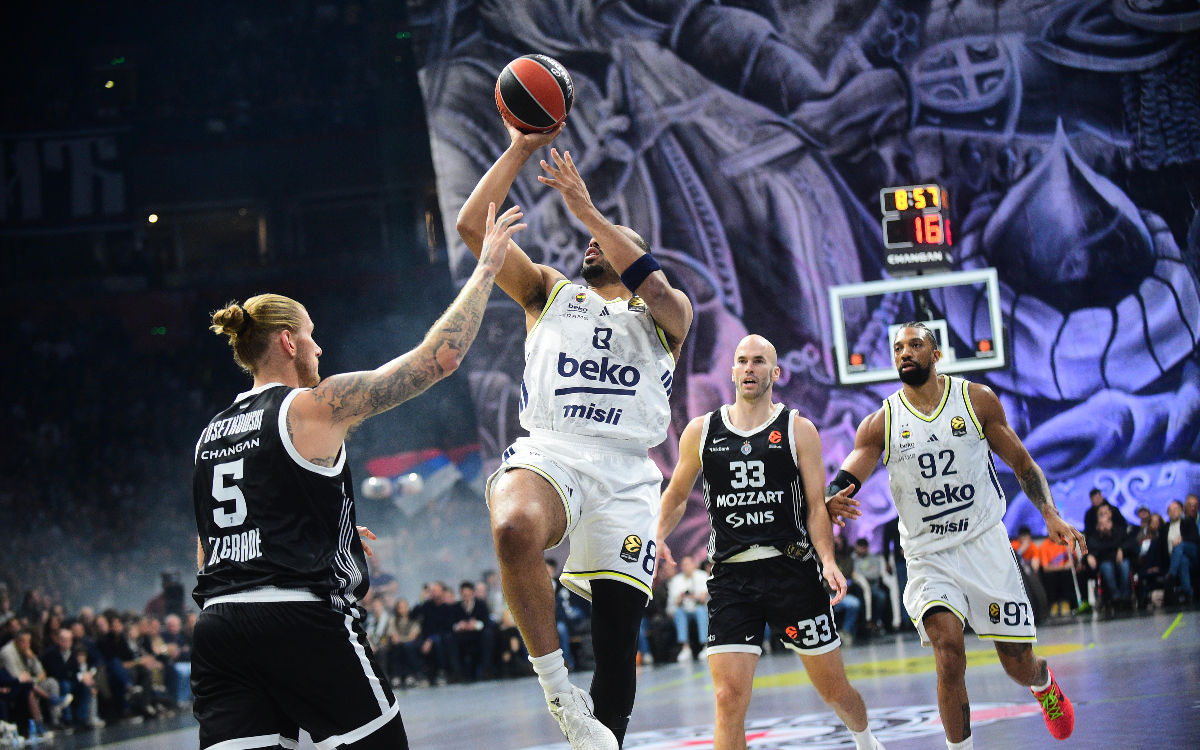
The meeting between Partizan and Fenerbahce in Belgrade began under a powerful visual display from the hosts. Above the Partizan supporters' section, a huge banner was unfurled showing a scene from a medieval battle on the Kosovo field: Milos Obilic delivering a fatal blow to sultan Murad I.
Such an image has an obvious historical and political context, especially for the Turkish side. That is why the appearance of the banner specifically in a game against a club from Turkey was perceived by Fenerbahce as a premeditated signal that went far beyond ordinary fan creativity.
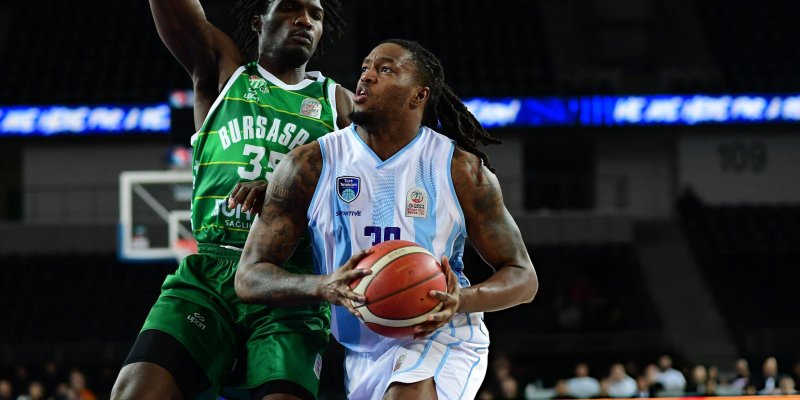
The game itself, meanwhile, went in favor of the visitors: Fenerbahce left Belgrade with a 99:87 victory. However, the result of the meeting was almost overshadowed by the discussion of what was happening not on the court, but in the stands.
Fenerbahce's Official Response: Protest and Firm Stance
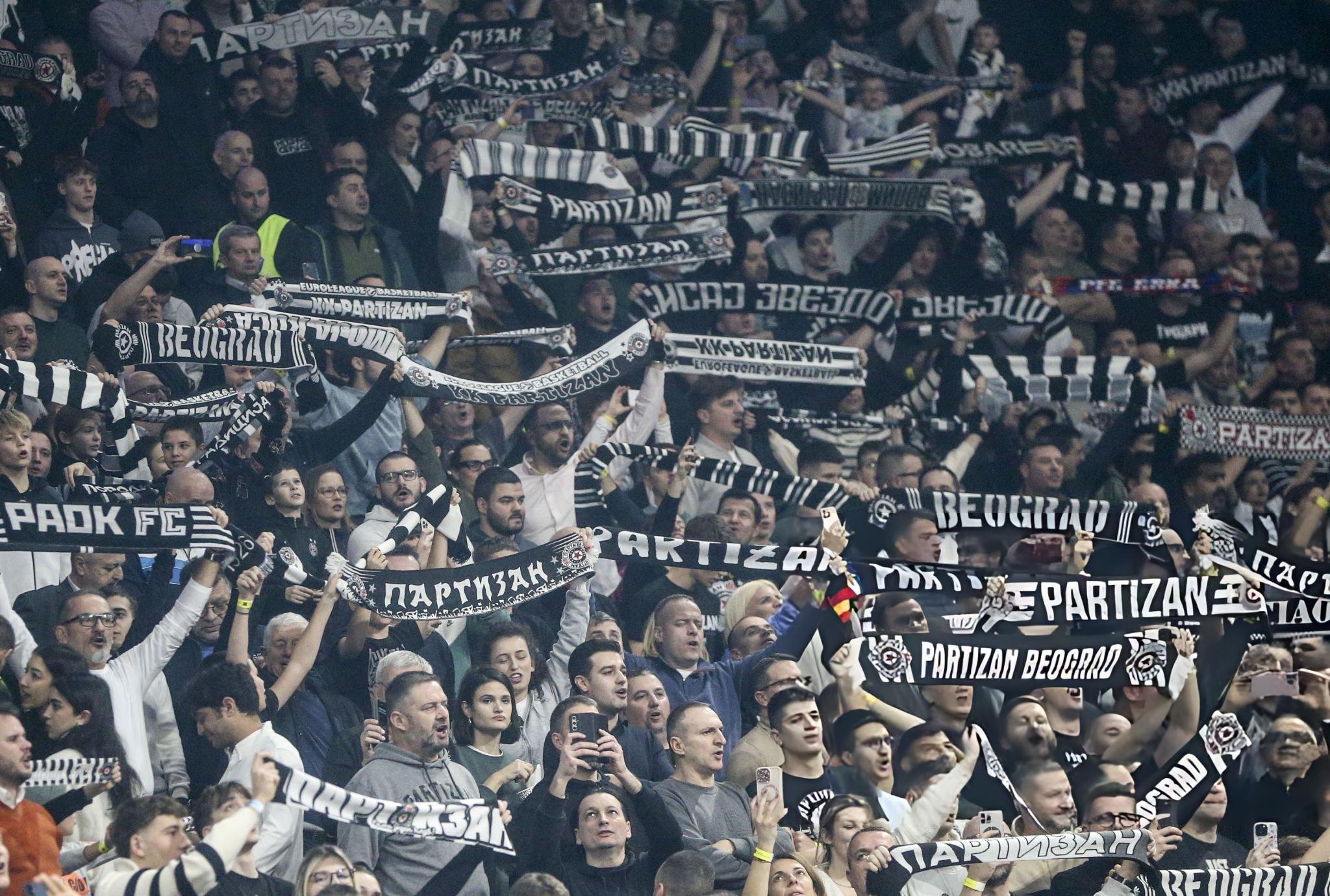
Representatives of the Istanbul club stated that the banner had been noticed already during the pregame practice. According to Fenerbahce basketball department manager Cem Ciritci, the Turkish delegation immediately approached the local officials and demanded that the provocative banner be removed.
The club's management filed a complaint with the local authorities even before the opening tip, but the permission for the banner to be displayed was not revoked, and it remained in the stands for the entire game. After the final buzzer, Fenerbahce representatives once again met with the organizers, demanded an explanation and announced their intention to submit an official protest to the relevant EuroLeague bodies.
At the same time, Ciritci emphasized that the most convincing response was given by the team on the court, winning the road game. The club also expressed the hope that in the return fixture Turkish fans would be able to show hospitality without crossing the boundaries of respect for their opponents.
EuroLeague's Decision: Fine and Conditional Sanctions
The EuroLeague governing bodies promptly reviewed the situation around the banner and classified it as provocative. Following the investigation, Partizan was punished with a fine of 40,000 euros.
However, the disciplinary action was not limited to a financial penalty. The Belgrade club also received conditional sanctions: in the event of repeated violations of this kind, it faces playing one home game with the arena capacity limited to 80%. In addition, the regulations provide for the possibility of closing certain sections, which would directly affect the atmosphere in the stands and the team's support in important games.
This step by the EuroLeague shows that the league intends to clamp down firmly on any manifestations that can be interpreted as political or historical provocations, even if formally they come in the form of fan displays in the stands.
Between Emotions and Regulations: The Limits of Fan Creativity
The story with the banner at the Partizan–Fenerbahce game once again raised the question of where the line lies between supporting one's team and actions that turn the arena into a stage for historical or political messages. For one side, such a performance may be a symbol of national memory; for the other, it may be perceived as a personal and collective insult.
With its decision, the EuroLeague made it clear that such actions will be assessed not only through the prism of fans' freedom of expression, but also through the lens of safety, respect and the inadmissibility of inciting hatred. Clubs, in turn, receive a clear signal: responsibility for what happens in the stands lies not only with the supporters but also with the game organizers themselves.
The conflict around the banner did not affect the outcome of the meeting in sporting terms, but it served as a reminder that even in a purely basketball matchup, history and emotions sometimes play no smaller role than a precise shot from beyond the arc or a well-executed pick-and-roll.