
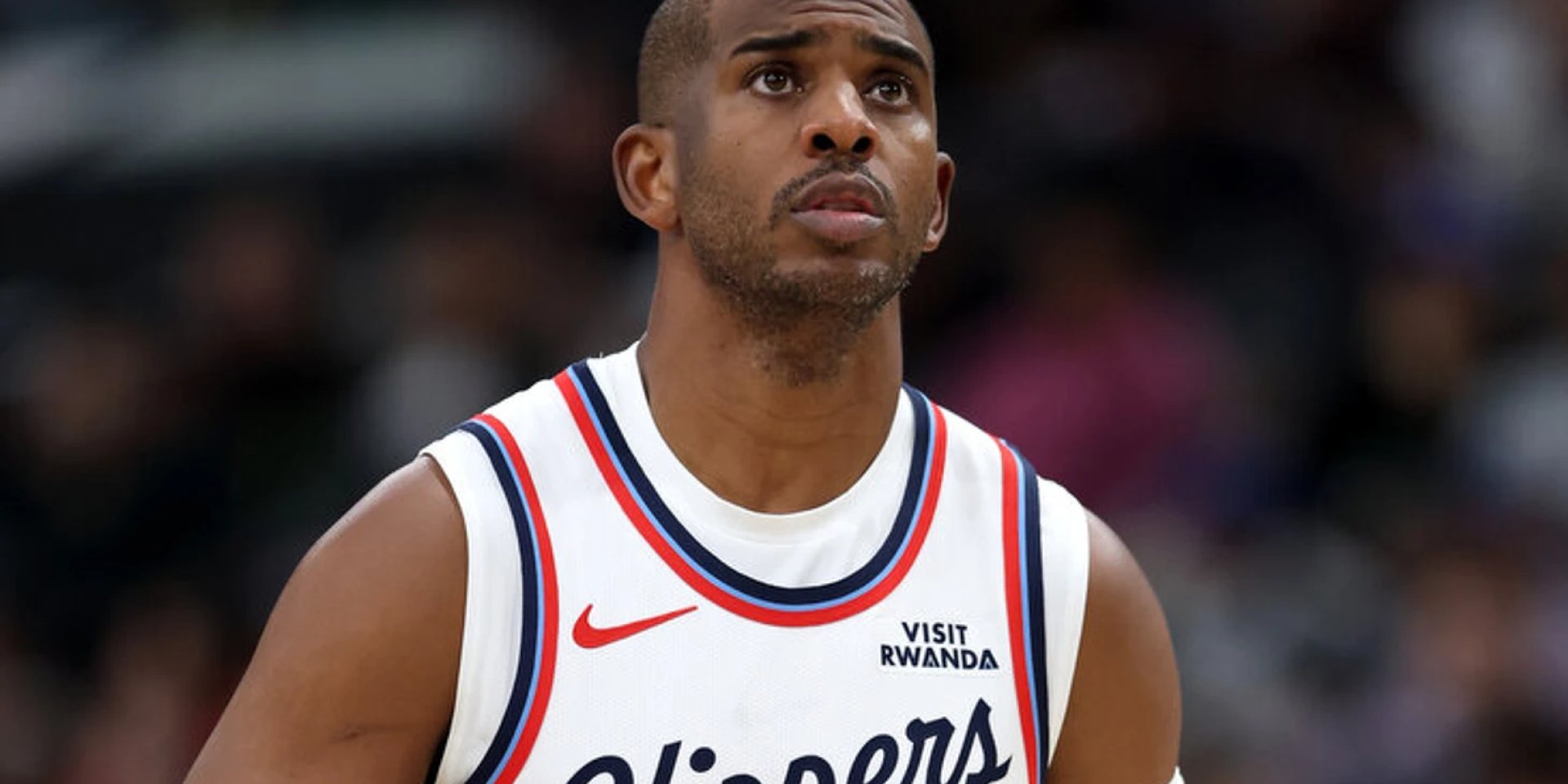
No one expected Chris Paul’s return to the Los Angeles Clippers to turn into such a short and rather painful chapter. It looked like the perfect script for a graceful end to his career: the veteran completes the circle, says goodbye to the fans in a new home arena, and quietly slips into history. Instead, the Clippers effectively showed their legend the door in the middle of a disastrous season, leaving far more questions than answers.
Star-Studded Roster, Collapsing Season
On paper, the 2025 Clippers look like a dream team. In the locker room they have a regular season MVP, a Finals MVP, NBA champions, Olympic and World Cup medalists. At least three likely future Hall of Famers and, taken together, dozens of All-Star Game selections. Add to that a head coach with a championship ring and an owner with an almost bottomless wallet.
Reality, however, is ruthless. Instead of fighting for a top-four seed in the West, they are stuck at the bottom of the standings. Preseason projections penciled the Clippers in for about 50 wins and a comfortable spot among the league’s top ten. In reality, they sit second from last in the conference with a 5–16 record, playing at the level of teams that aren’t taken seriously at all. The Clippers remain mired near the bottom with just two wins in their last 16 games, while even the much-mocked Dallas is slowly starting to climb its way up from the depths.
In such a chaotic setting, changes to the roster looked inevitable. Still, most people expected the first tremors to come from a failed trade, the coaching staff, or fringe rotation players — not from Chris Paul. Yet for the Clippers, Paul’s name was almost synonymous with a new era.
The Homecoming Story That Was Supposed to Be a Fairy Tale
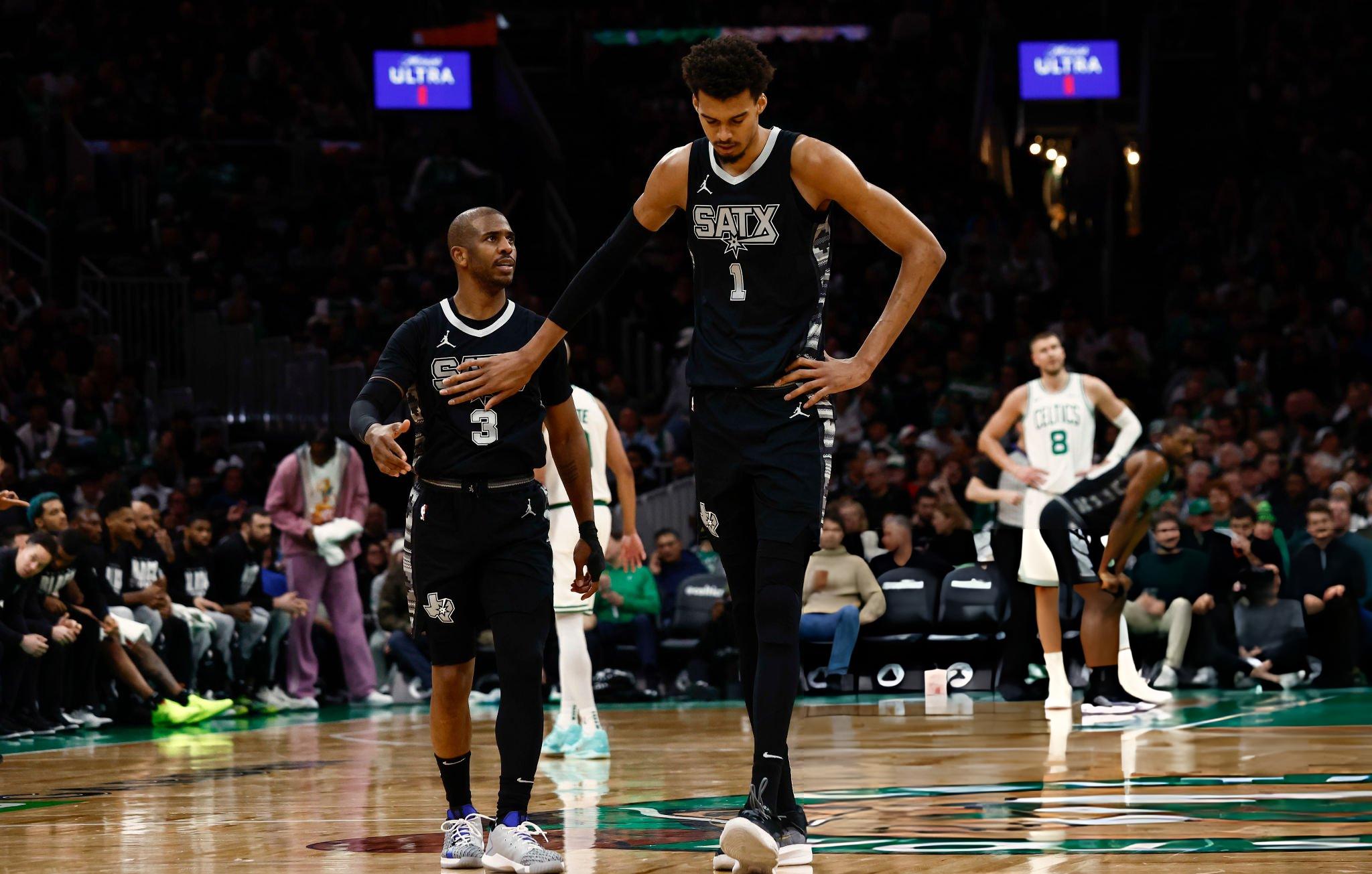
That summer, the 40-year-old point guard’s contract with the San Antonio Spurs expired. There he had been serving as a mentor to Victor Wembanyama, staying in the system even when the French big man ran into health issues and helping the franchise center adapt to the league and its new realities. The Spurs were happy with the veteran, but after De'Aaron Fox arrived and another guard, Dylan Harper, was taken in the draft, there was simply no longer a place in the rotation for Paul.
Even so, the market was far from closed for him: there was the option of joining the Charlotte Hornets in his home state; a return to the Phoenix Suns or a title chase with the Milwaukee Bucks was also being discussed. The media repeatedly mentioned the Portland Trail Blazers and Dallas Mavericks as possible destinations. But Chris made his priority crystal clear — he wanted to be as close as possible to his family and life in Los Angeles. The logic was simple: nothing is closer to Los Angeles than Los Angeles itself.
That is why a return to the Clippers looked like the perfect ending. Paul had been saying for some time that he would most likely play only one more season and then call it a career. And he wanted to put that final period exactly where he had enjoyed the most successful spell of his career. Another romantic detail was the new arena: during his first stint the Clippers had no such home. It seemed like a perfect stage — both symbolically and visually — for the farewell tour of the franchise’s undisputed greatest player.
When Paul joined the team in 2011, the organization was widely considered “cursed”: after moving to California, the club had reached the playoffs only four times in 33 years and had won just a single series. With Paul, they at least became a regular postseason participant. In each of his six seasons there, the Clippers made the playoffs, even though they never advanced beyond the second round. Lob City never managed to dethrone the Lakers as Los Angeles’s No. 1 team, but it was in that era that the Clippers stopped being the league’s punchline and became a legitimate competitor.
From Lob City to One Last Flight Out of LA
After leaving Los Angeles, a period of constant movement began: a strange partnership with James Harden in Houston, then stops in Oklahoma City, Phoenix, Golden State, and San Antonio. Paul’s entire career unfolded in the Western Conference, and it seemed perfectly logical that the final curtain would fall there too, among familiar walls.
Two weeks ago, Chris publicly announced that this season would definitely be his last. What he could not have known was that his final chapter in LA would be even shorter than he had imagined.
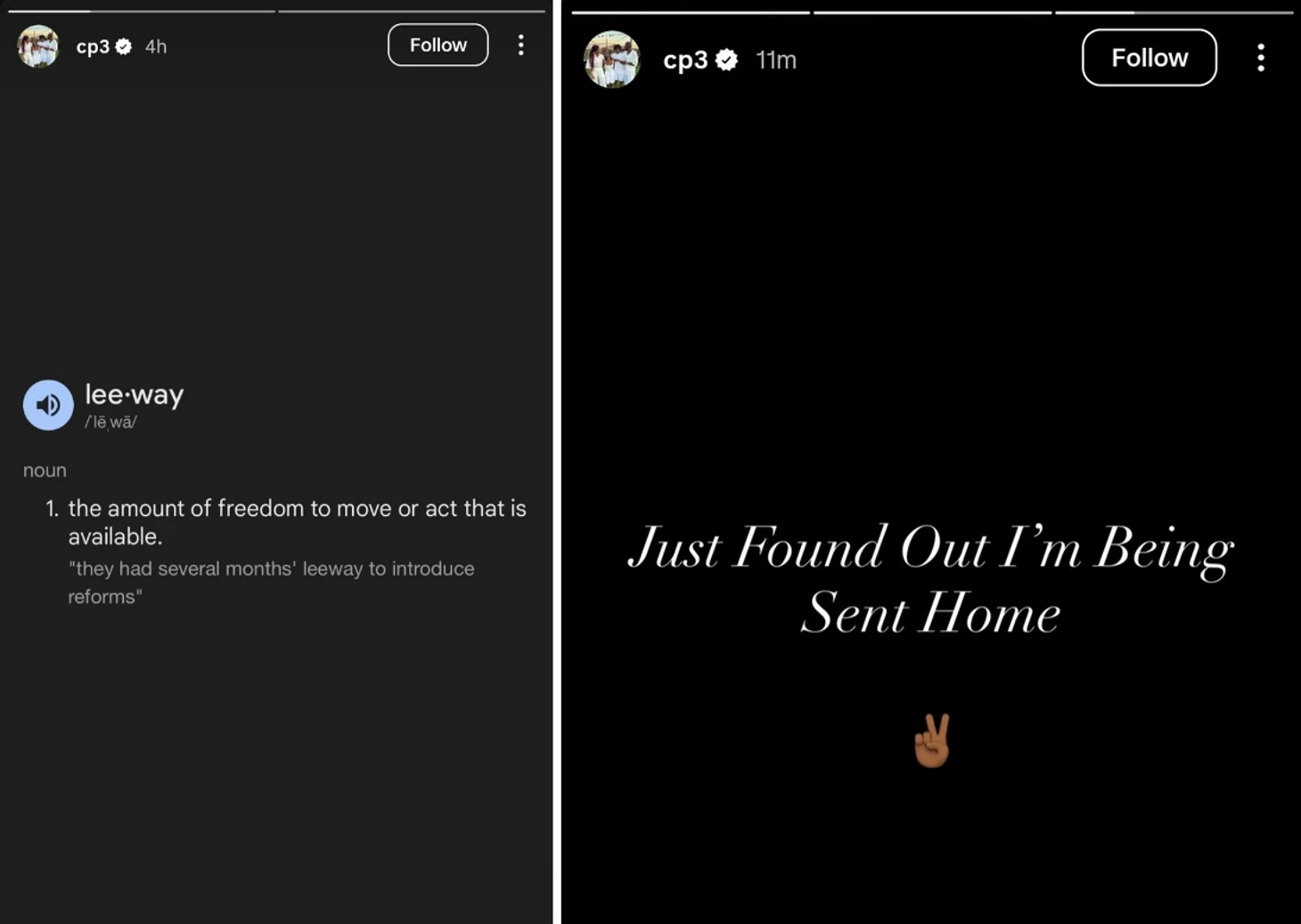
A few days ago, the point guard posted the word “leeway” on social media — a term that suggests “room to maneuver” or “freedom of action” — and it instantly triggered a wave of speculation among fans, commentators, and the press. In the meantime, the team suffered a couple more painful losses. Then, in the middle of a road trip and in the dead of night, another post appeared on a black background: “Just found out they’re sending me home.”
Reporter Chris Haynes, known for his inside information, quickly confirmed that this was not about an extra rest day, but about Paul’s de facto removal from the team. Shortly afterwards, the club released an official statement.
Official Language, Unofficial Signals
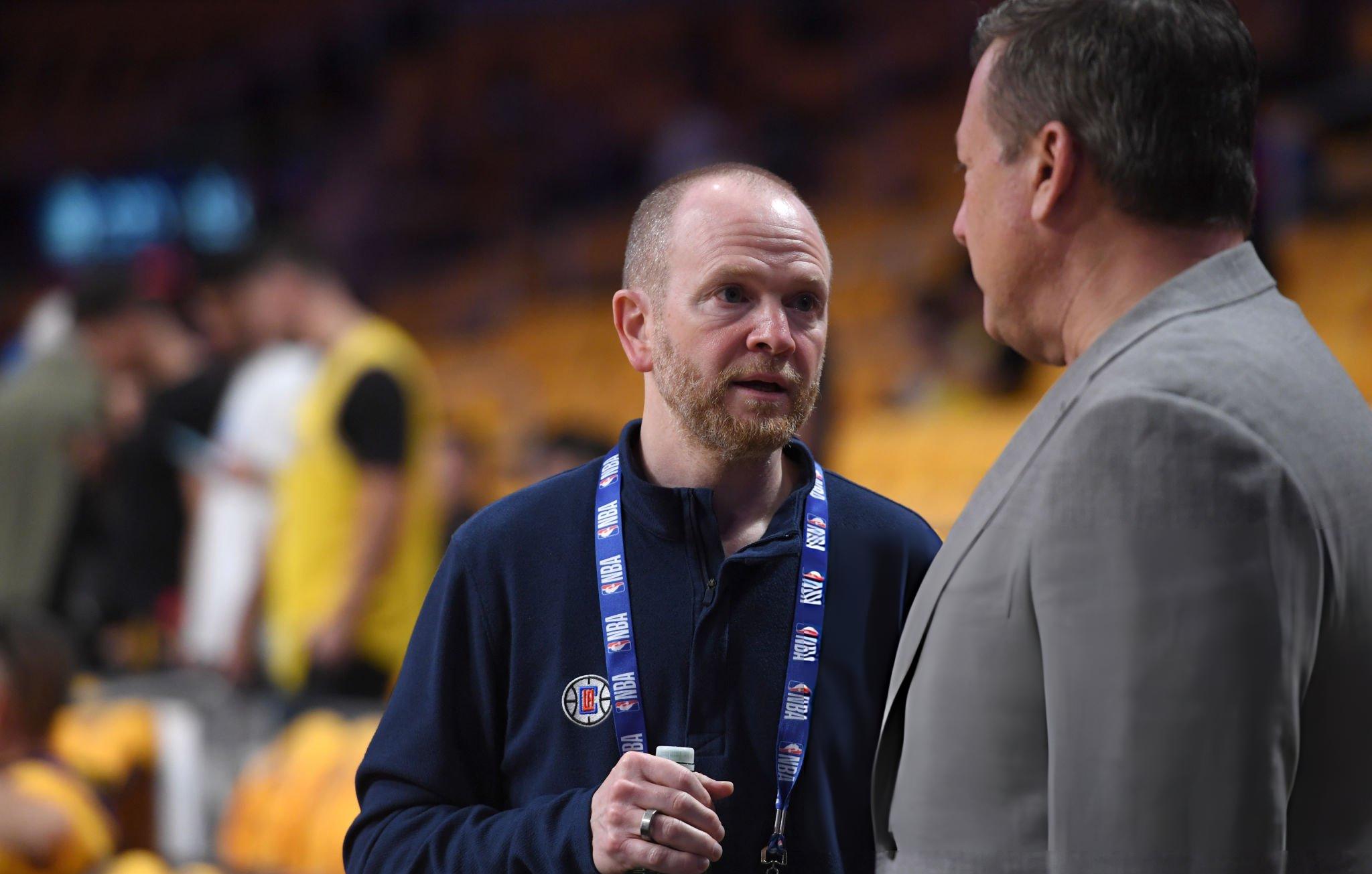
The Clippers announced that Chris Paul would no longer be part of the team and that the organization would discuss the next steps of his career with him. Club president Lawrence Frank stressed that Paul was not being blamed for the failed season and, on the contrary, said he was taking full responsibility for the results, adding that there were “many reasons” why the team had ended up in this situation. In its official tone, the statement was filled with gratitude for Paul’s impact on the club and respect for his status.
Behind those carefully chosen words, however, lies a very clear reality: the club no longer wants the veteran in the locker room or on the bench — not even in a symbolic leadership role.
Why Bring In a 40-Year-Old Point Guard at All?
If you look only at the raw numbers, Paul’s season appears painfully weak: barely about 14 minutes of playing time per game, 2.9 points, 3.3 assists, 32 percent shooting from the field, and not a single start. These are the stat lines of a veteran who already has one foot in another role — in the media, the front office, or on the coaching staff.
Yet from the outset he was not expected to serve as the primary point guard. The club’s concept was straightforward: Chris was supposed to be a mentor for the young players, a strong voice in the locker room, the face of the franchise at sponsor events, and a living bridge between the organization’s past and future. In other words, he was brought in as a “player–assistant coach” who was gradually transitioning into the next phase of his career.
The decision to bring him back was based far more on emotion and symbolism than on cold calculations. Fans gave Paul a rousing welcome, Bradley Beal surrendered the symbolic No. 3 jersey to him, and Tyronn Lue initially said he expected Paul to teach young players “how to be professionals,” to respect the ball, and to make the right decisions.
As the season wore on, the emphasis shifted. The coach openly admitted that Paul’s leadership off the court was becoming more important: his advice to the coaching staff, his work with players, and the outside perspective he provided on the game. Paul had been honestly told early on that he would not be playing in every single game, and he said publicly several times that he accepted this, that he would try to smile more often instead of wearing his usual serious game face, and that he would adapt to his new role.
But somewhere along the way, this construction started to crack.
Chris Paul: Leader, Lightning Rod, Uncomfortable Symbol
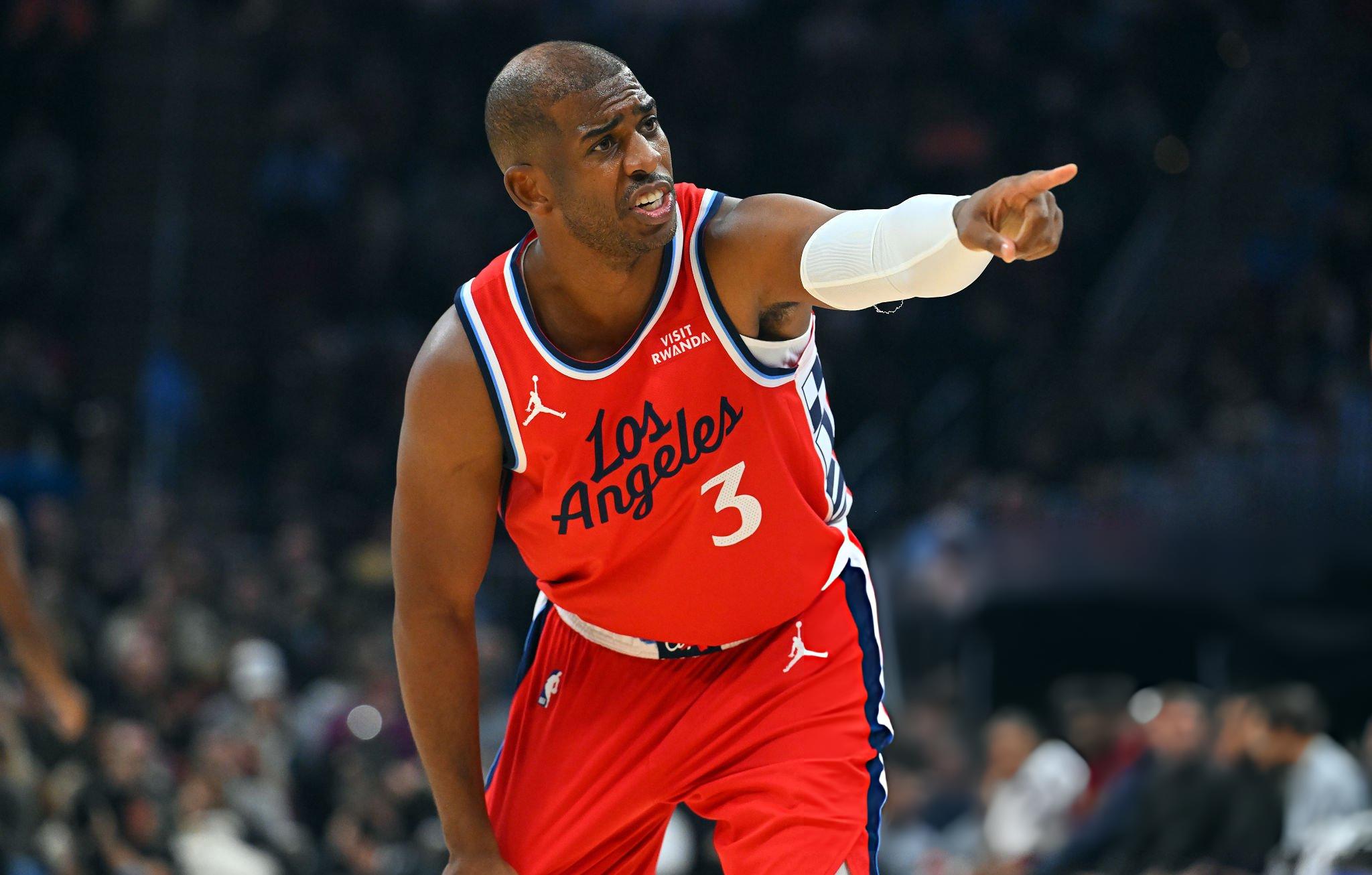
Paul has always been known as a complicated character. His stubbornness, basketball IQ, and extremely high standards for those around him made him a perfect profile to head the Players Association and a coveted veteran for well-run organizations like San Antonio or Golden State. At the same time, that very combination set the stage for conflicts with coaches, teammates, and management over the years.
A coach might feel his authority is being undermined. Young players might feel that the pressure he places on them is reminiscent of old stories about Michael Jordan, except without the championship rings to balance it out, which makes that pressure feel even heavier. Management, for its part, constantly has to rethink how to defuse the tension centered around one single figure.
Against the backdrop of the chaos of the 2025 season, a rattled Clippers organization seems to have decided that Paul was the easiest variable to remove from the equation. Not because he was the main reason for the losses, but because he was the most visible source of discomfort in the locker room.
The Clippers’ Problems: Paul Is on the List, but Not at the Top
Dumping everything on Chris would be a far too simplistic approach. The crisis in the Clippers is systemic, and it can be roughly described as follows:
- The team’s nominal leader, Kawhi Leonard, misses nearly half of the games and cannot regain consistent form.
- The organization is still under the shadow of an investigation by the league and tax authorities into alleged under-the-table payments used to circumvent the salary cap.
- James Harden alternates between MVP-caliber performances and games in which he looks like a tired mall Santa roaming around after the holidays.
- The team defense is among the worst in the league: broken pick-and-roll coverages, late help, low intensity, and a lack of focus.
- It increasingly feels like Tyronn Lue has lost control of the locker room — the structure of the game is falling apart, and his messages are no longer reaching the stars as clearly as before.
- Bradley Beal’s contract looks like an outright disaster: six lackluster games, a serious injury, and a $5 million payout for a player who will not see the floor again this season.
- The team spent its most important salary-cap exception on Beal — one of the main tools it had for improving the roster.
- Brook Lopez, who was brought in at the cost of flexibility, now spends almost all of his time glued to the bench.
- The big summer trade has also failed to pay off: Norman Powell is shining in a surprisingly good Miami, while John Collins looks like a contract the team will soon try to flip.
- And perhaps the most unpleasant part: the Clippers do not have valuable draft capital in the near future. Their 2026 first-round pick already belongs to Oklahoma City, and a number of their future picks have also been shipped out to other teams.
This list could go on, but even in its current form it makes one obvious conclusion clear: sending Paul out of the locker room will not solve the underlying problems. It’s merely an attempt to turn down the loudest alarm.
Last Page of a Career, or Just Another Plot Twist?
According to some scenarios, the first person to run out of patience was actually Chris himself: he grew tired of meaningless losses, openly voiced everything he thought about the front office, the coaching staff, and his star teammates, and only after that did the club decide that giving up on the veteran would be easier than restructuring everything around the stars.
Officially, Paul is still on the roster and his contract cannot be traded until December 15. After that date, the Clippers’ front office will undoubtedly attempt to turn his deal into at least some kind of trade asset. The chances of Chris ever putting on a Clippers jersey again, however, appear very slim.
Will he continue his NBA career elsewhere, looking for one last season with a different team? Time will tell. It also remains unclear whether this breakup will become the starting point of a broader rebuild: will Harden or Kawhi be put on the trade block, will Lue or Frank be dismissed, will there be a sweeping overhaul of the front office?
For now, only one thing is absolutely obvious: the fairy tale of the legend’s homecoming never came true. Instead of a tribute video, a wave of applause, and a grand farewell, Chris Paul gets a brief press release dropped at midnight and a “ticket home” in the middle of a road trip. For a club that once again struggles to handle its own history, it is a very fitting, very Clippers kind of ending.