
In MMA, sport, showmanship and business have long been intertwined, but the alliance between Khabib Nurmagomedov and Pavel Durov has taken this mix to a new level. The UFC legend and the creator of the region’s biggest messenger needed only a couple of days to turn a traditional Dagestani headdress into a digital collectible that fans snapped up for several million dollars. Let’s unpack how a tech guy everyone expected to see in the server room suddenly ended up by the cage, and how Khabib’s team found itself at the center of a new media market.
Telegram Founder by the UFC Cage: A Meeting in Abu Dhabi

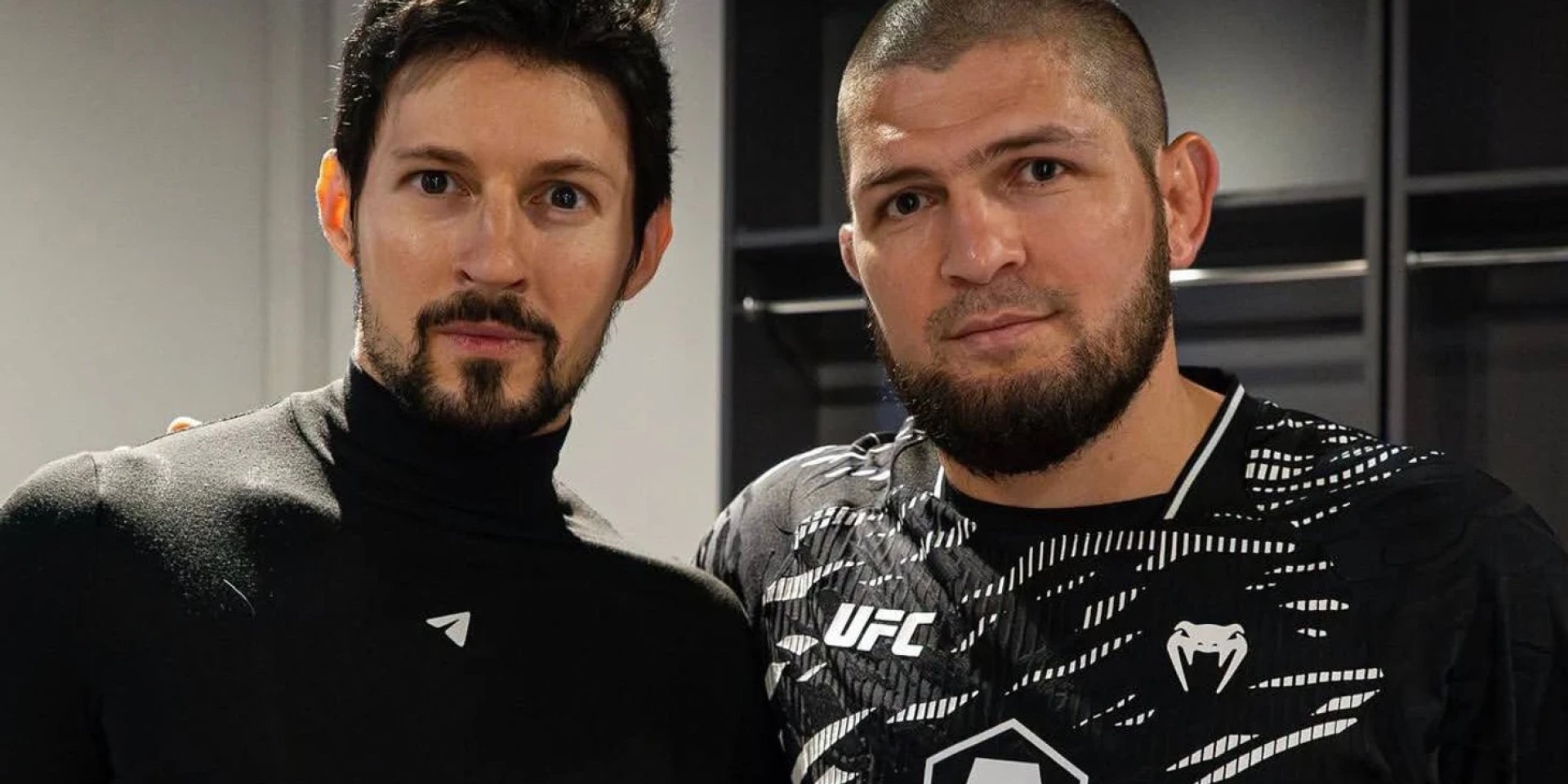
On October 25, at UFC 321 in Abu Dhabi, spectators spotted an unexpected guest in the front row – Pavel Durov. Until then, the Telegram founder had never really been seen around the Octagon and had not publicly declared any special love for MMA. In Abu Dhabi he posed for photos with streamer Buster, Petr Yan, Khabib Nurmagomedov and other Russian stars.
Khabib came to the event as a cornerman, there to support his cousin Umar Nurmagomedov and middleweight Ikram Aliskerov. After the show he posted a joint photo with Durov, thanking him for the support, and later admitted that he had been the one to invite Pavel to the tournament and had already managed to sign a contract with Telegram by that point.
According to Nurmagomedov, before the meeting he expected to see a “closed-off IT guy”, but instead he got a lively, sociable conversationalist: they had lunch together, talked for a long time and sketched out a “major joint project”, the details of which Khabib is still keeping in the shadows.
Khabib’s Return to the Media Space Through His Own Channel
Two days before UFC 321, Nurmagomedov quietly, without any fanfare, launched his personal Telegram channel. It looked almost like a mini-sensation: in recent months Khabib had rarely updated Instagram* and had practically stopped giving interviews.
On Telegram, though, he immediately switched into full athlete mode: he began posting regularly, sharing his thoughts, behind-the-scenes moments and even running a small poll asking the audience what kind of content they wanted to see more often. He pinned the channel link in his Instagram profile, effectively redirecting part of his traffic to his new media platform.
The whole team quickly followed: Islam Makhachev, Magomed Zaynukov, Umar and Usman Nurmagomedov. They already had Telegram channels, but they were barely alive: some would post rare religious quotes, others would share the occasional travel photo, and some remained silent for months.
Fighters Who Turned Into Bloggers
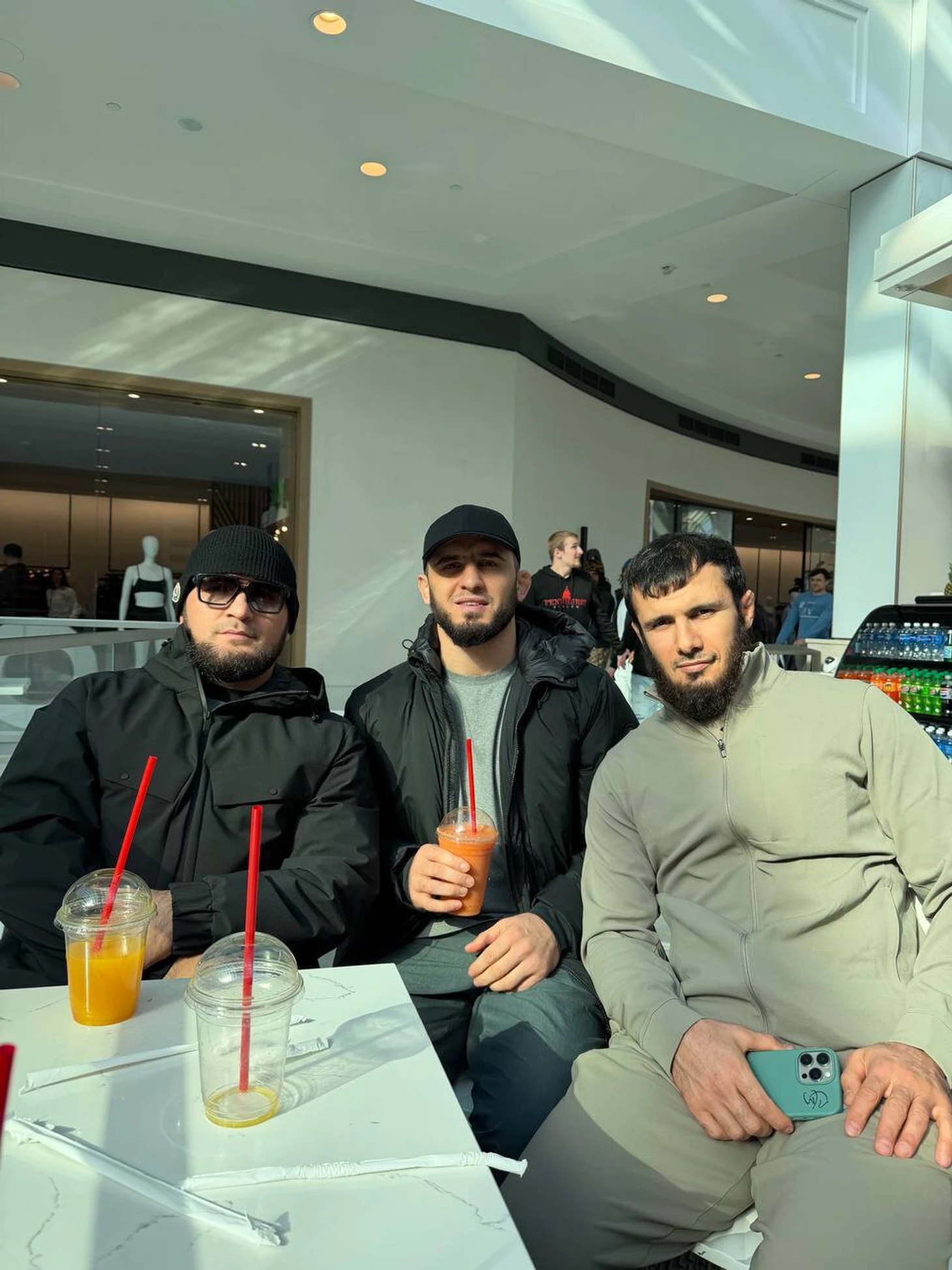
From late October the picture changed dramatically. Almost all of “Khabib’s army” started running their Telegram channels the way lifestyle bloggers do: posts come out almost daily, with lots of live formats – selfies, circular video messages, short clips shot right in the gym, on the plane or at home.
The key difference is the complete absence of that “press release” feeling. The texts and videos do not look like the work of a PR team; they feel like personal notes from fighters sharing their training, emotions, everyday life and what happens “between rounds” of their careers. As a result, Nurmagomedov’s team has become one of the most open in Russian MMA, while simultaneously building an ideal foundation for future collaborations.
Partnership Teasers and the “Send Me Location” Meme
At the same time, fans were waiting to see when Telegram would add gifts and collectible items tied to Khabib, similar to what had been done with other celebrities. On November 15, Durov announced the launch of an auction inside the messenger where users would be able to buy and sell digital gifts. Even earlier, clients using the beta version had noticed traces of this feature being rolled out.
A month after UFC 321, Khabib and Durov once again reminded everyone of their partnership. Nurmagomedov publicly addressed Pavel, saying he often saw him in the gym and that it was time to come out on the mat with the “brotherhood” and have a training session together. Durov’s reply instantly went viral as a meme: “Send me the location, brother” – a clear echo of the legendary “Send me location” line.
Whether it will ever get as far as a real sparring session is unknown; unlike Mark Zuckerberg, Durov has never talked about doing combat training. But as a PR hook, the move worked perfectly. Shortly beforehand, Khabib had already posed in a T-shirt with the Telegram logo and the slogan “Let’s make Telegram great again”, hinting that filming was ongoing and that an announcement was coming soon.
The Virtual Papakha Auction: One Day of Sales and 29,000 Purchases

The culmination of the collaboration was an auction of Khabib’s virtual papakhas on Telegram. It started on November 22 and wrapped up in the evening of the 23rd. Durov presented the collection as digital collectible items symbolizing “Tradition, Freedom and Respect”.
The line-up included 40 different versions of virtual papakhas with varying levels of rarity and design. The average price was about 10,100 Stars, Telegram’s internal currency, which works out to roughly $200. In just 24 hours, fans bought around 29,000 of these digital papakhas, and the total volume exceeded $4 million.
In essence, they turned the classic symbol of a Dagestani fighter into a digital asset: it doesn’t keep your head warm and it doesn’t sit on a shelf, but it allows fans to signal that they belong to “Khabib’s camp” inside the messenger’s ecosystem.
MMA in the Era of Messengers: When Symbols Become Digital Assets

The story of the virtual papakhas is not just a one-off campaign with a big number in the report. It shows how the economics of sport are changing: fighters are turning into media platforms in their own right, and messengers are becoming arenas where not only fights, but also symbols, values and lifestyles are monetized.
Khabib and Durov have done something that a few years ago would have sounded like a strange fantasy: they combined the traditional image of a Caucasian fighter, the global UFC brand and Telegram’s digital infrastructure into a single product that fans are willing to buy tens of thousands of times. And judging by how quickly Nurmagomedov’s team is embracing the role of bloggers, this virtual papakha is far from the final round of their shared game.