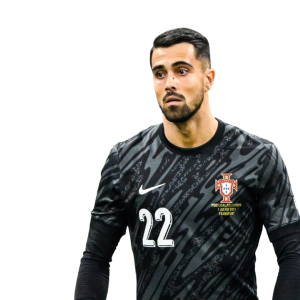
| Age | 37 years |
| Date of birth | October 7, 1988 |
| Height, weight | 186-188 cm, about 86 kg |
| Place of birth | Lagarto, Sergipe, Brazil |
| Citizenship | Brazil, Spain |
| Position | centre forward |
| Club | retired |
| Preferred foot | right |
Biography of Diego Costa
Diego da Silva Costa was born on October 7, 1988, in Lagarto, Brazil. His father named him after Diego Maradona, and his older brother after Jairzinho. Costa’s childhood was far from major football centers, so his early professional path was not obvious. As a teenager, he moved to São Paulo, worked in his uncle’s shop, and only there began to take football more seriously. Later, Costa opened an academy in his hometown and financed it himself.
Costa moved to Europe in 2006 through Jorge Mendes — first to Braga, then through a series of loans to Penafiel, Celta, and Albacete. Even early in his career, he stood out for his strength, stubbornness, and confrontational temperament. At Real Valladolid, he delivered his first truly notable top-flight season, after which he firmly entered Atlético Madrid’s orbit.
The turning point in Diego Costa’s career came at Atlético under Diego Simeone. Initially a physical secondary striker, he evolved into the team’s attacking leader. In the 2013–2014 season, Costa had the best spell of his career:
- 36 goals in all competitions
- 27 goals in La Liga
- 8 goals in the Champions League
He helped Atlético win La Liga for the first time since 1996 and reach the Champions League final.
In the summer of 2014, Costa joined Chelsea, where he quickly became the key striker under José Mourinho. In his debut season, he scored 20 Premier League goals and helped the club win:
- the Premier League
- the League Cup
In the second title-winning season under Antonio Conte, he again scored 20 league goals and played a crucial role in securing another championship. For Chelsea, Costa made 120 appearances and scored 59 goals.
After a conflict with Conte, the striker returned to Atlético. His second spell was less productive but still successful in terms of trophies:
- Europa League 2017–2018
- UEFA Super Cup 2018
- another La Liga title
In total, he recorded 216 appearances and 83 goals for Atlético.
The final stage of Diego Costa’s career came without his previous European superstar status but still included notable moments. He:
- won the Brazilian league and cup with Atlético Mineiro
- played a season at Wolverhampton
- had a spell at Botafogo
- in 2024, made 27 appearances for Grêmio, scoring 8 goals and providing 5 assists
His last official match was on December 8, 2024, and in February 2026, Costa officially announced his retirement.
At international level, his career was unusual:
- 2 matches for Brazil (2013)
- switch of sporting nationality
- 24 matches and 10 goals for Spain
- played in the 2014 and 2018 World Cups
Personal life of Diego Costa
Diego Costa grew up in a poor family, and his path to professional football was far from straightforward. Before moving to Europe, he was not considered a typical academy product — rather, he was a street footballer who advanced through determination and character.
He remains closely connected to his home region of Sergipe. One of his most notable off-field projects is his football academy in Lagarto, which he funded himself.
Additional facts:
- a longtime Palmeiras supporter
- known for his direct and tough personality
- lived in Madrid after retirement
- served as an Atlético ambassador at the 2025 Club World Cup
Interesting facts about Diego Costa
- his father named him after Diego Maradona
- he started from street football
- in 2006, he had a trial at Dynamo Moscow
- in the 2013–2014 season, he was one of Europe’s most dominant strikers
- scored 7 goals in his first 4 Premier League matches
- represented two national teams — Brazil and Spain
- in 2024, became top scorer of the Campeonato Gaúcho
Statistics of Diego Costa
Overall club statistics
| Club | Matches | Goals |
|---|---|---|
| Penafiel | 14 | 5 |
| Braga | 9 | 1 |
| Celta | 31 | 6 |
| Albacete | 36 | 10 |
| Real Valladolid | 36 | 9 |
| Atlético Madrid | 216 | 83 |
| Rayo Vallecano | 16 | 10 |
| Chelsea | 120 | 59 |
| Atlético Mineiro | 19 | 5 |
| Wolverhampton | 25 | 1 |
| Botafogo | 15 | 3 |
| Grêmio | 26 | 8 |
| Total | 561 | 200 |
Peak seasons
| Season | Club | Matches | Goals | Comment |
|---|---|---|---|---|
| 2013-2014 | Atlético Madrid | 52 | 36 | La Liga champion, UCL finalist |
| 2014-2015 | Chelsea | 37 | 21 | Premier League champion |
| 2016-2017 | Chelsea | 42 | 22 | second EPL title |
| 2012-2013 | Atlético Madrid | 44 | 20 | Copa del Rey winner |
| 2024 | Grêmio | 26 | 8 | top scorer |
National team statistics
| National team | Matches | Goals |
|---|---|---|
| Brazil | 2 | 0 |
| Spain | 24 | 10 |
| Total | 26 | 10 |
Spain stats by year
| Year | Matches | Goals |
|---|---|---|
| 2014 | 7 | 1 |
| 2015 | 3 | 0 |
| 2016 | 4 | 3 |
| 2017 | 2 | 2 |
| 2018 | 8 | 4 |
| Total | 24 | 10 |
Scandals involving Diego Costa
Diego Costa is one of the most controversial strikers of his generation, not because of off-field issues, but due to his behavior on the pitch. His career was marked by:
- provocations
- conflicts
- suspensions
- aggressive conduct
In England, the most notable incidents included:
- 2015 — suspension after an incident with Emre Can
- clashes with Koscielny and Gabriel (Arsenal)
- red card vs Everton and the alleged biting controversy
In Spain:
- 2012 — 4-match ban (headbutt incident)
- 2018 — red card after goal celebration
- 2019 — 8-match ban for insulting a referee
Conflict with Antonio Conte:
- 2017 — informed via text message he was no longer needed
- public criticism of the club
- forced exit from Chelsea
At the same time, his aggression was part of his effectiveness — he:
- pressured defenders
- disrupted the rhythm of matches
- dragged opponents into physical battles
For some, he was a “dirty” striker; for others, the perfect warrior who defined Simeone’s Atlético and Chelsea’s title-winning sides.