
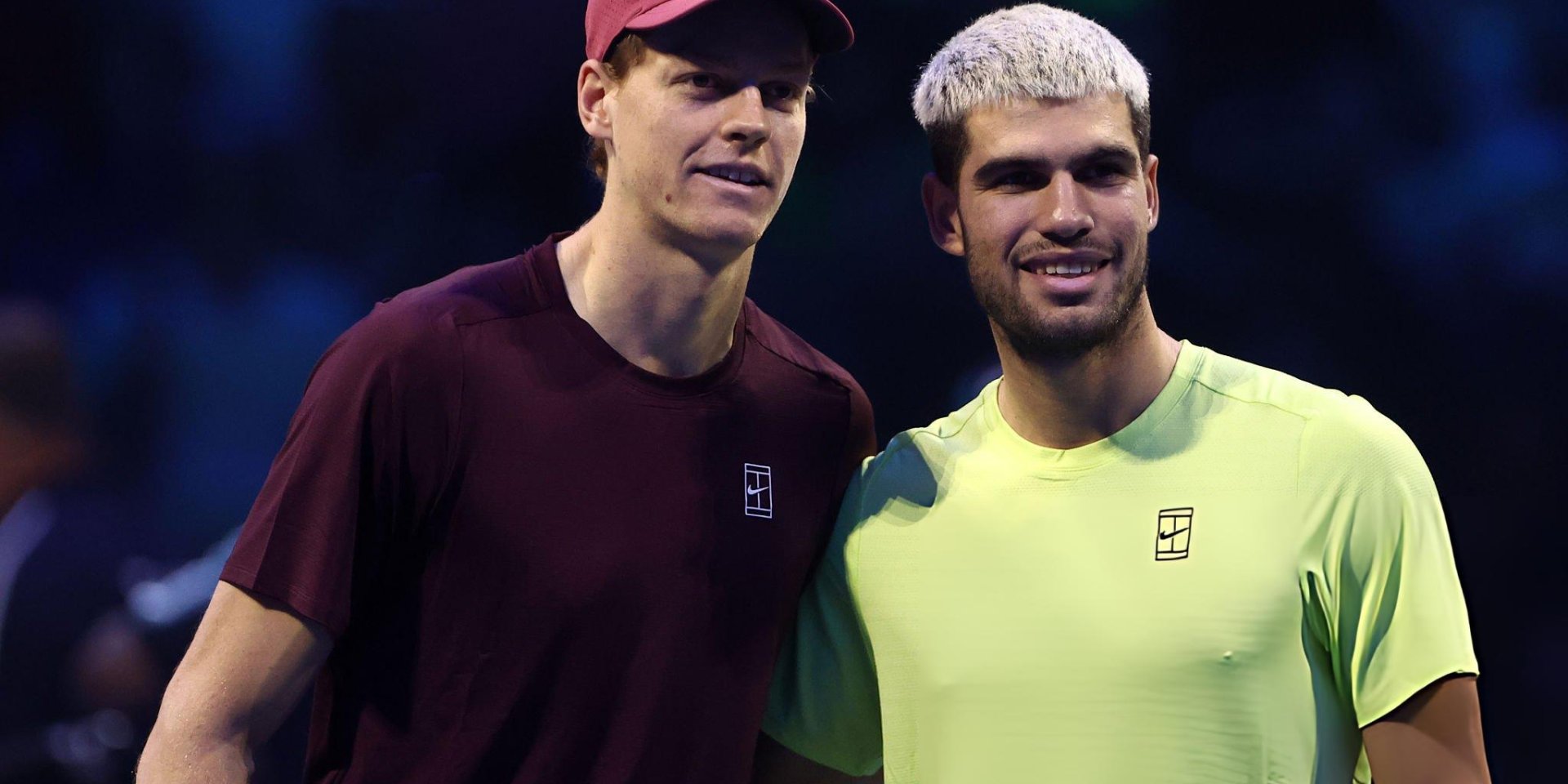
Carlos Alcaraz and Jannik Sinner already look like the duo that will define men's tennis for the coming years. Their dominance is so great that the gap between Sinner, ranked No. 2, and Alexander Zverev, who is No. 3, is bigger than the gap between Zverev and the last player in the rankings. Against this backdrop, the only major exception over the past two seasons has been Andrey Rublev's victory at the 2024 Madrid Masters, where he managed to leave both the Spaniard and the Italian behind and lift the trophy. But Alcaraz himself is already warning that next season could reshape the landscape, and a new player may appear on the horizon, burst into the race, and start winning. The only question is who exactly is ready to mount a genuine challenge to the “Sincaras” duo.
The New Wave: Those Who Are Still Under Twenty
The most obvious answer lies within the generation whose passports still look almost like they belong to juniors.
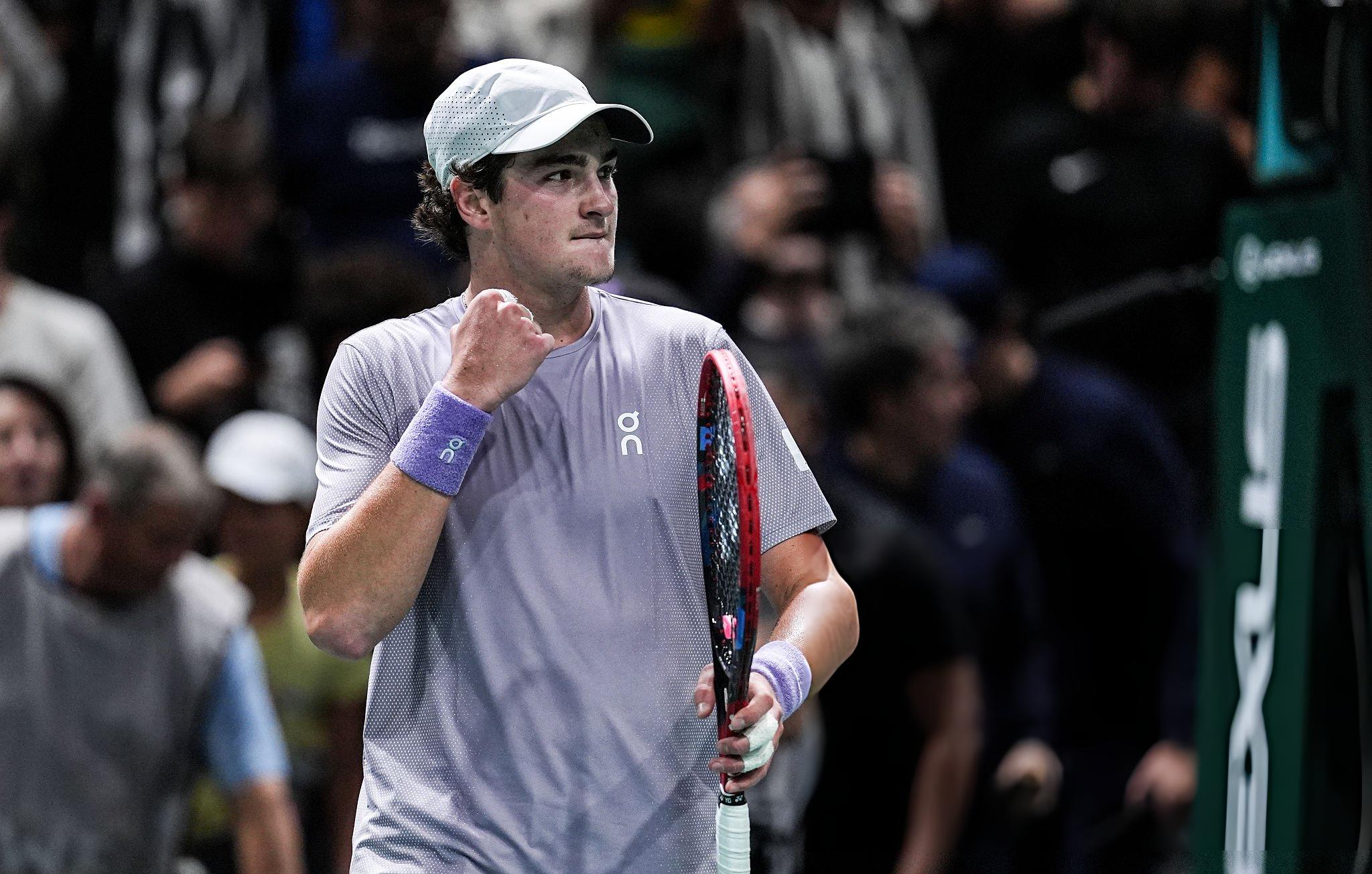
Nineteen-year-old Joao Fonseca has just completed his first full season at ATP level and has already established himself in the top 30. Over the year he claimed two titles — in Basel (ATP 500) and Buenos Aires (ATP 250) — and at the Grand Slams he consistently reached the middle rounds: the second round at the Australian Open and US Open, and the third round at Roland Garros and Wimbledon. Back when he was still 18, he came through qualifying at the Australian Open and in the first round of the main draw stunned Andrey Rublev, then ranked No. 9 in the world, becoming one of the youngest players in history to beat a top-10 opponent at a Slam.
Fonseca builds his game around a tremendously powerful forehand that mechanically resembles Sinner's stroke: active use of the torso, a high elbow, and from the baseline he produces such a variety of angles that it is extremely difficult for his opponent to read where the ball will go. At the same time, it is precisely the physical side that is currently preventing the Brazilian from moving up even higher: compared with Alcaraz at the same age, he is less enduring, struggles through long matches, and his movement around the court still needs refining so that his power-based style can become truly consistent.
Another 19-year-old, Lerner Tien, climbed in 2025 from No. 121 to the very end of the second ten, finishing the year at No. 28. He won his first career title in Metz (ATP 250), reached the final of a 500 in Beijing, recorded five wins over top-10 players — one of them at a Grand Slam — and ended the season as the player with the most victories among those aged under 21. The Australian Open also became a turning point for the American: first a surprise win over Daniil Medvedev, then a loss to Lorenzo Sonego a few rounds later, but by the end of the season a deserved spot in the top 30.
In terms of playing style, Tien is the complete opposite of Fonseca. As a left-hander with a flat backhand, he is an awkward match-up for most opponents simply because of his combination of grip and trajectory. The American is tactically flexible, able to vary spin and slice, come forward to the net intelligently, and withstand long rallies. All of this is necessary to compensate for his main drawback by modern standards — a relatively modest height (around 180 cm) and, as a result, the lack of a truly reliable serve. He wins only about 61.5% of points on his own serve, one of the worst figures in the top 50. It is therefore perfectly logical that he chose Michael Chang as his coach — the former world No. 2 who built his own career by extracting maximum value from a short stature and becoming a Grand Slam champion.
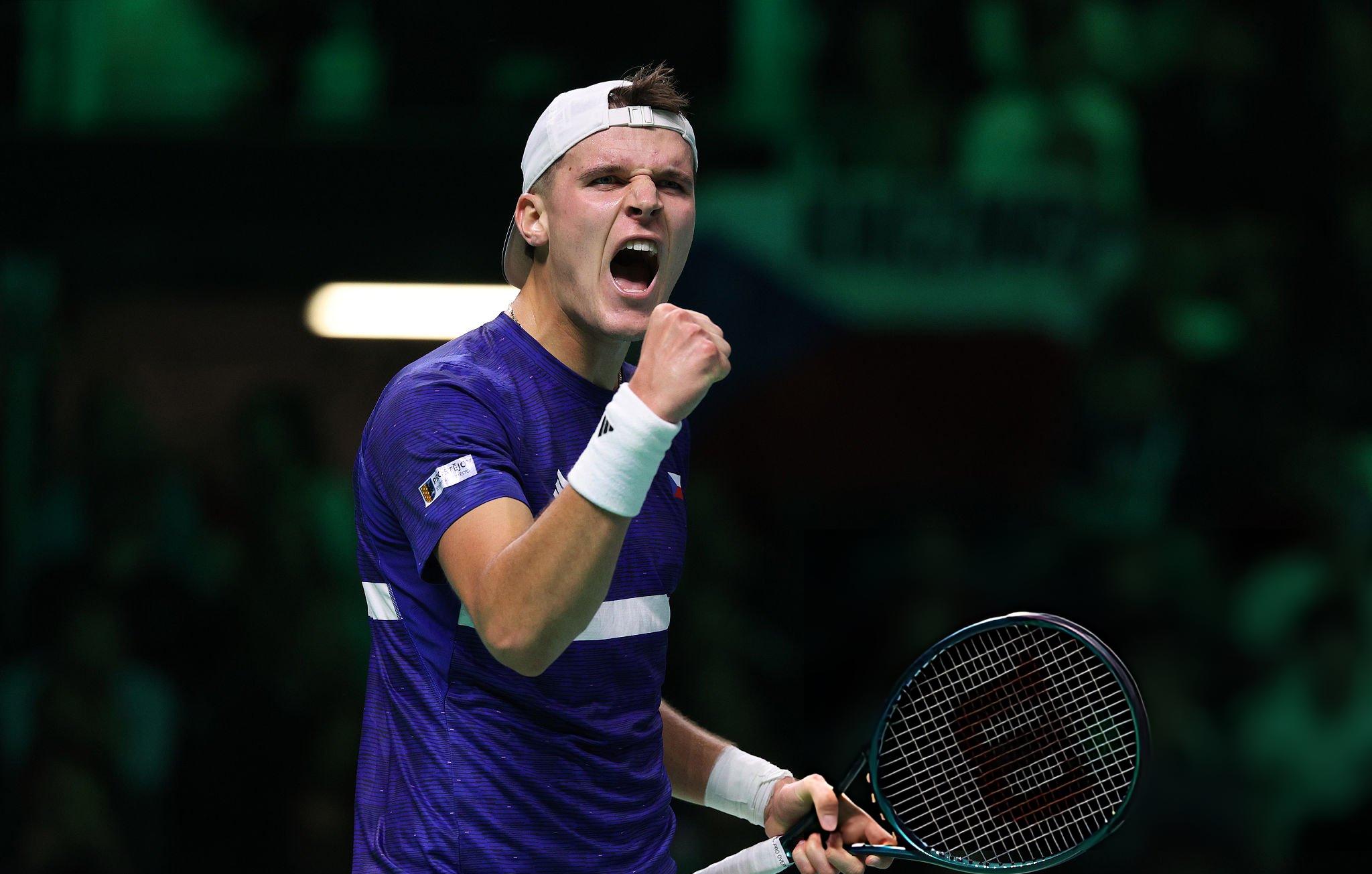
Another representative of this young wave is 19-year-old Czech Jakub Mensik. Over the course of the season he rose from the top 50 into the top 20 and won his first major title at the Miami Masters, where he defeated Novak Djokovic in the final. At the Slams he has so far maintained a consistent level: third rounds at the Australian Open, Roland Garros, and Wimbledon, and four wins over top-10 players during the year.
Mensik's strengths are a serve that can reach up to 225 km/h, aggressive first-strike tennis, and a reliable backhand. His coach Tomas Josefus describes his style as maximally aggressive and aimed at taking time away from his opponent. After his triumph in Miami it seemed that the Czech was mentally ready for big wins as well, showing no fear in front of the stars. But the season exposed his vulnerabilities. At the Australian Open and Roland Garros, Mensik lost his opening matches despite leading two sets to love, and on clay he even went down to a player from the third hundred in the rankings. At the US Open the scenario repeated itself, with a five-set defeat to a lower-ranked opponent.
On top of that, his game is quite straightforward and stylistically reminiscent of Alexander Zverev: his 196 cm height gives him a major advantage on serve but seriously limits his movement around the court. Moreover, Mensik has already started to build a reputation as an injury-prone player: he retired in Cincinnati due to health issues, struggled with knee problems at the 500 in Beijing, and in Basel withdrew from the tournament with a foot injury — effectively clearing Fonseca's path to the title.
The Peer Generation: Those Closest to the Elite
If we look at players of roughly the same age as Sinner and Alcaraz, the picture becomes much more complicated: there is plenty of potential, but no opponent yet who can consistently resist the leading duo over the course of an entire season.
Twenty-three-year-old Jack Draper sent his first strong signal of belonging to the elite this season when he sensationally captured the Indian Wells Masters, defeating Fonseca, Taylor Fritz, Ben Shelton, and Alcaraz himself along the way. He added runs to the finals in Doha and Madrid and a semifinal in Miami, and for the first time in his career, the Briton broke into the ATP top 10. Draper is a left-hander with a big serve and a quality return, but his main opponent is not across the net — it is his own body. A hip issue that he himself calls a “time bomb,” chronic shoulder pain dating back to 2023, and finally a bone bruise in his left forearm essentially wiped out the second half of his season.
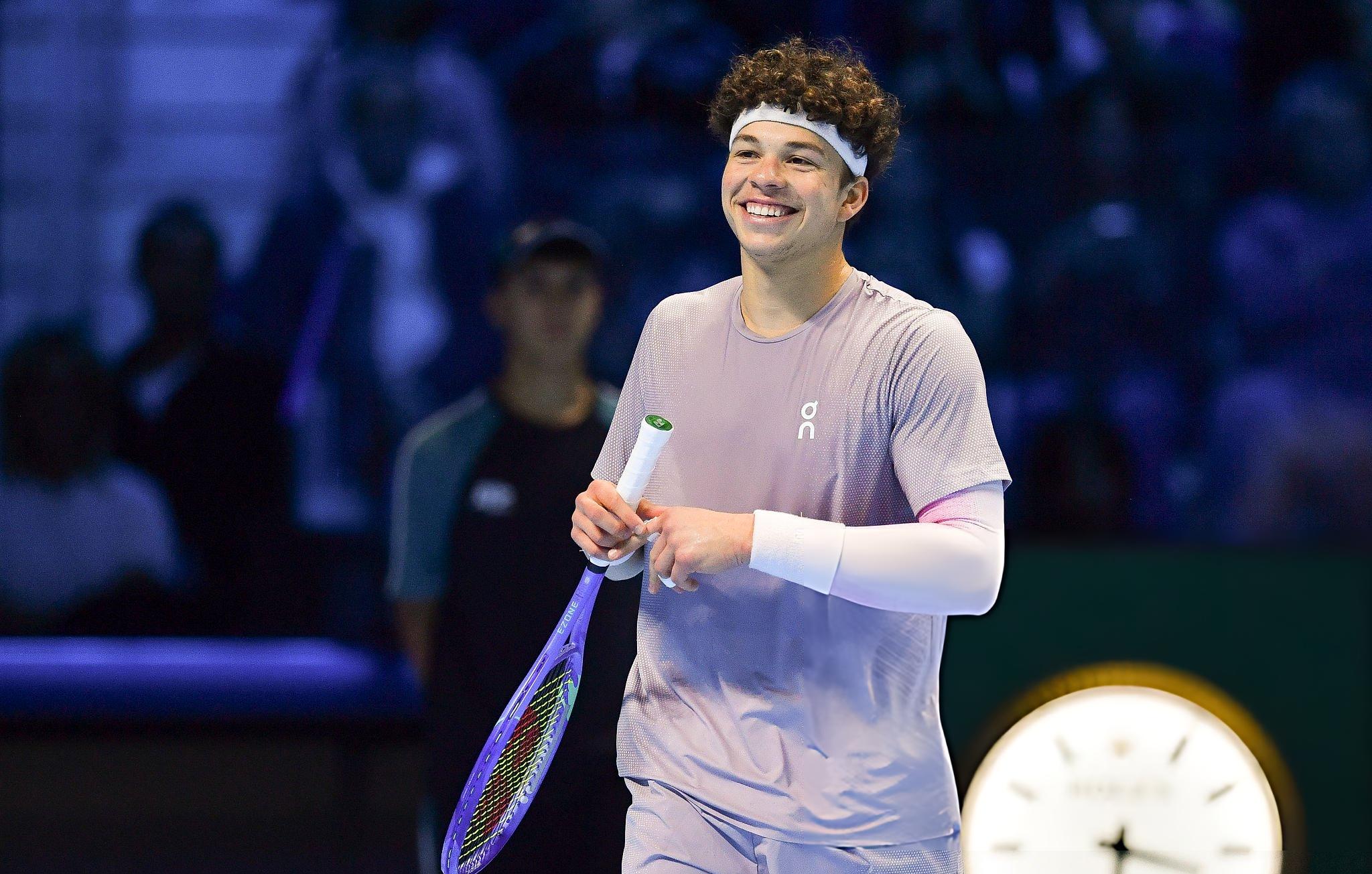
Ben Shelton, another left-hander and Draper's peer, is in a similar situation, though with different emphasis. In 2025 he won the first Masters title of his career, climbed from No. 21 to No. 5 in the rankings, and qualified for the year-end championships for the first time. On paper this looks like a major breakthrough, but it is important to remember that at the Canada Masters there was no Sinner, no Alcaraz, no Djokovic, and no Draper. As usual, Shelton earns the bulk of his ranking points thanks to his performances at the Slams, where he wins around 77% of his matches, whereas at other events his consistency drops notably (to about 66% wins). The American's weakest technical link is the return: in terms of the percentage of points won on his own serve (67.3%) he is among the very best, but in points won on return he sits only in the second half of the top 100, around 47th.
Twenty-three-year-old Lorenzo Musetti, meanwhile, boosted his ranking primarily through his results on clay. The Italian finished the season at No. 9, thus entering the top 10, played three finals (in Monte Carlo, Chengdu, and Athens), reached the semifinals at all major clay Masters events and at Roland Garros, and scored three wins over top-10 opponents. But on hard courts he remains vulnerable, and an injury suffered during the crucial Asian swing further complicated his year. His serve is not efficient enough for the very top level: he wins only about 64.4% of points behind his first delivery. In addition, Musetti is one of the few players still using a one-handed backhand, which in today's game is more an aesthetic flourish than a weapon. And the main issue is that for the third season in a row he has been unable to win a title, even when the draw and the level of opposition give him a real chance — as was the case in Chengdu this year.

Twenty-five-year-old Felix Auger-Aliassime spent the season on what felt like a constant roller-coaster. At the very start of the year he won back-to-back titles, but after the final in Dubai came a period of early exits interrupted only by occasional semifinals. These swings in results and emotions continued right up to the US Open, where Felix surged again, reached the semifinals, and for the first time in his career beat a top-5 opponent at a Slam. A strong showing at the Paris Masters and a relatively “comfortable” title run in Brussels at the end of the season earned him a place at the year-end championships, where he advanced to the semifinals and locked in a top-5 finish.
Twenty-two-year-old Holger Rune stands somewhat apart. He is one of only two players of the same generation as Sinner and Alcaraz who managed to beat either of them this season: the Dane defeated Alcaraz in the final in Barcelona. Overall, though, his story looks more like a warning for the youngsters than an ideal career roadmap. The former world No. 4 finished the season only at No. 15, and the latest chapter in his story was written by a serious injury — a ruptured Achilles tendon.
Which Way Will the Pendulum Swing on the Men's Tour
When you bring all these threads together into a single picture, the conclusion becomes quite clear: there are players who can match the Alcaraz–Sinner duo in terms of talent, but so far there is no third force stable enough in terms of results to challenge them over the course of an entire season. The young guns Fonseca, Tien, and Mensik have already shown that they can beat top-10 opponents and win big titles, but they are still held back by physical limitations, injuries, a lack of variety, and insufficient experience in five-set Grand Slam marathons. Their peers — Draper, Shelton, Musetti, Auger-Aliassime, and Rune — periodically make a lot of noise, win Masters titles, and reach the latter stages of Slams, yet they still live on bursts of form rather than season-long consistency.
That is why over the next year or two we are more likely to see a gradual erosion of “Sincaras” dominance than a sudden change of power. Sooner or later, one of the players mentioned above — or another talent from the next wave — will find a true balance between health, tactics, and mentality. And when that happens, the men's tour will finally get a third permanent center of power, a player ready not just to occasionally upset Alcaraz and Sinner, but to share the Grand Slam and Masters trophies with them on a regular basis.