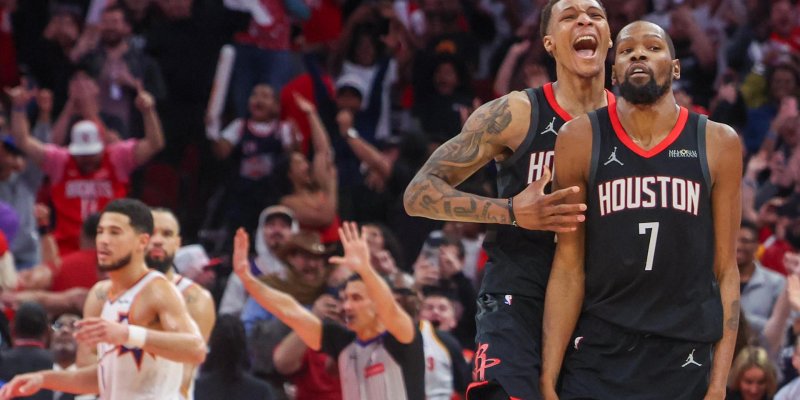

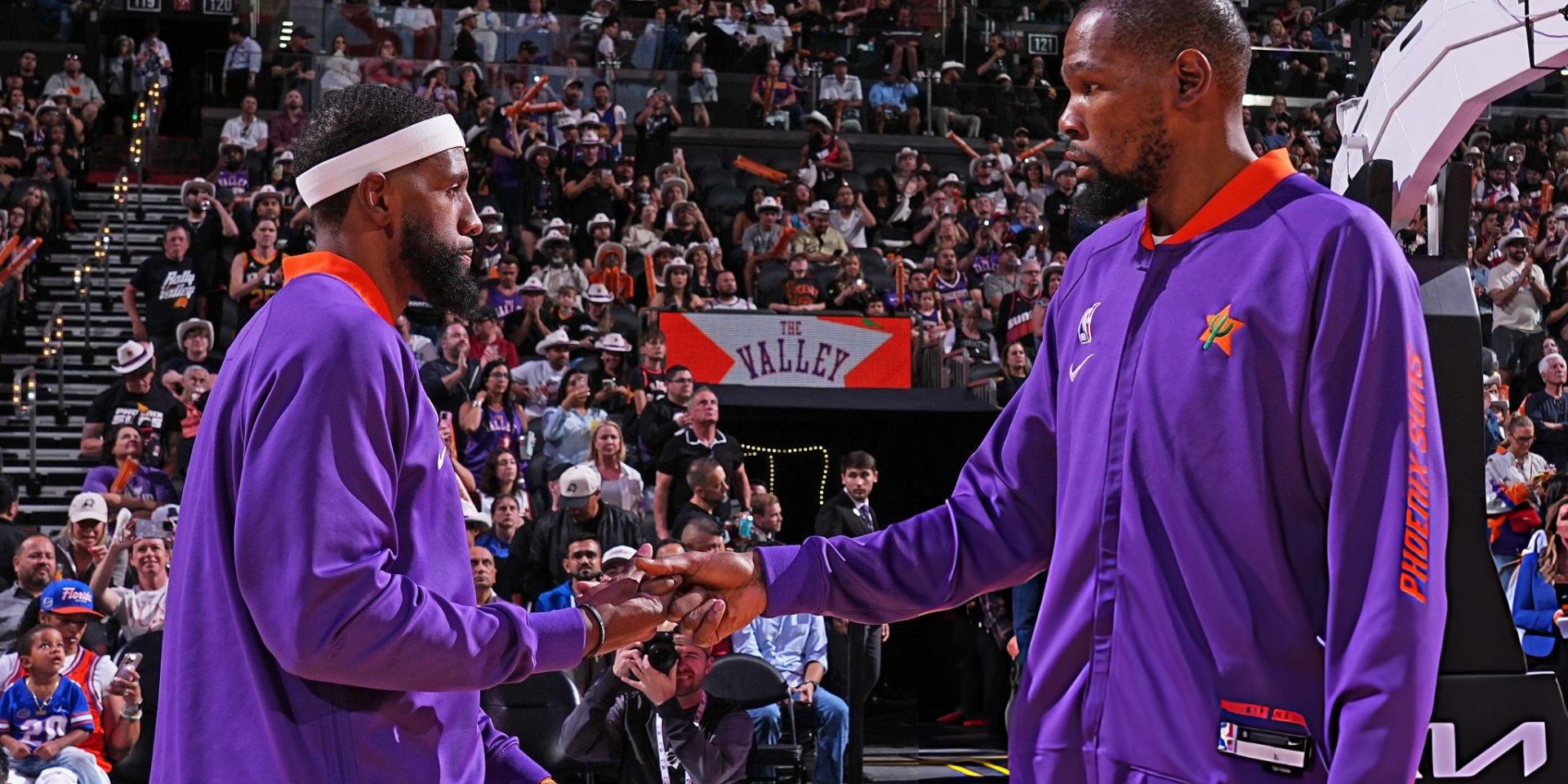
Not so long ago, Phoenix was trying on championship rings, trading its future for a loud “right now” and pushing the payroll to the cap and beyond. After the trades for Kevin Durant and Bradley Beal, the question seemed to boil down to just one thing: when, not whether, they would win a title. The result was burned-out assets, a locker room on edge, a first-round exit, and a painful breakup with its stars. And it was only after that that the Suns suddenly turned into a lively, slightly-above-average team that wins regularly and is interesting again. Let’s break down how this happened in nine thematic sections.
From the NBA Finals to a Broken Core
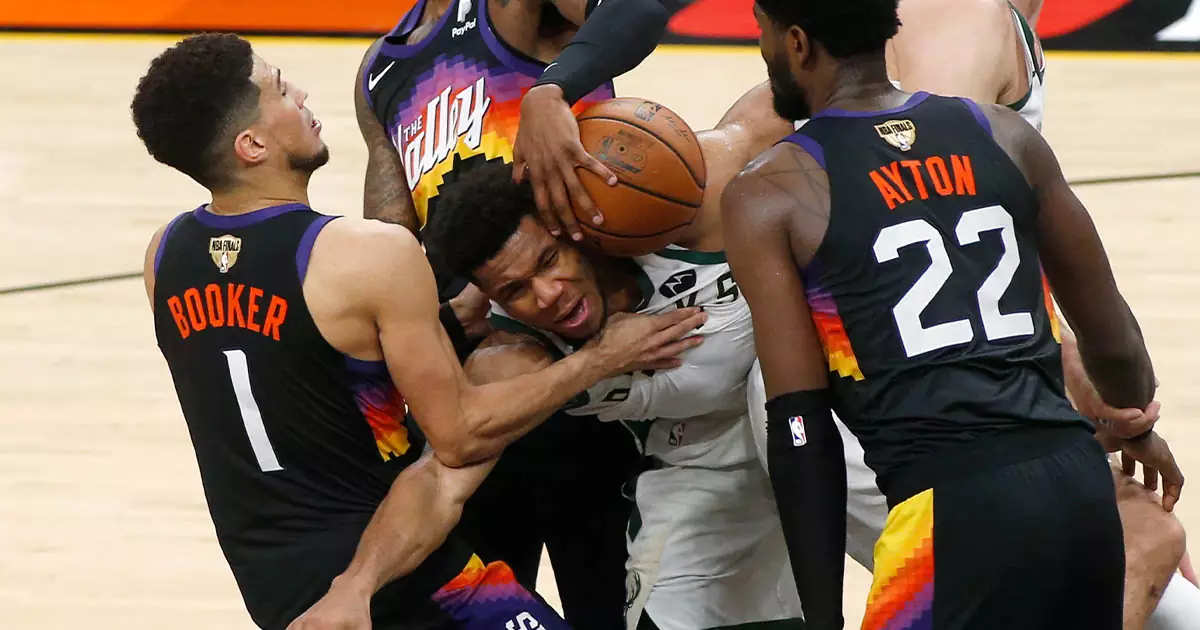
The road to today’s Phoenix started at the top. In 2021 the team reached the NBA Finals and lost there to Milwaukee. A year later, the Suns dominated the Western Conference regular season, winning 68 games, but in the second round of the playoffs Luka Doncic slammed the brakes on them in brutal fashion.
At the same time, the team’s key engine was aging. By that point Chris Paul had already crossed the 37-year mark: his brilliant basketball IQ and experience could no longer fully cover the deficit in athleticism. In early 2023 the franchise was purchased by Mat Ishbia. On February 7 the deal was officially announced, and just a day later the bombshell news of the Kevin Durant trade broke.
The price was enormous: two starters (Mikal Bridges and Cameron Johnson), Jae Crowder, four unprotected first-round picks plus a pick swap in 2028. The new owner decided the contender window would be open for a couple of years and went all in, mortgaging the future for a short, blazing present.
On paper it all looked gorgeous. At the end of the season James Jones finished fourth in the Executive of the Year voting, just one point behind second place – despite having already won the award a year earlier (and the trophy had not been given to the same person in back-to-back years since the mid-80s).
On the court, the fairy tale cracked quickly. Phoenix had little trouble dealing with the Clippers but lost 2–4 to Denver in the second round. Chris Paul got hurt when the series was 0–2, and soon after that he turned up in Golden State as part of the Bradley Beal deal.
All-In on Stars: How Beal Became a Symbol of the Dead End
By then it was too late to back out: the club had already staked everything on a super-star model. To get Bradley Beal, the Suns sent out four first-round pick swaps, a bundle of second-rounders and Landry Shamet, a respectable role-playing shooter. The idea was simple: the 30-year-old Beal would escape the Washington swamp, reinvigorate the offense and, in the ideal scenario, remember how he defended early in his career. It sounded dreamy – which was exactly the problem.
The team got through the regular season without a major disaster, but in the playoffs they ran into a wall: a 0–4 sweep by Minnesota in the very first round. After that, a real nightmare began in Arizona. Changing the coach did not help: Frank Vogel was replaced by Mike Budenholzer, but the atmosphere kept rotting. The locker room fragmented into little cliques, irritation and fatigue multiplied.
Bradley Beal sent a rather quick and clear message: he hadn’t been locked in with the Suns – the Suns had been locked in with him. The no-trade clause in his contract allowed him to shut down any deal involving him. Beal openly made fun of the club in conversations with reporters, often appeared on the injury report, and in the gaps between injuries he looked like someone who just “dropped by to play a little basketball.”
The front office, coaching staff and players were pulling in different directions, and some people simply stopped picking up the oars altogether. The result: Phoenix didn’t even make the play-in and was forced to hit the emergency exit button. Durant was shipped to Houston, and the Beal contract was cleared via a buyout. Instead of a roaring dynasty, the franchise woke up to a heavy hangover morning.
Luxury Tax and Dead Money: Why They Had to Break It Up
In theory, Phoenix could have kept Durant and Beal and just seen what happened next. In practice – no. That would only be interesting to people who like watching spiders in a jar.
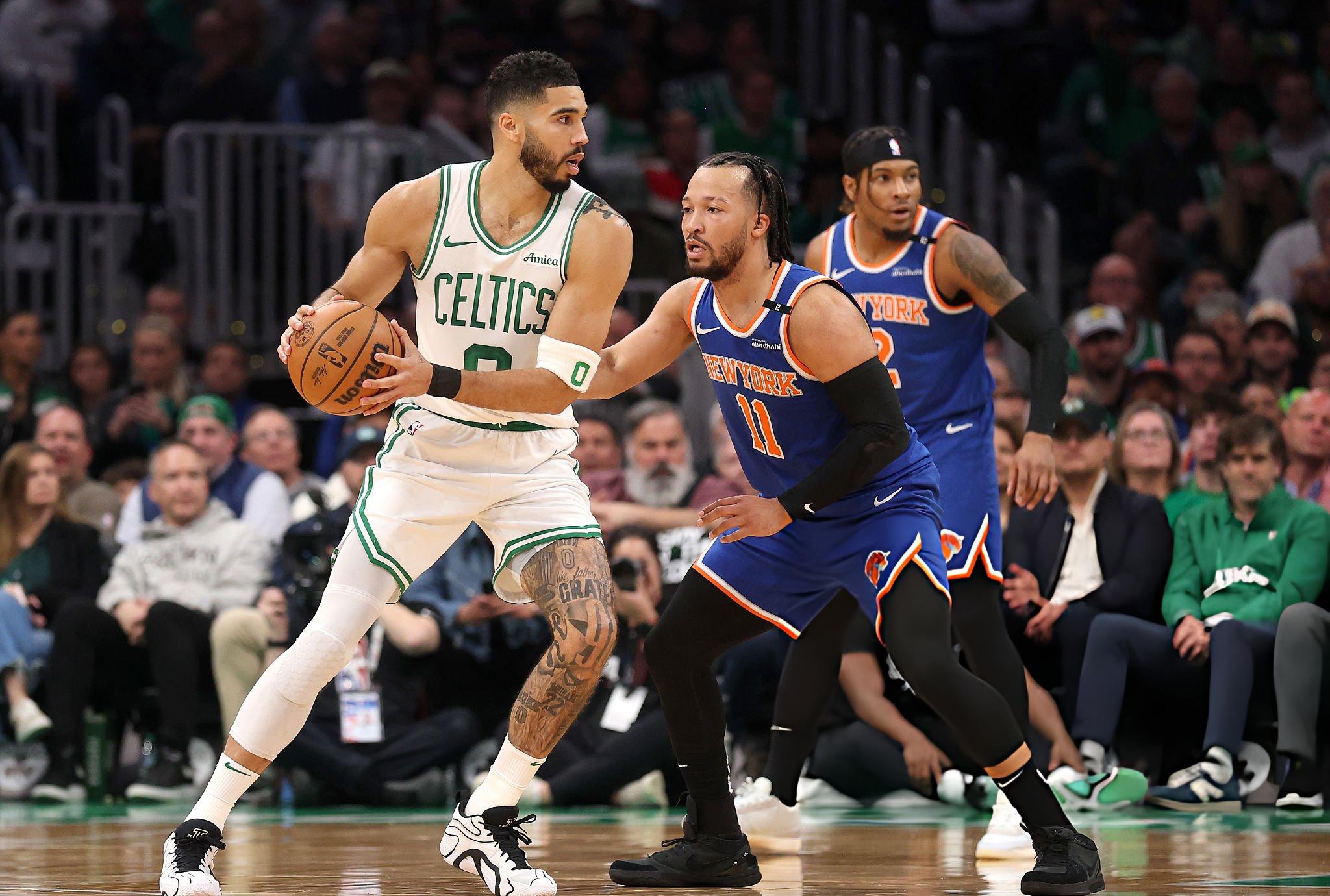
The Suns were in the luxury tax for the third straight season. In NBA terms that’s repeat-offender status – with brutal financial penalties and tight restrictions attached. You only carry that kind of load if you are unequivocally competing for a title. In any other scenario, teams prefer to tighten their belts so they don’t end up without their pants.
Boston is a good example. The team failed to defend its title, lost Jayson Tatum for the season, and immediately loosened the payroll, letting a number of key players walk. The precise math is Roman Skrikut’s territory, but the logic is simple: the structure of Beal’s contract allowed the Suns to get under the harshest tax threshold and save roughly $100 million in tax payments alone for a single season.
Of course, there is another bill to pay. Right now Phoenix has $58 million in “dead money” on the books – three players are being paid essentially for not suiting up for the Suns. In the summer of 2024 the club waived Nassir Little and E.J. Liddell, stretching their salaries out to 2029 and 2027 respectively. But under NBA rules the total of all stretched contracts cannot exceed 15 percent of the overall payroll. The stretch on Beal alone almost hit that ceiling; once you added nearly four million more for Little and Liddell, it went over. The team had to endure long and sometimes unpleasant negotiations to bring that number down.
Durant, meanwhile, was the last major asset that could still be turned into something tangible. He himself did not want to stay in Phoenix, and with the existing roster the Suns had no real claim to a serious playoff run. The package of Jalen Green, Dillon Brooks, Homan Maluach and five second-round picks is hardly a treasure chest, but no one on the market was offering more “for this cow.”
Why the Suns Don’t Have the Luxury of Just Crashing to the Bottom
The most logical path for a team with no chances is to tank: sink to the bottom of the standings, grab a high draft pick and start over. For Phoenix, that road is closed: the club has no control of its own first-rounders in the foreseeable future. They have all been mortgaged in the Durant and Beal trades. Just looking at the list of remaining assets is physically painful – there is no fresh influx of cheap, young contracts from the draft on the horizon until they start trading current players.
So tanking is pointless: other teams will get the higher picks, and the Suns will still be left with broken dishes. They are forced to flail around as long as they have the strength, like the frog in the milk-bucket fable: maybe they can churn the liquid into something solid, push off and climb out.
Confident basketball and results that exceed expectations pay off on several levels at once.
First, it sells tickets. Right now Phoenix has sellouts at all 11 home games this season, whereas just a year ago the team ranked 23rd in attendance – sandwiched between Charlotte and New Orleans.
Second, it raises trade value. Devin Booker is comfortable in Arizona, and the owner keeps repeating how lucky he was to buy a franchise with such a star. The task is to pump up the price tag on the rest of the roster so that closer to the deadline they can flip some role players and at least nail a couple of boards to the bottom of the empty treasure chest.
Buyers will appear. In the East, half the contenders dream of taking advantage of a newly opened path to the Finals; in the West there is at least Minnesota without a true point guard, the Clippers in save-the-season mode and Golden State, dreaming of one last real run for Steph Curry.
The main pieces – like Booker – probably won’t hit the market, but Phoenix has plenty of solid, energetic and relatively cheap role players to stock a few trades. The plan is sad but honest – and in the current circumstances it is almost the only realistic one.
A Team Just Above Average: The Real Level of Today’s Phoenix
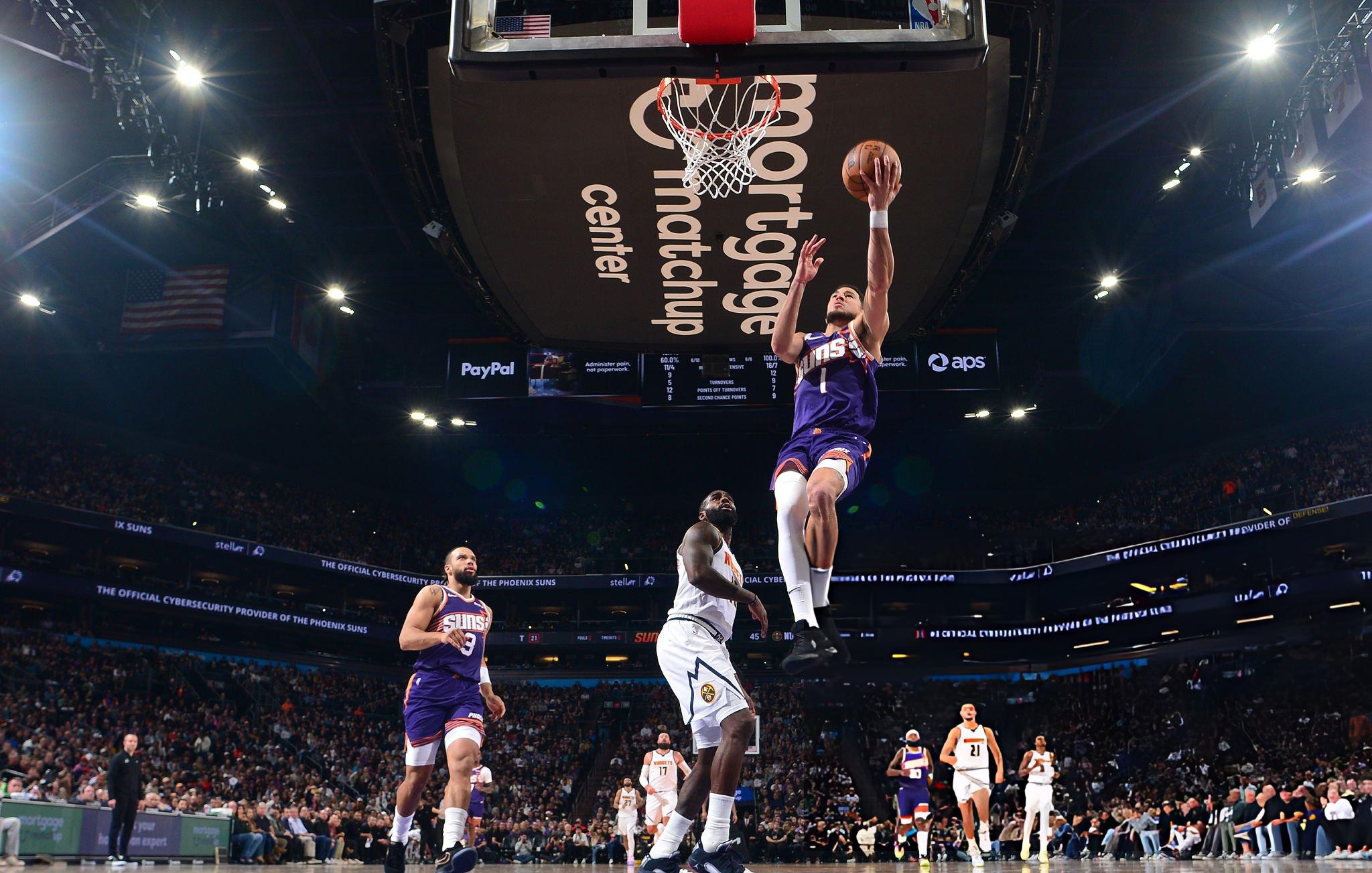
Sometimes the numbers tell the story better than any emotion. Right now Phoenix has the 12th-ranked offense and the 10th-ranked defense in the NBA. That’s the classic profile of a slightly-above-average team – a play-in zone level with little realistic chance of leaping much higher.
The Suns are sixth in the West with a 12–7 record, largely because they ruthlessly collect wins against bottom-feeders and the “swamp” of lower-mid-tier teams. Nine wins and three losses in 12 games against opponents with losing records is a marker of quality. Not elite quality, but respectably solid.
A couple of weeks ago the media were obsessed with talk of a “too easy schedule” and a weak win percentage against strong opponents. It’s true that against teams at the Denver or Houston level they don’t have much to show; Oklahoma is another story entirely. But things look different against the “second tier.”
Right now the Suns are 3–4 in seven games against teams with neutral or positive records. They have beaten San Antonio twice (once with Victor Wembanyama, once without him) and staged a crazy comeback against Minnesota. All this with Jalen Green playing only one full game out of nineteen.
For context: Golden State is 5–5 against teams with a .500+ record, Minnesota is 0–7. Cleveland sits at 5–7, New York at 5–5. Teams that consistently crush the bottom of the league and occasionally bite the favorites usually live in that sixth-to-eighth-seed band. Phoenix simply doesn’t have the resources for a higher ceiling.
Offense Around Booker: Simple Sets That Produce Points
On paper the Suns’ roster is extremely straightforward: one star, a bunch of shooters, a couple of solid secondary ball-handlers and two classic bigs with no outside shot. That’s enough to assemble a stable offensive structure.
Devin Booker is, by nature, a shooting guard. When he has to run the offense too often, his efficiency drops: 1.6 turnovers per game just on the dribble is a lot for that role. That means he needs a calm point guard next to him with reliable handle and a good first pass. In today’s Phoenix, Collin Gillespie fills that role very well.
Booker loves the midrange and knows how to get to the foul line. You pair him with a sizeable big to set screens, run two-man actions and crash the offensive glass. Wings with quality three-point shooting, decent handle and the ability to move the ball – Royce O’Neale, Grayson Allen and, to a lesser degree, Dillon Brooks – are responsible for stretching the defense.
The high interchangeability of the forwards and the similar functional profile of the center duo of Williams and Richards create a familiar environment for Booker. The individual talent level varies, but the principles are the same.
The key is constant threat from the perimeter. Phoenix ranks in the top ten in three-point rate (about 44.5 percent of all attempts) and fourth in three-point accuracy (37.9 percent). As of November 28, there were only two teams in the league that were top ten in both three-point rate and three-point percentage at the same time: New York and Phoenix.
The difference is that on the Knicks, everyone except Mitchell Robinson (who has also missed some games) shoots threes, while in Phoenix there is almost always one of Williams, Richards or Iguodaro on the floor – players with no range. In that configuration it’s inherently harder to find clean looks.
There are no magical sets or constant motion here; drives into the paint are not all that frequent either. Corner threes are relatively rare, though in accuracy from the corners the Suns are still in the top ten (around 40.4 percent). Most often the shots come from 45 degrees.
In essence, Phoenix has drilled three or four basic templates and learned to switch between them smoothly depending on how the opponent defends. There are relatively few empty passes that lead nowhere, but once the defense cracks, the Suns can whip the ball around with three or four quick passes and find an open shot.
The offensive backbone is high ball screens, hunting for favorable matchups and reading the play correctly. Against zone defenses, Phoenix manipulates spacing: the baseline player slides to the weak side, the screen wipes out the nearest defender and the ball flies to the far corner without delay. The result is a wide-open three.
Having three good shooters on the arc at once gives Booker space. If he doesn’t get stuck in dribbling and makes quick decisions, the help defense often arrives late. Leaving Grayson Allen (44.7 percent from three), Royce O’Neale (43.3 percent) or Collin Gillespie (41.3 percent) unguarded is a recipe for pain.
When the first line of defense can’t be cracked, Phoenix can always just give Booker an isolation. He’s not playing at an MVP level, but he consistently maintains a high efficiency baseline. The threat comes from everywhere: the snipers beyond the arc, Booker, Brooks and Jordan Goodwin from midrange (the Suns rank seventh in midrange frequency and fourth in midrange accuracy), and Williams and Richards at the rim.
The offensive emphasis shifts freely depending on the opponent, who on the roster is having a hot night and whether the other side is deploying zone. Phoenix doesn’t blow teams out, but against any non-elite defense they almost always reach an acceptable level in half-court offense.
An additional trump card is second-chance points. The Suns grab more than 30 percent of available offensive rebounds – only four teams in the NBA can say the same. Williams and Richards doing damage there is expected, but Jordan Goodwin and Ryan Dunn deserve separate praise for combining energy with smart positioning.
Jalen Green returning in full form will only expand the arsenal. In the game against the Clippers he already managed to get open for threes and solve a couple of tough possessions one-on-one. Green gives this well-drilled system another dose of individual creation – though the team will have to wait two to four weeks for his full return.
Pressure, Steals and a Closed Arc: Defense in the Eastern Trend
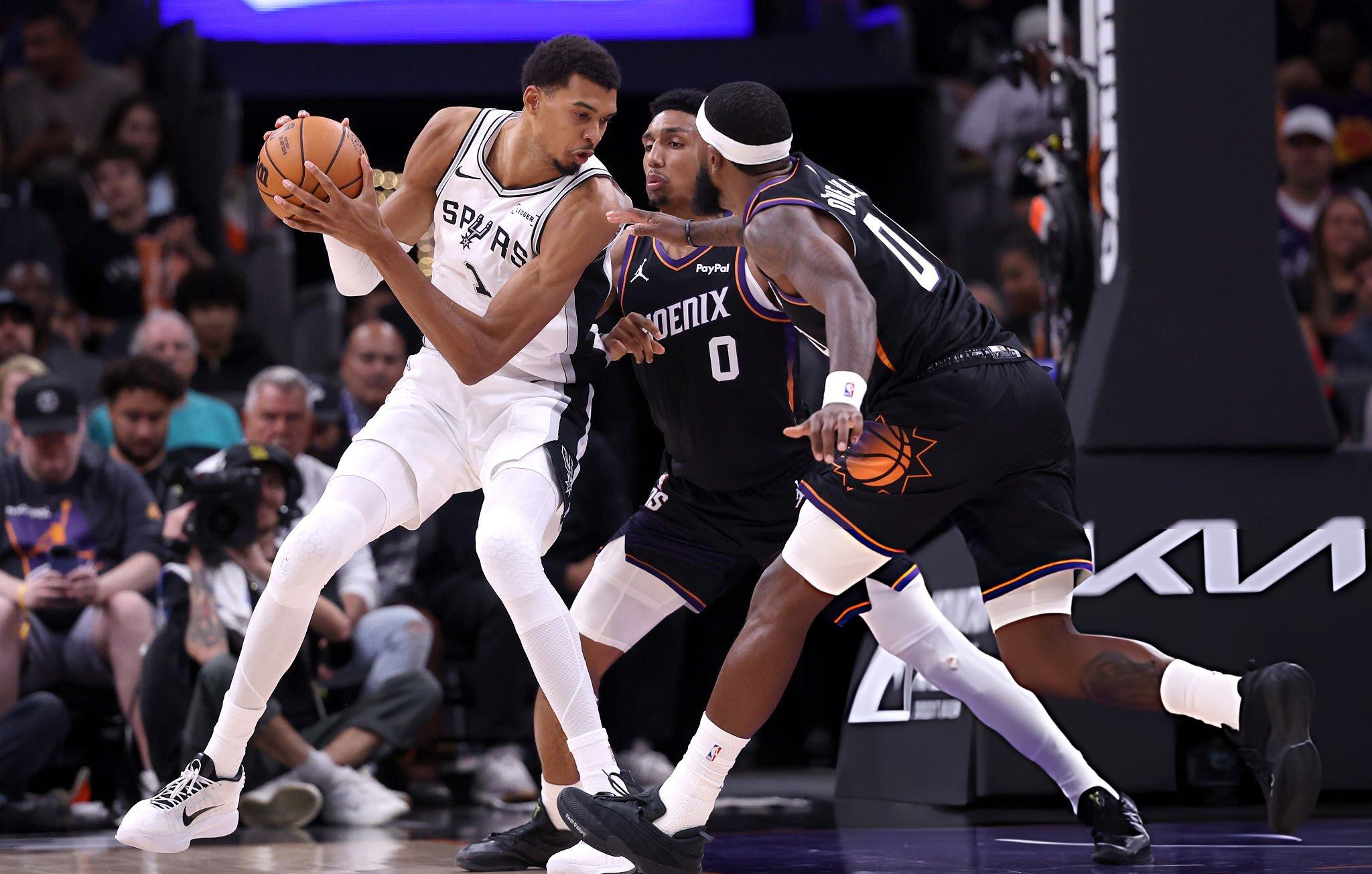
Sometimes it feels like Phoenix is geographically in the West but plays like an almost “Eastern-style” new-school team. Aggressive defense, pressure on the ball, a locked-down perimeter, maximizing opponent turnovers – straight out of the modern defensive manual.
The Suns lead the league in steals (about 10.8 per game) – almost one and a half times more than last season, when they ranked 29th in that category. Back then opponents barely felt their physical presence; now the pressure is constant. In opponent turnovers Phoenix is third at 16.5 per game, behind only the conference leaders Oklahoma and Detroit. Last year they were also 29th there (11.5).
A telling example is the first meeting with San Antonio, which essentially turned into a hunt for Victor Wembanyama. The young phenom could not handle the endless double teams: in 34.5 minutes he had 9 points, 2 assists and 6 turnovers. After the game, he himself praised the Suns’ game plan.
Phoenix is sixth in the league in three-point differential (+3.8 percentage points) and holds opponents to 34 percent from long range. The wings’ versatility allows them to switch and shrink the floor. Opponents get very few corner threes: in frequency Phoenix is near the bottom of the league, while in opponent corner-three accuracy they are in the top ten.
The injury list keeps filling up (Green, Dunn, Allen), but the style doesn’t fall apart. There is no singular “lockdown” defender of Defensive Player of the Year caliber; in this context Dillon Brooks is “just very good.” But eight different players average between 1.0 and 1.8 steals per game. Booker himself is at 0.9. No other team has that kind of breadth of “thieving hands”: for example, both the Thunder and the Pistons have only five players in that range.
The Suns read passing lanes extremely well; many players can pick off lazy passes, and steals off the dribble happen regularly. Intensity, willingness to fight and chemistry compensate for what is, in many cases, just average individual defensive skill.
The most curious part is that despite all those steals, Phoenix hardly runs. They are 25th in pace and 23rd in early offense scoring (about 13.9 points per game in transition). For those who remember the Steve Nash, Shawn Marion and Mike D’Antoni era, that borders on sacrilege.
The logic is simple: compared to the league as a whole, the roster is relatively young, but structurally it is built more around shooters than sprinters, and most importantly, the team already scores systematically in the half court. If you can read and punish the defense five-on-five, why sprint back and forth constantly? It’s a good sign: the Suns’ offense isn’t inflated by transition steroids; it rests on solid principles.
The Guy With the Tablet: Who Jordan Ott Is and Why He’s in the Coach of the Year Conversation
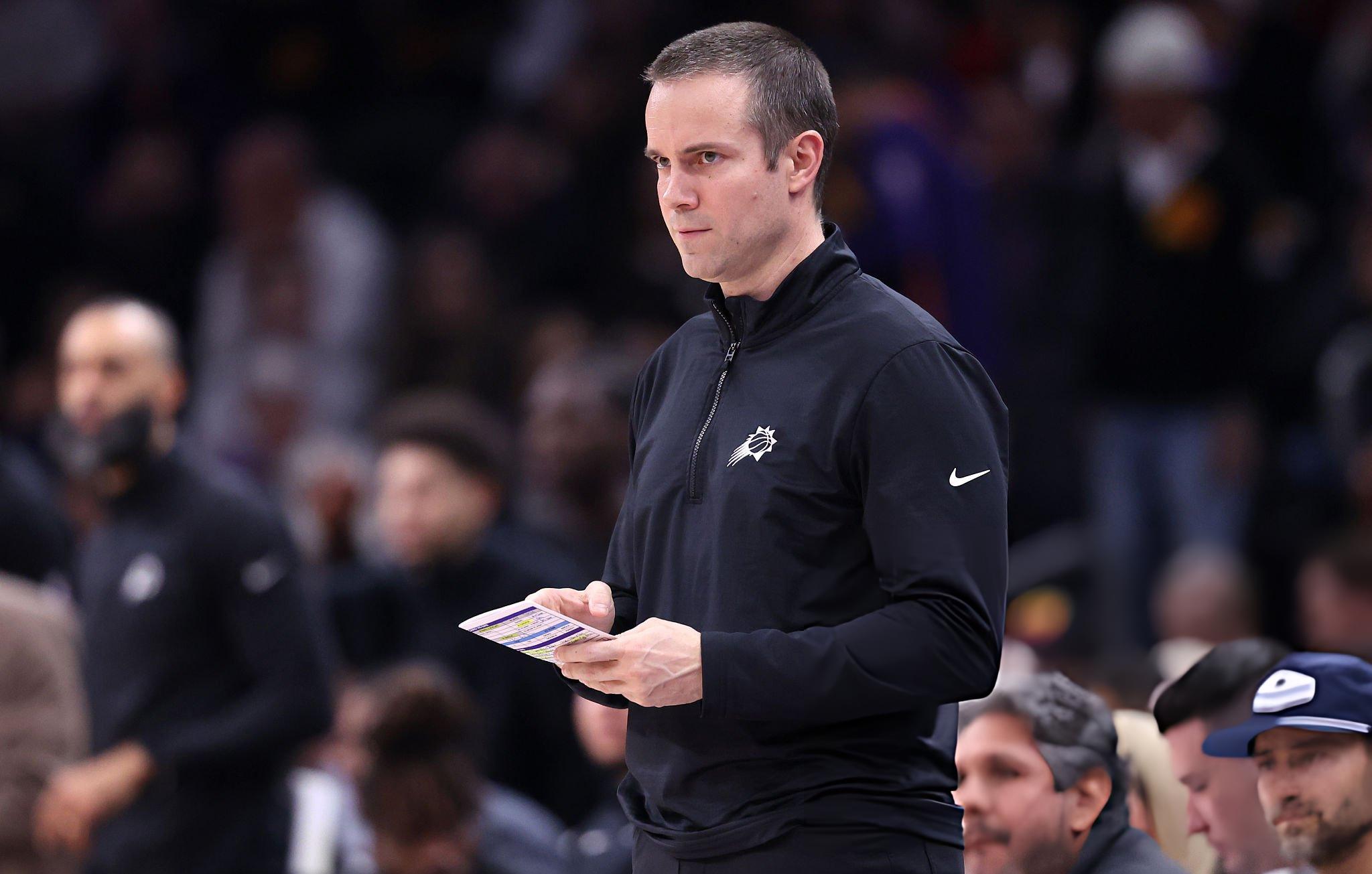
After parting ways with Budenholzer, the Suns’ short list reportedly included about 15 candidates. According to team sources, management was especially intrigued by the more complex, multi-layered offense proposed by Jordan Ott.
Ott began his coaching career in the mid-2010s as a video coordinator for Mike Budenholzer’s legendary Atlanta team – the one where the ball flew around, threes rained down, four players made the All-Star Game at once, and then the team ran into a wall in the playoffs. Later he worked as an assistant in Brooklyn and with the Lakers, and in the summer of 2024 he joined Cleveland, once again reuniting with Kenny Atkinson after their time together in Brooklyn.
In the 2023–24 season, the Cavaliers finished in the second half of the league in offensive efficiency and played a strange series against Orlando in the first round: 96 points per game and 28.7 percent from three – some called it old-school, others called it torture for viewers. Cleveland squeezed through, but in the second round they quickly bowed out to Boston, 1–4.
The very next year, with Ott on the bench, the Cavs suddenly produced the best offense in the NBA by a healthy margin. The playoff storyline was similar again: they swept Miami and then, amid injuries, lost 1–4 to Indiana. Still, it was hard to miss Ott’s fingerprints on the offense’s evolution.
At his first press conference in Arizona, Ott talked about “playing fast” – but he was talking about minds, not legs.
“We want to play fast, but to do that you need several strong ball-handlers on the floor. To make decisions at that tempo, the team has to know in advance what options we have against every type of defense. The game has changed, and we’re lucky to have depth in the backcourt. Our goal is to blend the coaches’ ideas with the players’ natural styles.”
There is another detail worth adding to the portrait. Ott did his graduate studies and worked as an assistant for the basketball team at Michigan State University. The Suns’ owner Mat Ishbia went to the same university – and also played point guard there. On the surface it looks like a pure “country club” story, but in this case the personal connection didn’t become a trap: the coach was chosen for his professional qualities first, and the shared alma mater was just a footnote.
Right now Jordan Ott’s name comes up more and more often in conversations about Coach of the Year candidates. It’s still early on that road, but given what the Suns have been through in recent years, the very fact that their coach is being mentioned in that context is telling.
Role Players in the Shop Window: Who the Suns Are Ready to Offer Contenders
On this Phoenix roster there is no one with a “never to be traded” label. Everything depends on whether the offer on the table is truly worth it.
Things are straightforward on the veteran wing front. The league knows exactly who Dillon Brooks is. Royce O’Neale and Grayson Allen are reliable role players who are especially valuable in the playoffs. Both are already over 30, their contracts run through 2028 and the numbers are significant. Buyers will appear, but no one is likely to offer a massive package for them.
The big-man duo of Mark Williams and Nick Richards has its own story. Williams will soon become a restricted free agent, while Richards is on an expiring deal. The latter grades out as heavily negative in modern metrics, is 28 years old and struggles to handle competition – not the most enticing investment target.
Mark Williams, on the other hand, is much more attractive: he regularly posts double-doubles, makes his presence felt on defense, hits his free throws well and is still young. There will be suitors for him.
Trading at least one of the bigs would open the door for Homan Maluach. Right now he is far too raw for a major role, but he can absolutely handle being slightly negative in 10–12 minutes a night – which is exactly what Richards is doing at the moment.
Collin Gillespie fits perfectly into the league-wide trend of smart point guards who don’t turn the ball over. At 26 he has only just secured a stable rotation spot in the NBA, but right now he’s doing almost everything: coming off the bench, averaging roughly 12 points, 5 assists and 4 rebounds in 26 minutes, and shooting 41.3 percent from three on 6.4 attempts. His assist-to-turnover ratio is above 3, he feels comfortable off the ball and knocks down catch-and-shoot threes confidently.
The limiting factors are his size and defense. In the playoffs opponents will target him on purpose, and quick hands alone won’t be enough for big minutes. As a backup point guard, though, he’s ideal – which means his trade value will be reasonable but not astronomical. Gillespie will be eligible to be traded starting December 15.
All told, Phoenix can absolutely stock up on picks by moving a couple of role players, but dreaming of a giant first-tier package would be unrealistic.
Booker as the Last Pillar: Is It Worth Blowing Everything Up?
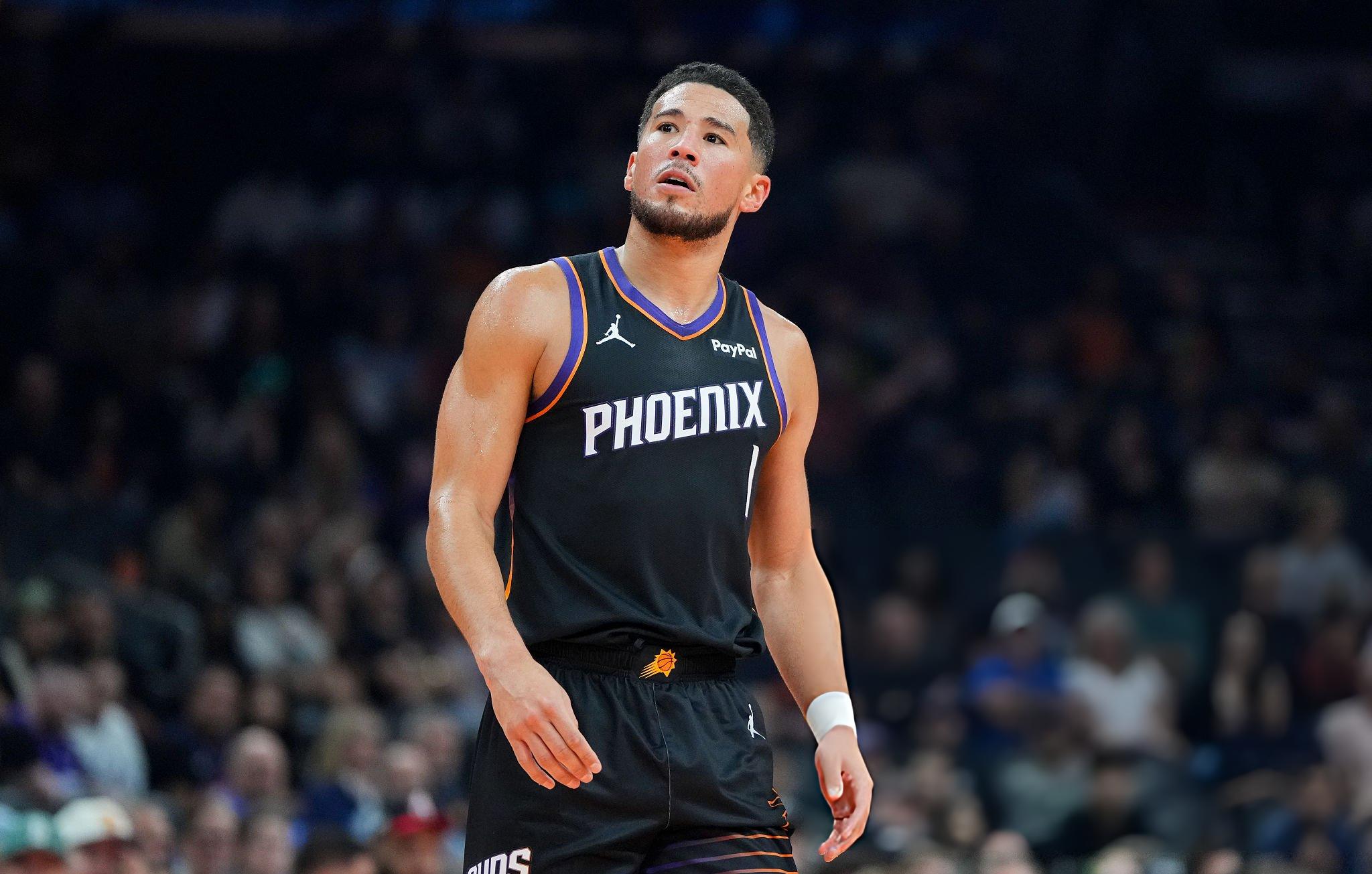
Strictly speaking, Devin Booker is the Suns’ only full-fledged star asset left. At the same time he is the face of the franchise and its emotional core. In theory, trading Booker would bring back several first-round picks and one or two talented young players. In practice, the club would be left with nothing on the floor that people actually want to watch.
Attendance would plummet again, and by the time the acquired picks turned into something serious, years would have passed. It’s hard to say how many people would buy tickets just to follow the nightly development of Homan Maluach and company.
Booker himself seems very comfortable in the role of “top guy in town” – especially in a town that has become his real home. He has been in Arizona since 2015 and has lived through the full journey from deep backwater to the NBA Finals. There were more bad days than good along the way, and that probably makes the story more meaningful.
At 29, Booker clearly has reached his playing plateau: his current line of 26 points, 7 assists and 4 rebounds is more than enough for the first option on a strong team as long as he has proper support. A radical leap forward is unlikely, but a brutal decline is not visible on the horizon yet either.
From the outside, Ishbia’s warm words about Booker can easily be read as an attempt to inflate his trade value before a potential deal. But this is the same owner who, just two days after buying the club, detonated the Durant trade and then signed up for Beal’s contract, playing the role of the confident leader marching the column straight toward a cliff.
Now the picture is different. Minority owners and Ishbia himself are already trading lawsuits: as the boss of the Suns and WNBA’s Mercury, he is accused of using the clubs’ resources for his private companies – issuing high-interest loans, signing dubious lease agreements and reallocating capital in his own favor. In that environment, the last thing the owner needs is more unpopular moves.
Trading the face of the franchise amid this much noise and internal turmoil only makes sense if you are absolutely certain the move is a winner. Only someone very desperate or extremely brave would take that gamble. Ishbia was that person when he was ready to give up half the roster for Durant and put his name under Beal’s contract.
Now, for the first time in a while, he appears to be choosing a less flashy but more sensible path: keep Booker, squeeze the maximum out of the role players and slowly rebuild the club. And, paradoxically, it’s only after the superteam was dismantled that Phoenix has finally started to look like a living basketball organism again, rather than just a shop window full of big names with empty shelves underneath.