
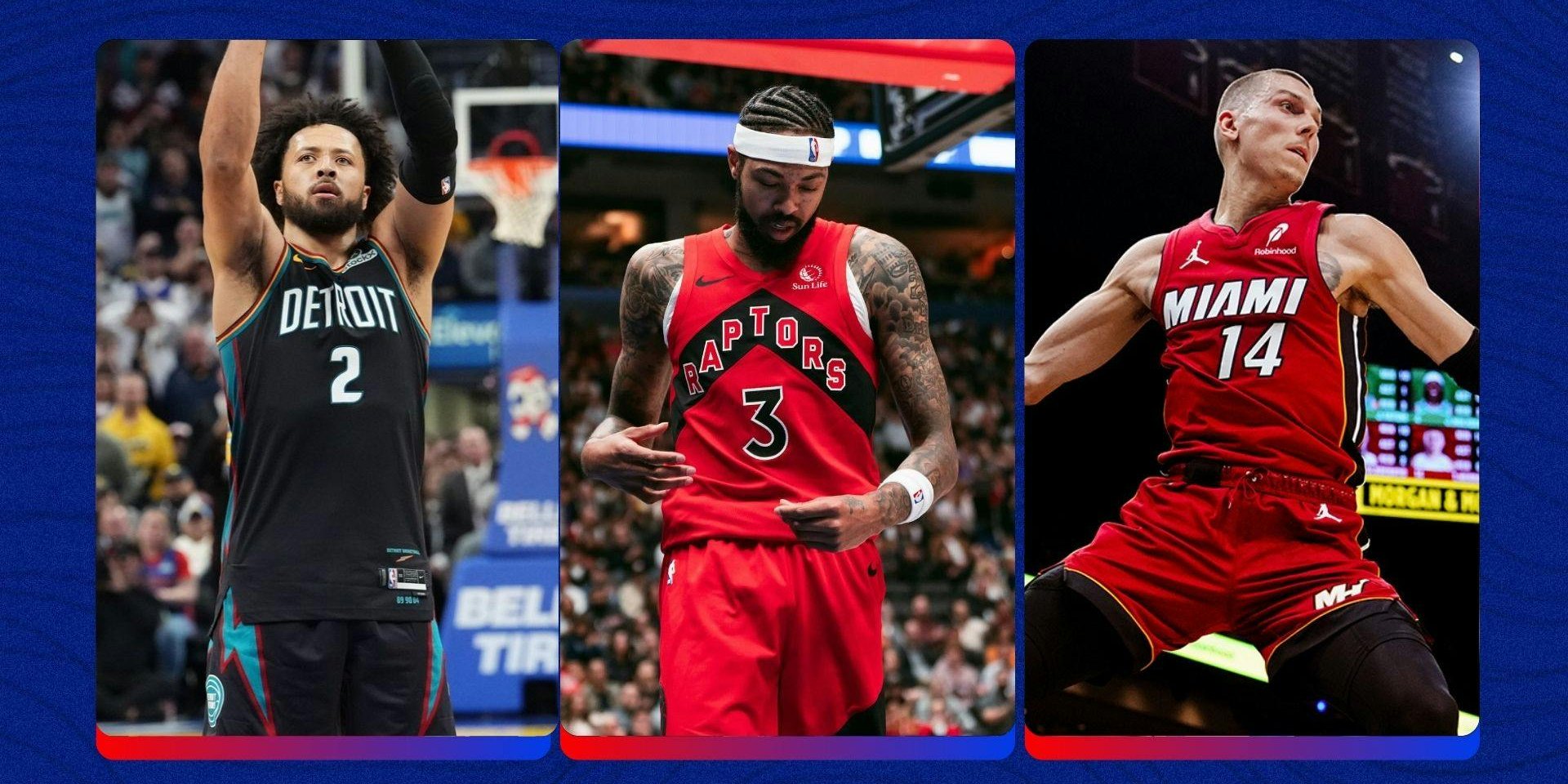
The Eastern Conference standings right now look less like a table and more like a classic Mexican standoff: everyone is standing there with guns drawn, waiting to see who flinches first. Boston and Indiana have fallen out of the picture due to injuries, Cleveland and New York look shaky, and sitting on top of the conference is a group hardly anyone expected to see there in October. Miami, Toronto and Detroit have secured their spots in the upper tier of the standings, Atlanta is right next to them – and all four are playing in a way that can no longer be dismissed as a random hot streak.
The Pass as a Weapon: Teams That Think Through the Extra Pass
If you pull up the NBA table for assist differential as of November 26, the same cluster of brands jumps out immediately:
- Toronto averages 4.7 more assists than its opponents;
- Atlanta is at +4.2;
- Detroit and Miami are both at +3.8.
Right behind them are Oklahoma City (+3.0) and Denver (+2.9), the benchmarks of a healthy contender machine. Everyone else doesn’t even reach the +2.0 threshold. This is not just a pretty number – it is a fairly accurate marker of teams that know how to play modern half-court basketball.
Last season already proved it. Indiana led the league in assist differential – both in the regular season (+3.2) and in the playoffs (+6.3). Oklahoma City stayed in that neighborhood the whole time. The Eastern Conference Finals featured teams that, by that point, were among the leaders in this metric. In the Finals, the Thunder badly lost the ball movement battle (123–159 in assists) and, because of that, ended up just a bit behind Minnesota and the Clippers in the overall hierarchy.
The same faces appear in another category – the share of three-pointers taken off the pass:
- Miami – 95% of their threes come off a pass;
- Chicago – 94.4%;
- Atlanta – 92.6%;
- Toronto – 91.4%.
Detroit, with its 85.4%, is closer to the middle – for a simple reason: the starting five includes two players at once who don’t threaten from beyond the arc, which narrows the floor and naturally slashes the number of perimeter passes. The Pistons make up for it with elite defense.
The picture is similar for three-point percentage differential:
- Miami – +6.4% compared to its opponents;
- Toronto – +6.3%;
- Houston – +6.1%;
- Atlanta – seventh at +3.4%. With Trae Young on the floor the differential was only +0.5%; without him it climbed to +4.7% – Denver territory.
Indiana reappears here as well: in last year’s playoffs it led the league in three-point differential (+5.3%). In the regular season the Pacers were only eighth, but they had to play without Aaron Nesmith and Andrew Nembhard until January – two universal players who can both defend and shoot from outside. Once they came back, the offense spiked sharply.
Minimal Waste, Maximum Pace: How to Play Fast Without Breaking Down
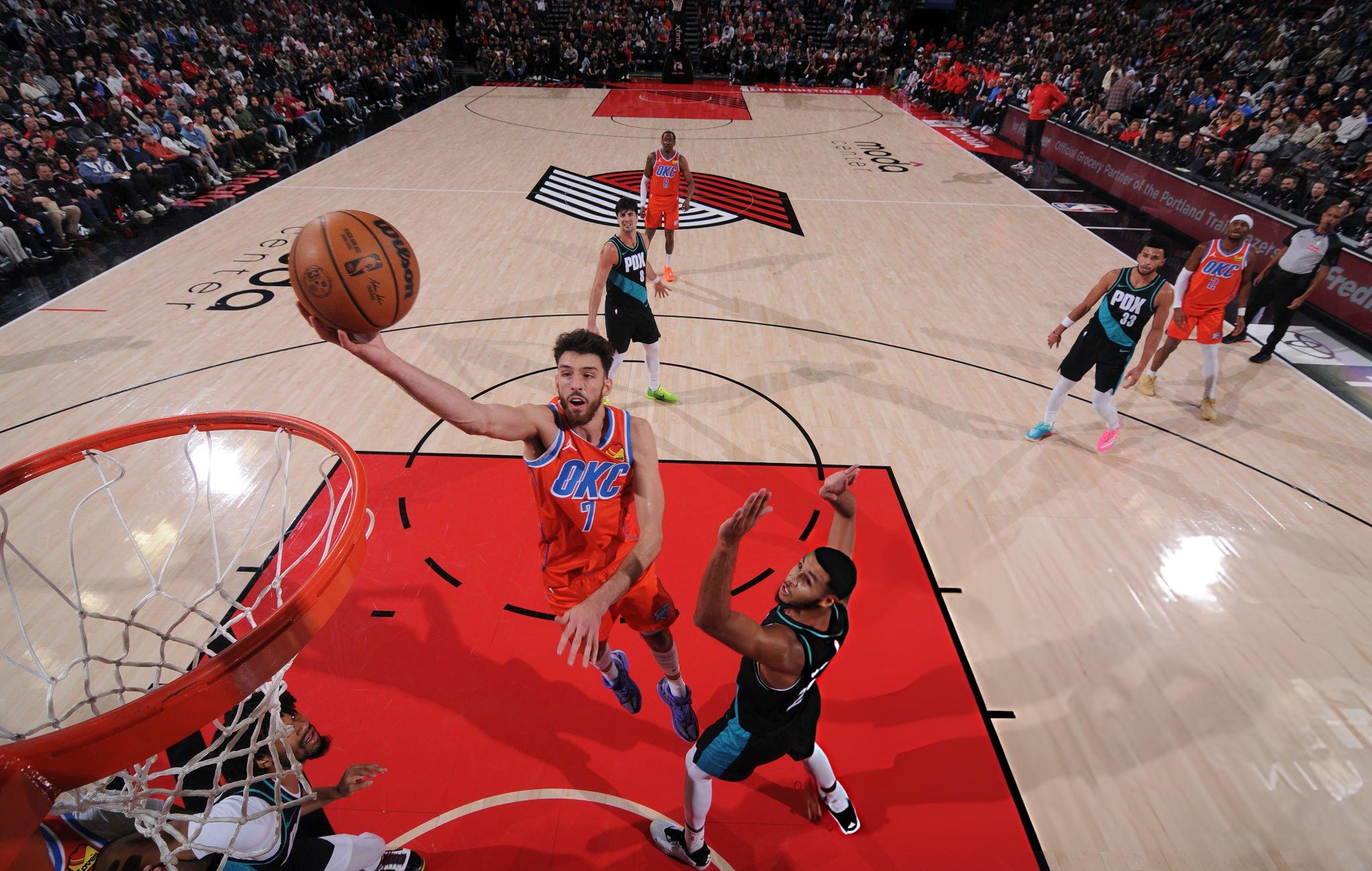
The next common denominator is taking care of the ball. The league leaders in turnover differential look like this:
- Oklahoma City – 4.7 fewer turnovers per game than opponents;
- Boston – -3.4;
- Detroit – -2.6;
- Cleveland and Toronto – both at -2.2;
- Atlanta – -1.8;
- Miami – ninth at -1.1.
All four of our teams sit in the upper part of the table. At the same time, none of them turns into a caricature of Houston-style basketball where you jack up a three at the first half-chance. In terms of the share of three-point attempts they are actually near the bottom: Detroit is 28th, Toronto 27th, Miami 24th, Atlanta somewhere in the back half of the second ten. The principle is simple: fewer attempts, better quality. They are happy to let someone else win the volume battle, but not the efficiency battle.
And still, all four play at a pretty high pace. They all sit in the top 12 in the league in possessions per game: Toronto and Detroit hover near the start of the second ten, Atlanta pushes the throttle up to something close to first cosmic velocity, and Miami leads the league in pace, 2.2 possessions clear of the next team – a chasm by NBA standards.
On paper it sounds simple. In reality it requires an extremely high level of mutual understanding. You have to see the open pass in a fraction of a second, know in advance where your teammate is cutting, not over-dribble and never hesitate on a wide-open three. This is no longer just tactics – it is a culture, habits drilled all the way down to muscle memory.
Young Legs, Hungry Contracts: Where the Energy Comes From
In a league where pace and athleticism grow year after year, the edge goes to whoever can keep the intensity up for all 48 minutes. Here Atlanta, Detroit and Toronto have a huge initial advantage: all three rank among the ten youngest teams in the 2025/26 season, with an average age of about 25. This is that sweet 24–27 window where the body can still do everything and the head already understands a lot.
Miami, by comparison, sits closer to the middle, but even there everything is calculated. Norman Powell (32) is on an expiring contract, Andrew Wiggins (30) has a player option, Simone Fontecchio (29) is also in a year that will require a new deal afterwards. Financial motivation does its job: if you want a good contract, you have to run and defend at full speed.
The young-core layer is substantial as well: Kel’el Ware is 21, Nikola Jovic 22, Jaime Jaquez, Pelle Larsson and Keshad Johnson are all 24, and Tyler Herro is 25. These are not just warm bodies to fill out the rotation; they are real role players who add pace and pressure on the ball.
The second source of intensity is smart minute allocation. Load management and routinely skipping games wreck chemistry: lineups change, roles shift, shot volume gets redistributed. You can’t do that in the playoffs – games come every other day, and your stars have to be ready to log 35+ high-pressure minutes. So it’s much more important to get players used to that workload in advance than to try to save their legs artificially.
Oklahoma City can afford to send the starters to the bench after three quarters – that’s the privilege of a champion. The Heat, Raptors, Pistons and Hawks have to find other solutions. Hence the focus on deepening the rotation and steering clear of crazy minute loads for their stars. Among this group, only one player sits in the league’s top ten in minutes per game: Cade Cunningham at 36.4 minutes (seventh), and he has already missed time with a hip issue.
Jalen Johnson of Atlanta plays 34 minutes a night (25th), yet compared to last season his workload has actually dropped a bit – despite the jump in status and the triple-double that vaulted him into the MVP race on the NBA’s official site. For Toronto and Miami most key players hover around the 30-minute mark, with reasonable rest stretches. The starting fives don’t get run into the ground, and the bench guys are genuinely integrated into the system.
The payoff is obvious in crunch time. In games decided in the closing minutes, the leaders in win percentage are:
- Toronto and the Lakers – 100%;
- Atlanta, Miami and Sacramento – 83.3% each;
- Detroit – 80%.
The Kings are there more as a quirk – they don’t reach tight endings that often. Our heroes do, and as a rule, they walk away with the win.
Champion Armor: Why This Party Ends Quickly Without Defense
Four- or five-game winning streaks are nothing special in the NBA. You hit a soft patch in the schedule, an opposing star is banged up, the threes fall for three nights in a row – and suddenly you’ve got a mini-sensation. But anything that stays near the top of the standings for months is always built on defense.
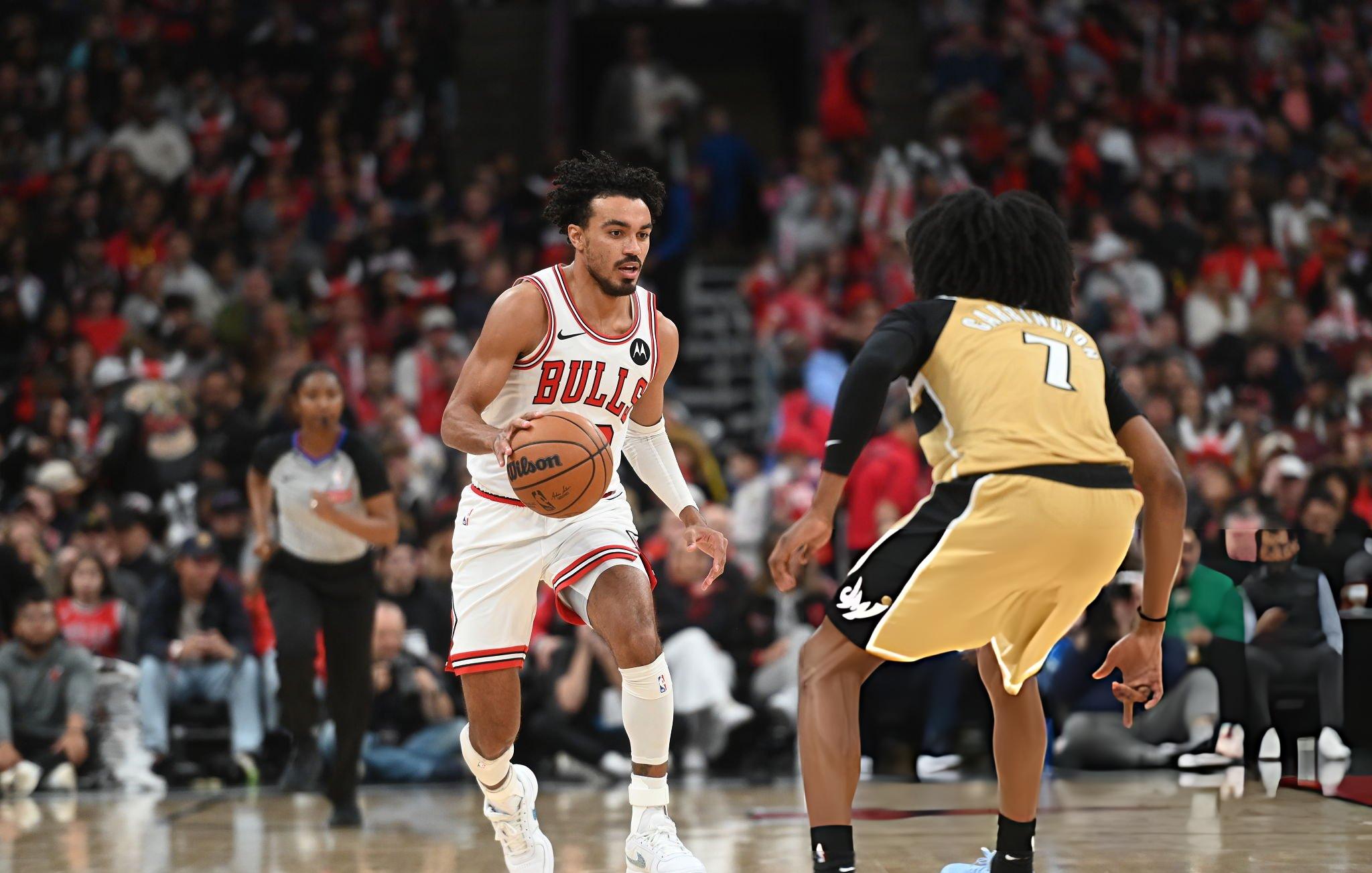
Chicago’s best start since the Michael Jordan era is a great counterexample. The Bulls were shining in almost every trendy category: fourth in assists, second in pace, young core, top five in three-point accuracy. On paper, a perfect new hype-contender. But even during that 5–0 run their defense ranked 18th, and now it is all the way down to 23rd. They are 28th in steal differential, ahead of only Utah and Washington, and 29th in forcing opponent turnovers, just in front of, again, Washington. Without a credible aggressive defense, you’re not in the elite; without at least a decent one, you’re stuck in the play-in zone. A few memorable game-winners didn’t stop them from sliding back into their familiar swamp of eighth–tenth place.
The current Eastern leaders are in far better shape on their own half. Miami and Detroit are both in the top four in defensive efficiency, Toronto is sixth. Atlanta sits only 14th over the long haul, but in the Young-less stretch it climbs to eighth.
Each team solves the problem in its own way, depending on personnel.
Detroit defends in ultra-aggressive fashion. It leans on strength and length: more than 10 steals and 6 blocks per game on average, top four in both categories. They foul a lot as well – top five in personal fouls and opponent free throw attempts. No easy points, just ringing hands and sore ribs. They allow fewer than 44 points in the paint – fourth-best in the NBA.
Miami and Toronto, by contrast, lock down the perimeter. The Heat lead the league in opponent three-point percentage (31.6%), the Raptors are fourth (32.1%). Atlanta is trying to move in the same direction, although there are hiccups: it sits seventh at 34.8%.
All three rely on versatility, switching aggressively on defense and cutting off passing lanes with long arms. Breaking through the first line of defense is hard, which forces teams into more isolations. They are willing to concede straight-on threes, but the corners are nailed shut.
The leaders in holding opponents’ corner threes down are:
- Toronto – 28.9%;
- Houston – 31.0%;
- Dallas – 33.1%;
- Denver – 33.2%;
- Atlanta – 34.5%;
- Chicago – 34.6%;
- Miami – 35.9%;
- Detroit – 37.8%, 14th, because it focuses more on protecting the paint.
Staying below 30% when the league average is 39.5% looks like a miracle. Last season nobody even got under 35%.
We can discount a bit for small sample size and good fortune. Even so, the credit due to Darko Rajakovic is enormous. The Raptors don’t exactly have a roster full of lockdown one-on-one stoppers. Only five players log 20+ minutes, and four of them are Brandon Ingram, Immanuel Quickley, RJ Barrett and Jakob Poeltl – hardly a group of obvious Defensive Player of the Year contenders. Yet they are holding steady in the top ten in defensive efficiency.
The funniest part is that this isn’t even Toronto’s main superpower.
Rhythm Arithmetic: Who Controls the Game and Who Gets Carried Away
For young teams, a typical problem is that they only know three gears: “fast”, “faster” and “still not fast enough”. In that transmission, sooner or later the game starts controlling them instead of the other way around.
Only five teams in the league rank in the top ten in both points scored and points allowed in transition. In the West that team is San Antonio: the Spurs give up the fewest fast-break points in the league (10 per game) and sit 10th in points scored in transition (16.8). Even without Victor Wembanyama their numbers understandably dip, but they are still holding up. A +6.8 average margin in transition is one of the reasons for their strong start and fifth-place standing in the conference.
The four remaining teams are in the East.
Miami scores 19.0 in transition and allows 14.8 – a +4.2 margin. The Heat’s overall Net Rating? +5.6.
Atlanta scores 17.5 and allows 14.6 – +2.9 with a Net Rating of +1.8.
Detroit scores 17.2 and allows 13.8 – a +3.4 margin with a Net Rating of +6.9.
And then there is the jewel of the list. Toronto alone manages to be top three in both fast-break scoring and fast-break defense. The Raptors put up 20.8 points in transition while allowing only 13.4. That’s a staggering +7.4 points per game from transition alone, with an overall Net Rating of +6.9.
The trick is not just to run fast. It’s not even about running for a long time. At one moment the game speeds up, at the next it slows down. The weakest teams aren’t ready for that; solid ones react and survive; the best ones create those waves themselves.
In soccer this would be called game rhythm disruption. In basketball substitutions are unlimited, so after 15 minutes of aggressive pressing you don’t have to burn a timeout – you just send in fresh legs.
Of course, this requires deft rotation management and a clear understanding of player tendencies. Toronto and Atlanta, for instance, are both among the five worst teams in offensive rebounding. Usually only one or two players crash the glass – for the Raptors that’s Poeltl and Scottie Barnes, for the Hawks it’s Dyson Daniels and one of Kristaps Porzingis or Onyeka Okongwu. Everyone else is already sprinting back to protect their own basket. The opponent doesn’t get a numbers advantage.
Miami is the complete opposite and loses more defensive rebounds than anyone in the NBA – 14.8 times per game, with only poor Washington in the same neighborhood. The Wizards don’t care much either way, but the Heat with Adebayo and Ware have made a conscious choice. The setup is inverted: at the moment of the shot, wings often bolt for the offensive end. The bigs go for the board, the point guard shows for an outlet. If it all clicks, the chances of running out are excellent. Statistically, second-chance points are quite efficient, but early offense is even more efficient.
This is where you see the Raptors’ style and superpower in full. With the 12th-fastest pace in the NBA, they manage to score more transition points than anyone else – and by a good margin. Orlando, in second place, trails by 1.5 points, and as we saw recently, the Magic are terrible at getting back on defense.
Teams Without Superheroes: When the System Matters More Than the Star
Turnover differential and careful play in transition have put our quartet among the most disciplined teams in the league. But everything ultimately comes back to playmaking: who makes decisions with the ball.
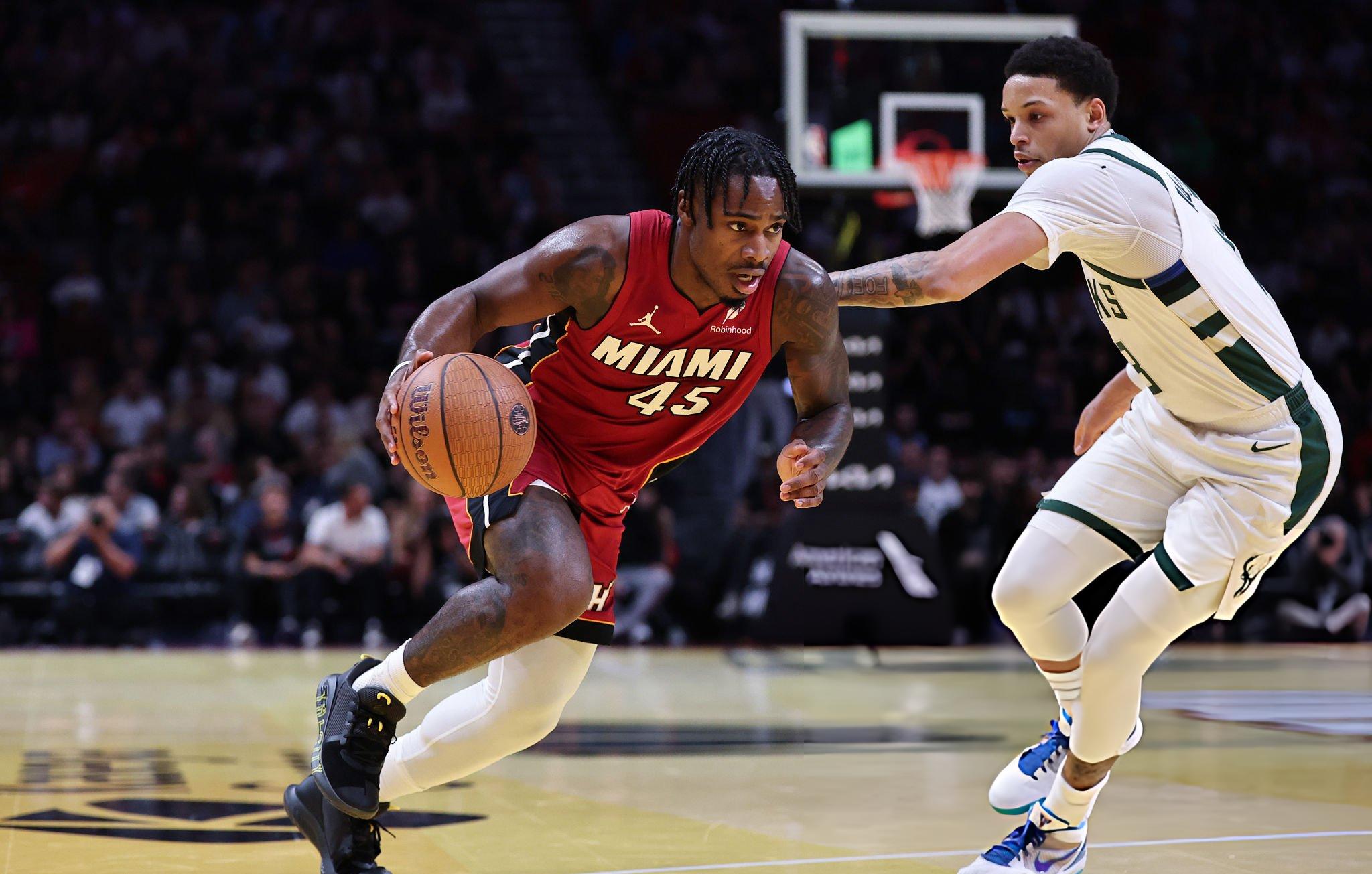
Miami and Toronto prefer reliable conductors. In Miami, Davion Mitchell is the perfect example: he gets the ball from point A to point B, doesn’t overcomplicate things and almost never messes up the easy passes. His assist-to-turnover ratio is 4.9, the best mark among starting point guards in the NBA.
The Raptors have two players in the top ten in AST/TO among those with significant minutes. Immanuel Quickley, who was never considered the model of composure in New York, has practically rebooted his career in Toronto: his assist-to-turnover ratio moved from 2.1–2.8–2.6 in previous seasons to a steady 3.3–3.3–3.8 after the trade. Jamal Shead was known for his steadiness back in college; now he puts up 6.3 points and 5.7 assists with just 1.2 turnovers in 19 minutes and hits 42.2% from three. He is one of the most underrated players of the season. Between them, Quickley and Shead have lost the ball on the dribble only four times in 36 games – this is a team that simply does not like pointless dribbling.
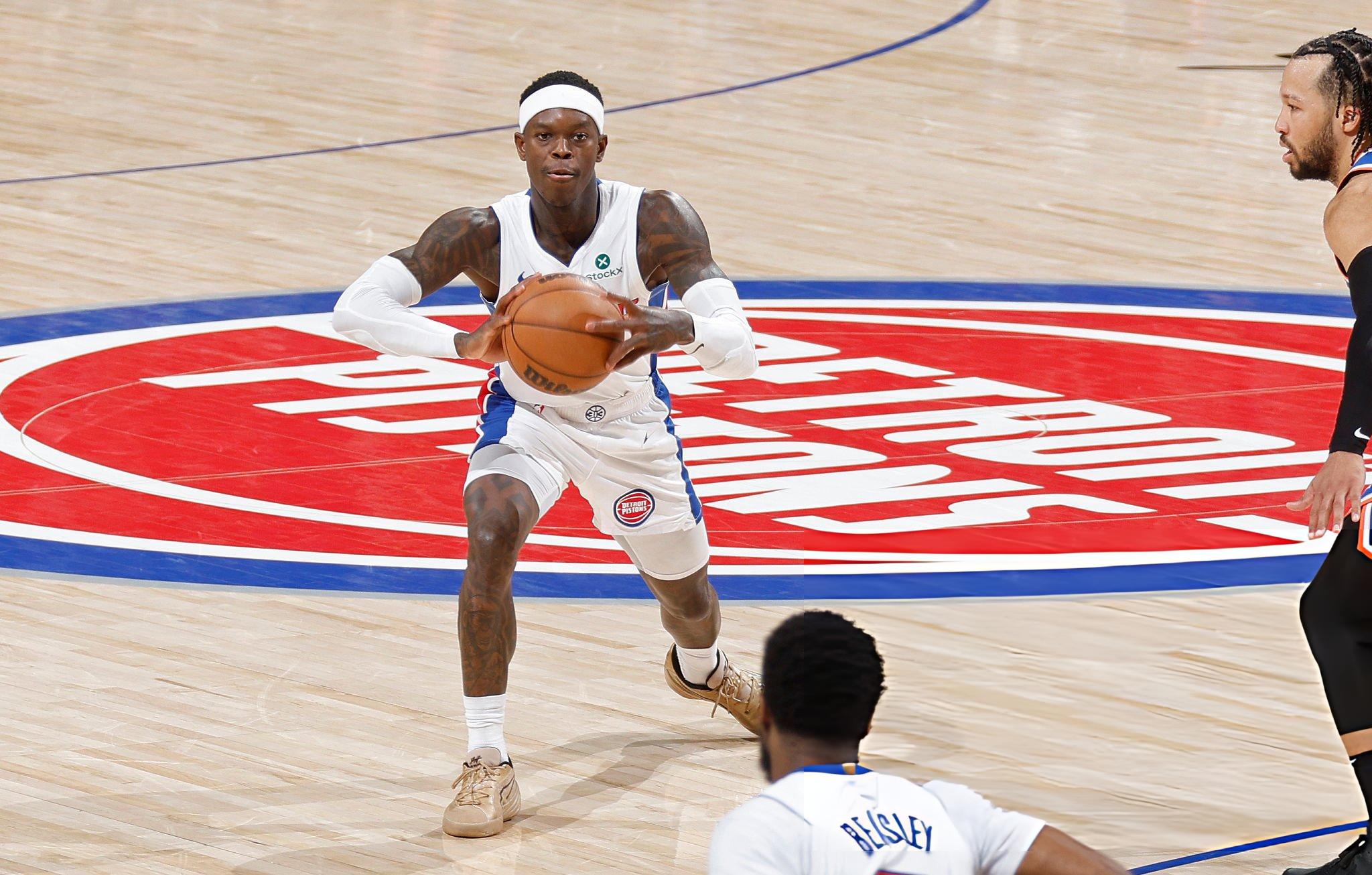
In Detroit things are simpler and more straightforward: they have a star playmaker in Cade Cunningham and one of the best young big men in the league. Run pick-and-roll, run it again, squeeze out the maximum. Cade averages 9.6 assists to 3.6 turnovers (AST/TO 2.8) while constantly facing double-teams, traps and tight spacing. Last season the ratio was 2.0 – the progress is obvious.
Atlanta’s situation is the trickiest. With Trae Young rehabbing, a lot rests on the shoulders of Jalen Johnson and Dyson Daniels. Both have posted career-best AST/TO numbers: 7.4 assists to 3.3 turnovers for Johnson – outstanding for a forward – and 5.7 to 2.3 for Daniels, the front-runner for “Mr. Lock”, 5.7 to 2.3. Keaton Wallace squeezes every drop out of his 15 minutes and almost never turns the ball over, but his individual ceiling is clearly limited. As a result, there are stretches when watching the Hawks’ half-court offense is genuinely tough – everything is correct and structured, but there isn’t enough star-level shot creation.
The overarching idea is clear: no superheroes hogging the ball and breaking the system. That’s why storylines like “Ja Morant heading to Miami or Toronto for pennies on the dollar” feel more like horror tales than dreams. The balance of the system could suffer more than the gain from the extra talent.
Atlanta’s future is the most intriguing. Without Young, the team has started moving the ball much better (assists climbed from 27.0 to 30.5 – already league-leader level) and shooting the three much more accurately (from 33.3% to 37.2%). On paper, Trae raises the offense to an entirely different level of threat, but reintegrating a player who loves to pull from nine meters out on the eighth second of the shot clock into a newly built collective structure without bruising his ego or his teammates’ roles is a delicate job.
Eastern Powder Keg: How Long Can This Last?
Right now, the best measure of sustainability we have is the gap between transition advantage and overall Net Rating. It is much harder to control tempo in the playoffs: by Game 3 at the latest, the opponent will have dissected your game and found ways to cut off your favorite transition looks. Only a handful of special teams manage to carry the same transition edge into May.
Atlanta and Toronto have an obvious flaw: they are in the red in half-court offense. For the playoffs that is practically a death sentence – if not in the first round, then in the second. The Hawks will try to fold Young back into the current framework and give the resulting structure time; there is a chance for a leap, but it’s hard to call it a likely outcome. The Raptors feel a lot like last year’s Pistons: energetic, big, afraid of no one – but with a ceiling somewhere around fifth to seventh place without a serious offensive upgrade. Brandon Ingram and Scottie Barnes as primary options is a recipe for a fan-favorite award for bravery and a respectful first-round exit against the first serious opponent.
Miami and Detroit look more substantial. The Pistons have balance on both ends of the floor and, even if relatively fresh, real playoff experience. The Heat have a core of players who have already been through long series and know exactly what it means to play every other day under maximum pressure.
There are three ideas worth keeping in mind.
First. In an ideal universe, all four would probably sit one or two spots lower in the standings. Every year the East gets a nice-looking team that dreams of jumping out of the bushes in the playoffs and grabbing Cinderella’s slipper. If Boston and Indiana were healthy and New York hadn’t wrecked its rhythm with a coaching change, we would be talking about appealing chasers rather than conference leaders – fresh, likable and limited.
Second. Even with that caveat, this foursome looks more solid than Chicago and has everything it needs either to earn a direct playoff berth or, in Atlanta’s case, fight for a top-six seed right to the end – provided the conference landscape doesn’t change dramatically.
Third. The landscape will almost certainly change. Right now the East really is that “Mexican standoff” circle where several armed people are pointing guns at each other and waiting for the first shot. Some general manager is going to snap and make a big trade in the next month or month and a half, and then the others will follow. As the deadline approaches, a “big bird” might appear on the market at a discount, and no one wants to give up a chance at that crane in the sky by grabbing a sparrow in the hand too early.
Usually the first one to move is the one who understands their own vulnerability better than anyone else. Which means these teams – and therefore we as viewers – probably still have another month or so to enjoy watching the Heat, Raptors, Pistons and Hawks reshape the East in their own image.