
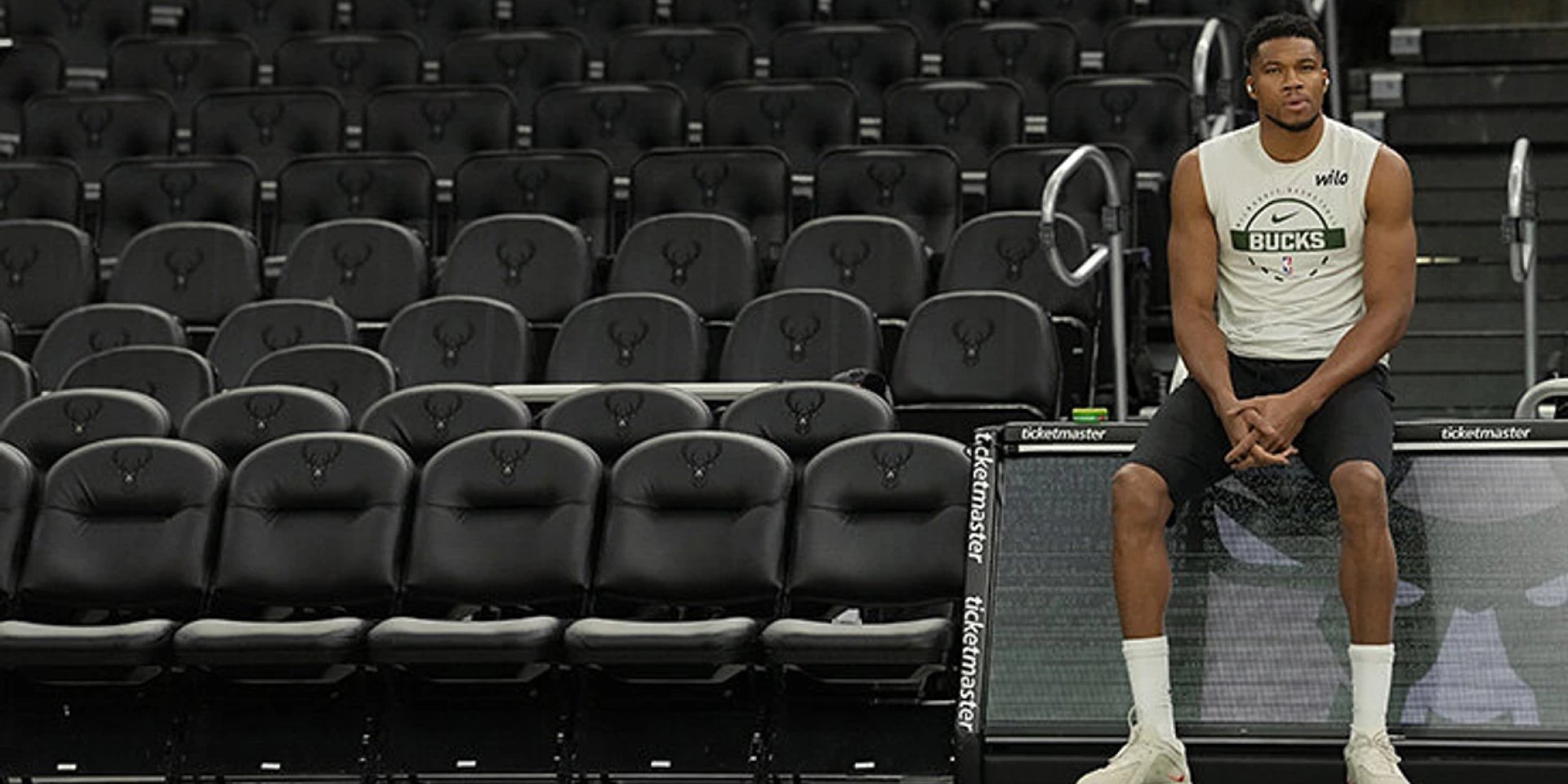
The partnership between Giannis Antetokounmpo and Milwaukee has been going on for twelve years now. In that time they have gone all the way from a hopeless bottom feeder to NBA champions, living through both the lows and the euphoria of a championship parade. It is a story that fits neatly into a Hollywood script: a shy kid from Greece, a small market, mutual belief in one another – and in the end, the Larry O'Brien trophy.
But even fairy tales eventually end. Today the union between the franchise and its superstar has reached a crossroads: the Bucks' resources are almost exhausted, the roster structure is cracking, and Giannis's health is breaking down more and more often. The question is no longer whether they have earned one more chance to fight for a title, but how exactly this story will end – with a soft parting or a painful break.
Point of No Return: Why Milwaukee No Longer Looks Like a Champion

Right now the Bucks are holding on to the label of a nominal contender mostly through inertia and respect for past achievements. The reality is much darker:
- the roster is very hard to reshape – there is almost no flexibility;
- draft picks have been sold off for many years ahead;
- the payroll and cap sheet are maxed out;
- without Giannis the offense literally falls apart;
- Myles Turner has not managed to plug the hole left by the best versions of Brook Lopez as a rim protector;
- without an elite rim protector the defense drops from elite to average, and an average defense in the East means, at best, a play-in team.
Antetokounmpo has just turned 31. His game still depends heavily on his physical tools – an explosive first step, powerful drives, constant contact around the rim. Careers built on that style rarely go smoothly: minor injuries accumulate, missed games pile up. This season he has already gone down twice, and the schedule has not even reached the halfway point.
Wanting to spend the rest of his prime years in a title race is absolutely natural. The problem is that the current version of Milwaukee cannot guarantee him anything close to that. And yet all public comments are as polite as possible: Giannis avoids making a direct trade request, Doc Rivers and his teammates repeat that he wants to stay – but between the lines you can feel that everyone is getting ready for a breakup.
The organization and the player clearly want to separate with dignity. Not by clashing and breaking dishes, as so often happens, but in a “we changed each other's lives and now we move on” format. Only the NBA is not a romantic musical. Here almost always someone has to sacrifice something.
Right now the Greek star is out for roughly a month and at the same time is discussing his future with the team. According to Shams Charania, a decision is expected in the coming weeks. To understand the possible scenarios, it helps to fix a few key points:
- The club is putting Giannis's wishes first. Stories about the Knicks having an exclusive summer window to prepare a trade proposal look quite believable. Antetokounmpo carefully avoids directly denying his interest in New York.
- The trade market is not fully open yet. Most players cannot be traded until after December 15, some only in January or even early February. There are also players who cannot be moved all season. For simplicity, we will assume the Bucks are not rushing, waiting for the pool of available players to become as large as possible. The wider the market, the higher the chance to minimize losses.
- It is impossible to get “fair” value back. A player who lives in the top four of the MVP race every year simply cannot be matched by any realistic package. For Milwaukee the realistic task is to escape the trap with minimal losses and grab at least some useful assets.
- The financial details are inevitably complex. Second aprons, the new CBA rules, the nuances of stretch buyouts – the space for error is huge, and insiders' and writers' calculations are not always perfectly aligned.
- All probabilities are approximations. The percentages are based on the situation at the beginning of December, but the market changes every day.
So, let's assume the Bucks do decide to trade him. What paths open up in front of them?
Path No. 1. Living for Today: Extending the Agony at Any Cost

Why This Could Actually Happen
For years Milwaukee has followed one simple principle: if you have to jump into the fire for Giannis, the club will jump. They shipped out picks, took on problem contracts, made moves that pushed the future deep into the red, all so that the present would be more comfortable.
That's how you get the Damian Lillard trade, walking away from Nick Nurse whom the front office favored, firing Adrian Griffin despite decent results because he lost the locker room, hiring Doc Rivers not as a perfect tactician but as an “authority figure”, and betting on Myles Turner in this configuration.
The organization remembers perfectly well the dreary years before the rise of the Greek Freak. And they understand that the next star of this magnitude may never come to Wisconsin at all. Free agents of that caliber do not choose this market; the trade asset pool is almost exhausted, and the draft stopped being a strength long ago.
Even a “smart tank” for high lottery picks is not an option – most of those picks have already been dealt. In this situation the difference between “five years of rebuilding” and “seven years of rebuilding” becomes almost abstract. If the future looks dark either way, the logic of “let's at least delay the onset of the nightmare” feels very human.
Why It Is Still Unlikely
The problem is that there is nothing left to pay with. With the current set of assets the Bucks can only really absorb other teams' bad money – big names without real impact and with negative value. That is the role of a forest ranger cleaning up other people's toxic salary dumps.
The cap sheet is already packed to the brim, and stretching Lillard has put dead money on the books for years to come. Truly liquid players are few and far between, and the next decade of draft capital has already been painted over in broad strokes. Any attempt to “add one more star” would bring a new pile of problems instead of solutions.
In reality this is the “do nothing” path. Extend Giannis, squeeze a couple more seasons out of a big-name team with a clearly limited ceiling, and accept that.
What The Bucks Still Have To Work With
After all the maneuvers, guaranteed money for this season is around $176 million. There is not much to trade out, but there is plenty of room to receive other people's contracts.
The main assets that still have some weight are the late first-round picks in 2031 and 2032 plus a few mid-tier role players.
Probability Of This Scenario
Call it roughly 25%. The “after us, the flood” strategy is common in the NBA, especially among owners who have already tasted a championship and are not thrilled by the idea of spending years rebuilding from scratch. In a bad position almost every move is bad – the choice is no longer between good and bad, but between bad and worse.
Path No. 2. Give Us Our Lottery Tickets Back: Trying to Recover Their Picks

Control of the Bucks' draft picks over the coming years is concentrated in the hands of two teams – Atlanta and Portland. The obvious idea for Milwaukee: try to trade with those exact clubs to at least partially reclaim their future.
The Atlanta Option: A Strong Package With Questions About Giannis's Desire
What The Hawks Can Put On The Table
- the New Orleans 2026 first-round pick;
- Trae Young;
- their own first-round picks in 2029 and 2031;
- the worse of the Bucks and Pelicans picks in 2027;
- young assets at the level of Zaccharie Risacher and Dyson Daniels.
Atlanta's arsenal is impressive: their own picks from 2029 through 2032, the ability to take on more salary than they send out, and existing control of a solid chunk of the future belonging to the Bucks and Pelicans.
Why The Deal Could Be Attractive
Teams in small markets are almost doomed to build through the draft. After the introduction of the second apron, it's extremely hard to construct a true contender without strong contributors on cheap rookie deals.
The Hawks already look dangerous today, and Giannis's arrival would automatically catapult them into the group of conference finals contenders. At the same time their rich pool of assets allows them to keep most of their current core – Antetokounmpo would not be walking into a scorched-earth situation.
For Milwaukee the key is not to fall all the way into the abyss. If they can get someone like Trae Young as a new first option, the Bucks at least remain a team whose basketball revolves around a star, rather than a bottom-dweller stuck in a multi-year expedition to the depths of the standings.
Where The Weak Spot Is
Everything comes down to what Giannis himself wants. There are no visible signs that he dreams of Georgia. The Hawks can afford to negotiate from a position of strength: they are fine even without a deal. If the Greek star does not clearly signal his interest, they can simply stay the course.
The Portland Option: Reclaiming The Future Through Oregon
What The Blazers Have In Hand
- rights to the Bucks' first-round picks in 2028–2030;
- Deni Avdija on a very team-friendly contract;
- Jerami Grant;
- Robert Williams;
- Matisse Thybulle;
- one of the young prospects Donovan Clingan or Scoot Henderson (or, in the most generous package, both).
After the Lillard trade it is Portland that controls a significant part of the Bucks' medium-term future. For Wisconsin, getting at least some of those picks back is a way not to cement themselves at the bottom for a decade.
Why This Could Suit Both Sides
The Blazers have a new owner, and new bosses often want to make a splash using the assets accumulated by their predecessors. In theory they could accelerate the move from “promising” to “contending” by adding a ready-made superstar to an already interesting young core.
If Portland is willing to give up part of its future, open a two–three year “title window”, and build around Giannis with Holiday, Thybulle, Avdija, and Clingan, they become a very dangerous contender in the West.
For Milwaukee this might be the best realistic compromise: get some of their own picks back; land one or two young players with All-Star ceilings; and avoid completely detonating the payroll.
Why It Still Probably Won't Happen
Portland's current strategy is to stockpile talent, develop their young players calmly, and wait for the West to thin out somewhat. Oklahoma City, Houston, and San Antonio are on the rise; Denver with Jokic is still at the top. Diving into the title race right now by burning through assets does not look like the smartest move.
Giannis's appetite for life in Oregon so far exists only in fantasy, too.
Combined Assessment For Atlanta And Portland
The combined probability is around 3%. This is more like the Bucks' dream of a beautiful restart than a set of clearly emerging real-world options.
Path No. 3. Eastern Winds of Change: The Young Predators of the Conference
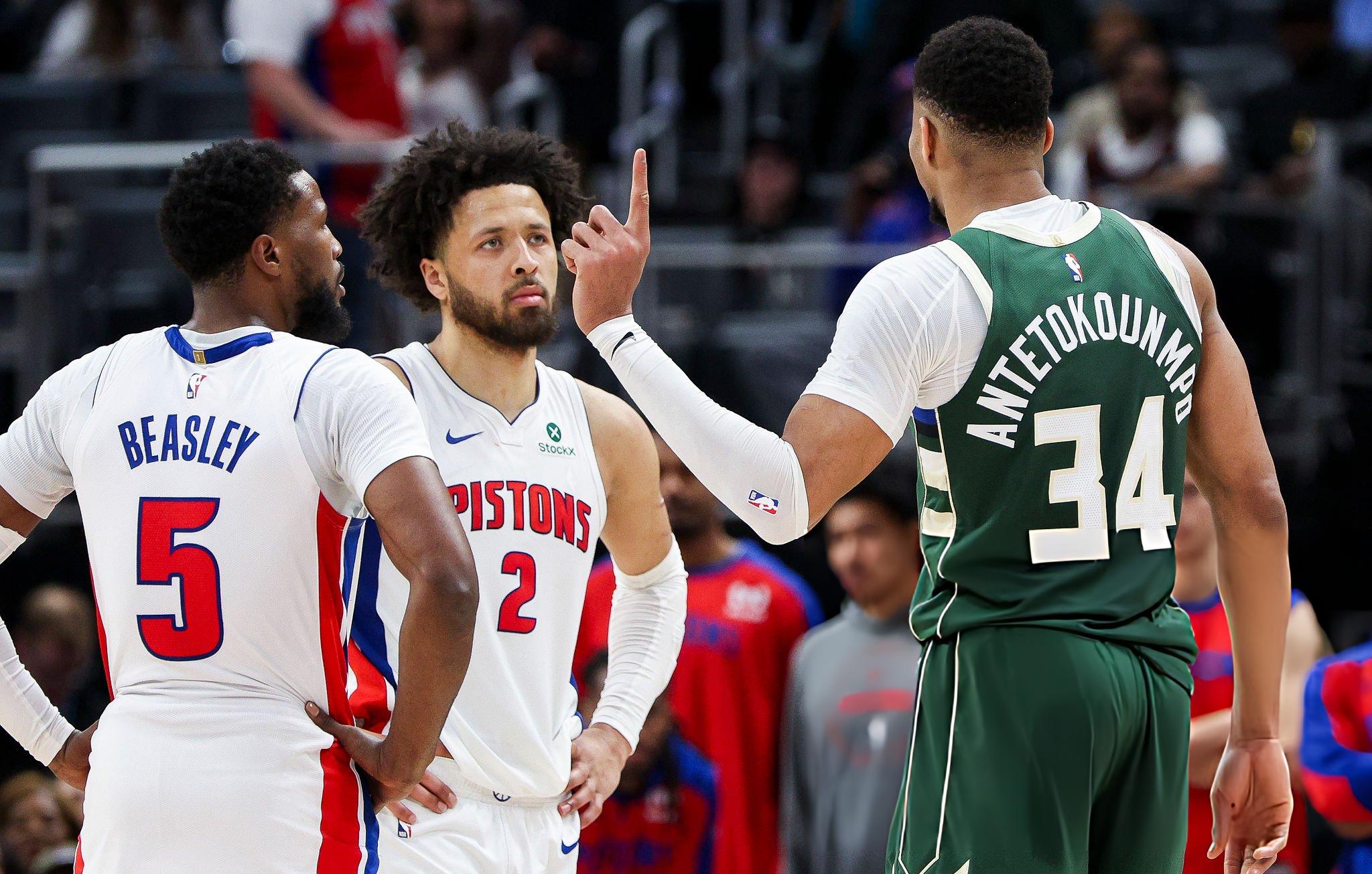
In the East there is a group of young, aggressive teams that are one piece away from becoming full-fledged championship contenders. And that piece is over two meters tall, weighs around 115 kilos, and is one of the best players in the league.
The idea is simple: Giannis understands perfectly how crowded the West is. The reigning champions are there, Jokic is there, and there is a wave of up-and-coming teams. In the East, the route to the Finals is shorter and the field is thinner; Antetokounmpo's arrival instantly turns several solid teams into clear favorites.
These clubs enter the stage if the Greek star firmly decides to leave but his primary preferred destinations (say, the Knicks and Spurs scenarios) fall through for one reason or another.
Detroit: Lots Of Youth, Little Point
What The Pistons Can Offer In Theory
- one of Ausar Thompson or Jalen Duren;
- Jaden Ivey;
- Tobias Harris's contract for salary matching;
- virtually any number of their own first-round picks between 2026 and 2032.
Why This Idea Pops Up So Often
Any time a powerful forward hits the market, Detroit almost automatically appears among the rumored suitors. They have enough assets, the East is open, and the age of their core allows them to look at the future with optimism.
Why The Upside Is Questionable
- Three-point shooting. The Pistons are already near the bottom of the league in three-point percentage. Giannis's arrival will compress the spacing even more, and it's hard to survive long in the playoffs with this kind of perimeter threat.
- Offensive structure. Detroit's offense is built around pick-and-rolls run by Cade Cunningham at the top. Taking that role away from a 24-year-old “semi-MVP” just to get two or three years of Giannis is risky both from a basketball and an organizational standpoint.
- The real value of the picks. Cunningham is 24, and the team is already not that bad. In the near future Pistons picks are likely to land around the middle of the first round – far from a guaranteed jackpot.
- City and status. Detroit has not been a dream destination for stars for a long time. The Blake Griffin trade in 2018 and its aftermath are still remembered – elite players and their agents pay close attention to such examples.
In total you get lots of noise and little tangible benefit.
Orlando: An Old Acquaintance And A Warm Climate
What The Magic Could Put In A Package
- one of Franz Wagner or Paolo Banchero;
- Anthony Black;
- Tristan Da Silva;
- pick-swap rights in 2027 and 2031;
- a distant first-round pick in 2032.
What Keeps This Option Alive
The main trump card is John Hammond. He is the one who drafted Antetokounmpo and guided his first steps in the NBA. Giannis has repeatedly thanked him publicly for “giving me the opportunity of a lifetime.”
On top of that Orlando is a warm state, with a growing core and aggressive ambitions. The team is already on the verge of becoming a permanent member of the East's upper half. Adding the Greek star raises their ceiling dramatically.
From Milwaukee's perspective the package at least meets a certain standard: Banchero looks like an early-version Giannis built around drives with an inconsistent jumper; Wagner is a smart, near-star-level wing you can easily build a play-in-level team around; Anthony Black has shown in recent weeks that he can grow into a solid starting guard.
Why It Is Still Not Enough
The biggest issue is the lack of draft capital. A lot of it has already gone to Memphis for Desmond Bane. Swap rights are a nice bonus, but they cannot be the foundation of a rebuild.
For the Bucks this is more like a “break-glass-in-case-of-emergency” path: a respectable starting point, but not the maximum package they could theoretically hope for.
Miami: Eternal Rumor Mill Star, But Not A Real Candidate
What The Heat Might Offer
- combinations built around Tyler Herro, Andrew Wiggins, or Norman Powell;
- Jaime Jaquez;
- Nikola Jovic;
- a young big like Kel'el Ware;
- first-round picks in 2030 and 2032.
In almost every scenario Pat Riley is not going to trade Bam Adebayo – that has been stated many times. And according to various reports Giannis himself is not too eager to work with Riley.
As a result Miami's package ends up being a set of good but non-star players plus a couple of distant picks. For the Bucks this is not the kind of return you want for the face of your franchise.
Toronto: Raptors Staying True To Their Aggressive Nature
What The Raptors Have
- Scottie Barnes or RJ Barrett;
- Immanuel Quickley;
- Jakob Poeltl;
- a pool of young players such as Grady Dick, Ochai Agbaji, Jamal Shead, and others;
- full control of all their first-round picks through 2032.
The Canadian club has already shown, with the Kawhi Leonard trade and the title that followed, that it is not afraid to put “everything on the table” for one big shot. The current roster is a collection of many nice but non-elite pieces side by side. Turning some of them into a superstar is totally feasible.
For Milwaukee such a package is intriguing: a first option at the level of Barnes or a scorer like Barrett, several quality role players, and a bundle of picks – not ideal, but a very workable starting point for a rebuild.
The downside is that we have no idea whether Giannis wants to live and play in Canada. So far he has not given a single clear sign of any special affection for the Raptors.
Chicago: An Internet Meme, Not A Serious Scenario
Recently an “insider” story made the rounds on social media: allegedly Giannis's representatives reached out to the Bulls, but Chicago, valuing its young core more, politely turned them down. The level of credibility is roughly the same as the old tale about some Russian club passing on David Beckham.
The reality factor is zero, the noise level is high. There is no point in treating this as a genuine possibility.
The Overall Probability For The Eastern Block is about 7%. In terms of package quality Toronto looks the most appealing, but based on leaks and reports, none of these teams seem to be on Giannis's personal short list.
Path No. 4. Fantasy, But Let's Check: Superbrands and Clickbait Scenarios
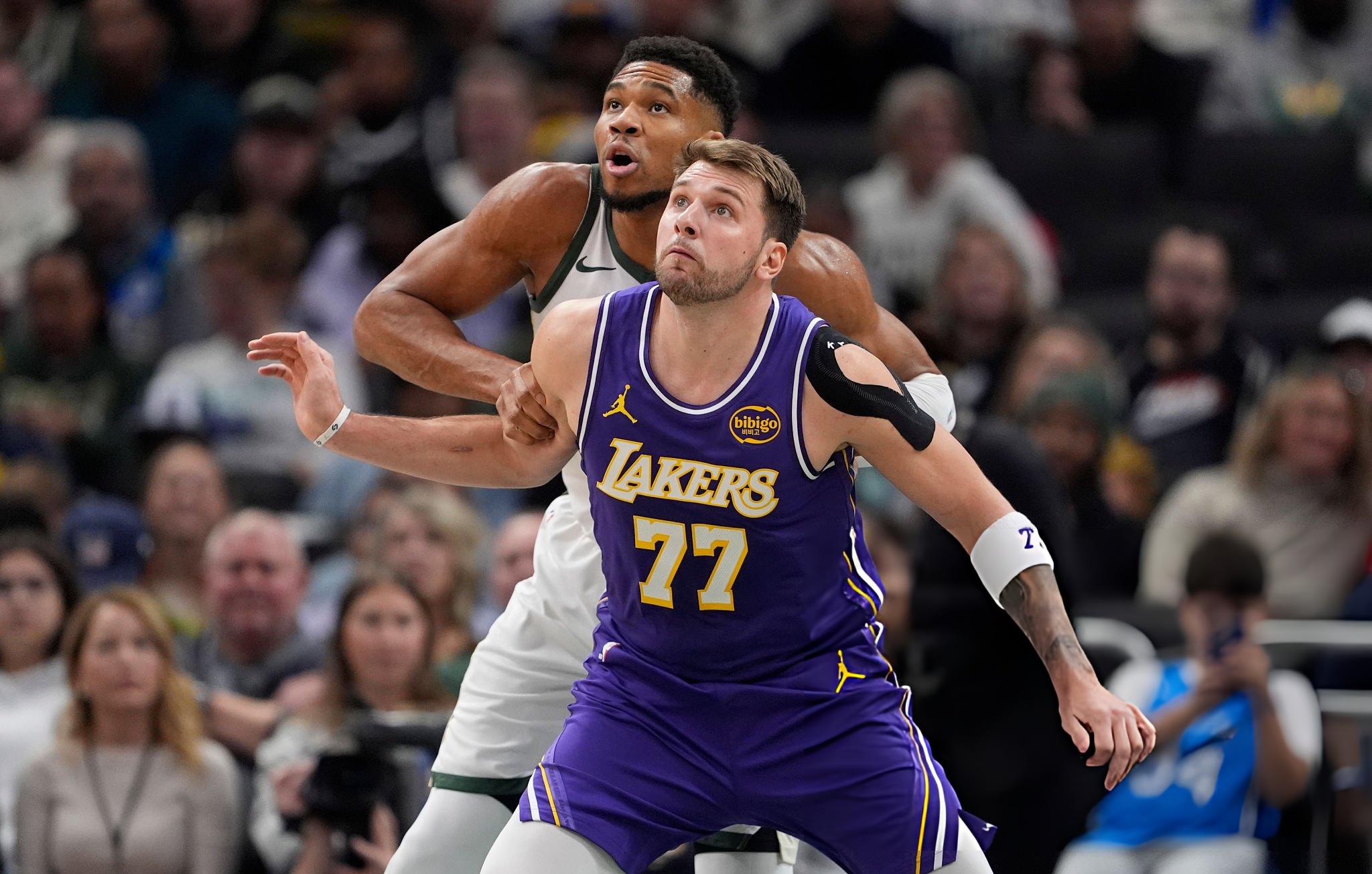
These are the options that do not make a ton of sense logically but keep popping up in rumor cycles. Massive brands whose asset packages, despite their stature, are clearly underwhelming.
Lakers: When The Logo Outweighs Logic
A Possible Package
- Austin Reaves;
- Rui Hachimura;
- Gabe Vincent;
- Dalton Knecht;
- a distant 2031 first-round pick;
- several pick swaps in 2028, 2030, and 2032.
From a media standpoint everything looks perfect: Giannis in a Lakers jersey, a gigantic market, a global brand, LeBron, the legacy of Kareem and Shaq.
For Milwaukee, however, the package is extremely weak. Reaves is unlikely to want to spend his prime in Wisconsin, the veteran role players do not raise the team's ceiling to contender level, and waiting until 2031 for the first real pick is a luxury they can hardly afford.
This story exists for one simple reason: these are the Lakers. Whenever a superstar budges, their name is guaranteed to be mentioned. But the real foundation for a deal is very thin.
Golden State: The Dream Of A Curry–Giannis Duo
What The Warriors Could Offer
- Jonathan Kuminga;
- Draymond Green;
- Buddy Hield;
- a young player like Brandon Podziemski;
- several future first-round picks.
Reports about Golden State's interest in Giannis have surfaced from time to time. Just imagining a Curry–Giannis pick-and-roll is enough to excite basketball fans.
But when you look at the concrete details, things fall apart:
- Green and Hield are not the kind of contracts a rebuilding team is dying to take on;
- Kuminga and one or two young names are nice, but not enough;
- the Warriors' distant picks are theoretically valuable, but you have to survive long enough to see them.
Houston: Lots Of Smoke, Little Fire
A Hypothetical Rockets Offer
- Alperen Sengun or Amen Thompson;
- Fred VanVleet;
- a 2027 first-round pick via Phoenix;
- their own first-rounders from 2030 to 2032.
There was a time when Houston was seen as a natural candidate whenever a big superstar trade came up. Now the picture is different: Kevin Durant is already on the roster, the team is already looking toward the title race, and burning a “future + young talent” package on a second aging star could easily wreck their balance.
With Oklahoma City standing out as such a clear model, the logical move for the Rockets is to preserve a roster architecture that balances the present and the future, not to spend their assets down to zero.
The Total Probability For This “Fantasy Block” is about 5%. Most of these stories are narrative constructs created to generate clicks and debate, not real plans.
Path No. 5. A Fair Price: A Real Predator from Texas

Based on insider reports and betting odds, one of the two main candidates is San Antonio – a team that stands out in terms of resources, basketball logic, and the pure visual drama of the story.
Spurs: Wembanyama And Giannis As The League's Nightmare
What The Texas Team Can Put In
- Stephon Castle or De'Aaron Fox;
- Devin Vassell;
- Keldon Johnson;
- Atlanta's 2027 first-round pick;
- their own first-round picks in 2029 and/or 2032.
This scenario is almost too cinematic: Victor Wembanyama and Antetokounmpo on the same team. One is “Giannis 2.0”, the other is the original. Two giants with endless arms, mobility, and defensive ceilings that border on absurd; a duo that would terrify any offense.
The Spurs would immediately jump into the core of the title-contender pool. Their defense could reach something close to a “wall” in basketball form.
Milwaukee, in turn, would receive:
- a young or already established first option in Castle or Fox;
- two solid second-tier scorers;
- a new cache of picks to build the future with.
Where The Catch Is
The situation brings to mind the old joke about “the market in the desert.” Whoever has the food – in this case, the future assets – sets the prices.
The Spurs already look quite solid even in games without Wembanyama. Their trajectory is upward, they are under no pressure to rush, their asset pool is full, and their system is working. So why overpay if:
- their only real rival on the market is the Knicks;
- New York's draft capital is much weaker than San Antonio's;
- the Spurs can climb to the summit step by step like Oklahoma City, even without a Giannis trade.
That is why they have no reason to put both Harper and Castle into one package or burn half of their pick stockpile at once. They can make a strong offer without it necessarily being the absolute maximum.
The Bucks, on the other hand, are in a much weaker position. They need the Spurs' assets more than the Spurs need Giannis. In real negotiations it is likely that Milwaukee would be forced to make the first move – and thus to adapt to San Antonio's conditions.
Estimated Probability – around 25%. In an open bidding process this scenario is one of the favorites, especially if Giannis's preferred path (New York) collapses for some reason. For Milwaukee it is one of the most “tolerable” realistic options: it hurts, but at least leaves something solid to build on.
Path No. 6. I Want to Go There: When the Star's Wish Outweighs the Market
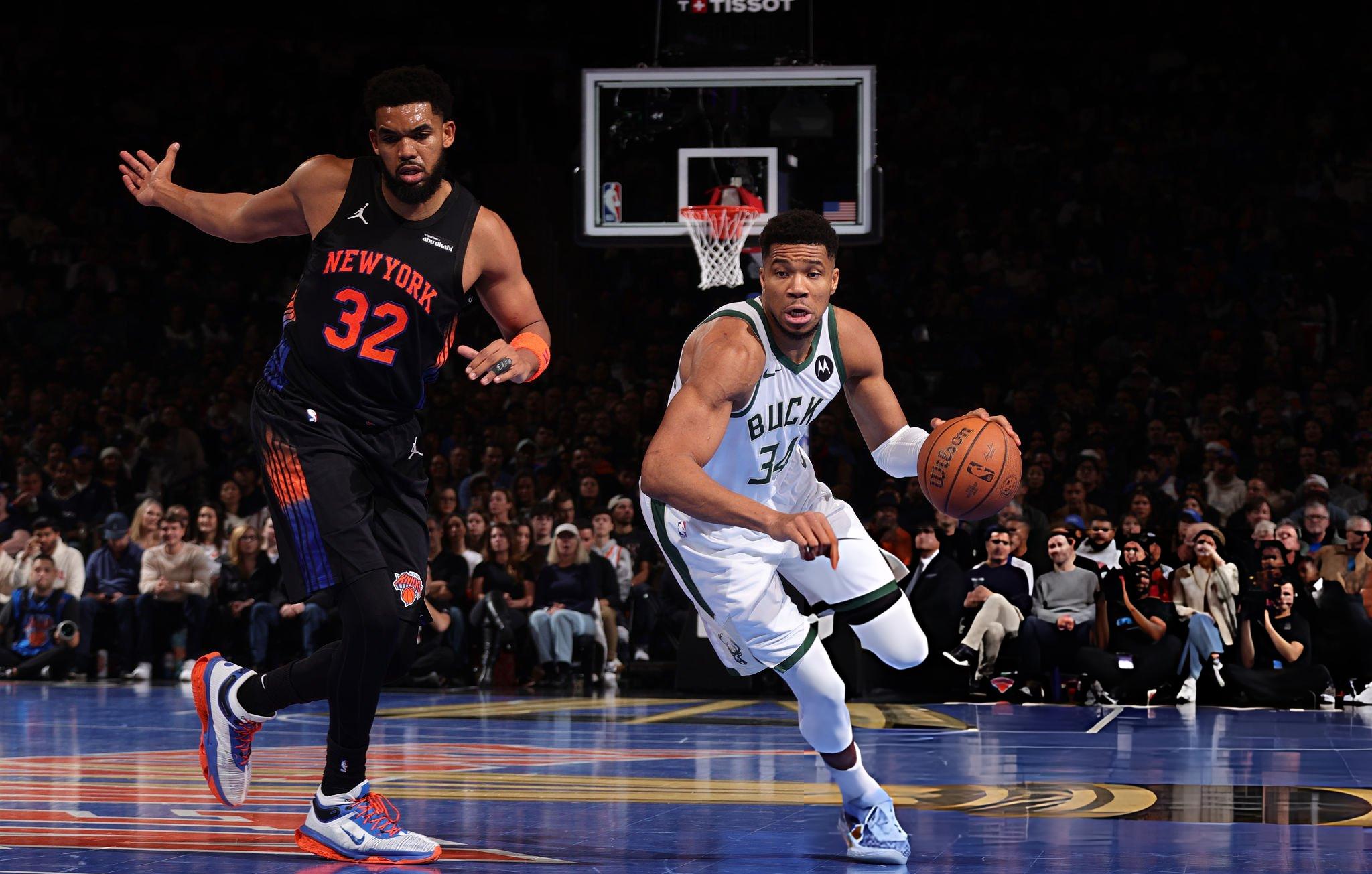
And finally, the candidate that has been mentioned the most over the years – the Knicks. Not because they have the richest asset pool, but because, according to the rumors, this is where Giannis would most like to go.
New York: Bright Lights, Weak Package
What The Knicks Might Be Able To Assemble
- Karl-Anthony Towns or OG Anunoby;
- Josh Hart;
- Miles McBride;
- a combination of first-round swap rights in 2028, 2030, and 2032;
- multi-team constructions to balance salaries.
The Knicks do not have a ton of “clean” picks of their own, nor a surplus of young superstars on cheap deals. In an open auction their offer would likely lag behind that of many competitors.
But they have something others do not: the player's own desire. According to insider reports, last summer Milwaukee already gave New York a one-time special window to talk and put together a package. Those negotiations ended quickly – the Knicks could not come up with a convincing proposal.
Even so, the relationship between Antetokounmpo and the Bucks is on an entirely different level. The club does not want to turn the breakup into a scandal, hurt the image of a small-market franchise, or lodge itself in the player's memory as “the place that forced me out.”
There are two main things Wisconsin has to think about:
- The chance of a return. From the way Giannis talks about “his city”, it is not hard to sense that coming back to Milwaukee at the end of his career to say goodbye there does not seem alien to him at all. Burning bridges now would mean killing that possibility.
- How the next generation will see them. In an era where top prospects are already refusing to work out for certain teams before the draft, the brand value of being a front office that treats its players with respect is very high. Handling Antetokounmpo harshly could easily put the Bucks on a lot of future stars' personal “no-go” lists.
That is precisely why New York, though weaker on paper, has a real chance to become the favorite if you factor in relationships and sentiment.
Why The Offer Is Objectively Modest
- Towns is 30, with a complicated injury history and a very clear set of strengths and weaknesses as a center. For a Bucks team that needs a young, versatile first option, he is not an ideal foundation.
- Anunoby plus Hart or Bridges gives you great second and third options, but not the central figure you build a new era around.
- The only truly attractive asset is Miles McBride; he can be flipped later for a nice package, but that is nowhere near what you would expect for a player of Giannis's caliber.
And yet...
When Desire Becomes Law: Why the Knicks Remain a Top Favorite
Most estimates give New York about a 35% chance of becoming Antetokounmpo's next team.
The reasons are clear:
- according to the rumors, this is the place Giannis wants the most;
- Milwaukee has already given the Knicks priority once in previous talks;
- it is much easier to arrange a “humane” separation through the only destination the player has chosen himself than through a cold auction.
Against this backdrop, the Knicks' tactical and coaching moves begin to make more sense:
- Tom Thibodeau's sudden dismissal;
- the hiring of Mike Brown;
- reallocating roles, increasing three-point volume, and giving more minutes to the bench.
Taking into account the ages of Jalen Brunson and the other leaders, Giannis's timeline fits this core perfectly. Yes, they will still lack a group of “young, angry stars in their absolute prime” for deep playoff runs, but a trade for Antetokounmpo at least brings in the star power needed to partially cover that gap.
Time to Pay the Bill: Whatever Milwaukee Chooses, There is a Price
No matter which path the Bucks take, there will be no “happy ending” in the classic sense. Any scenario in which Giannis is traded means taking a step back. The only question is whether that step will be a small one or a giant leap backwards.
- Leaving everything as is means extending the agony for a few more years and accepting that your resources are slowly burning out.
- Reclaiming their picks through Atlanta or Portland would be perfect on paper, but in the real market it is complicated by the motivations of other teams and the wishes of the player.
- Betting on “Eastern fairy tales” is taking a solid but not maximum package from Toronto or someone else and ending up in a gray area that neither fully satisfies the star nor the front office.
- Entering a “fantasy package” with the Lakers or Warriors means trading a franchise player not for future assets, but for brand value and marketing power.
- Closing a deal with the Spurs gives the league a historic Wembanyama–Giannis duo and, in return, leaves Milwaukee with a serious foundation for a rebuild – a painful but logical middle road.
- Listening to Giannis and sending him to the Knicks means getting less than you theoretically could, but keeping your face and leaving the door open for a potential return.
One way or another, Antetokounmpo has already given Milwaukee something many franchises wait decades for: a championship banner and years of joy.
The most unpleasant part of this story is very simple: now it is time to pay the bill. And this time the price is not just money – it is the future itself.