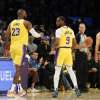
Sometimes the outcome of the game is still a long way off, but the tension is already off the charts and the coach effectively hits the pause button. That exact moment turns into a separate market for fans of unconventional outcomes. The 'first timeout' bet lets you profit not only from the strength of the teams, but also from coaching habits, game dynamics, and psychology. It is not the most obvious type of wager, but with a thoughtful approach it can become a useful addition to your overall strategy.
Table of Contents
- The Meaning of the 'First Timeout' Market
- Timeouts Through the Coach's Eyes: Who Likes to Stop the Game Early
- Form, Style, and Psychology: What Else Influences the First Timeout
- How to Find Value in First Timeout Odds
- Real-Life Examples of First Timeout Bets
- The Timeout Bet Within a Responsible Gambling System
The Meaning of the 'First Timeout' Market
A 'first timeout' bet is a wager on which of the teams will be the first to request a stoppage in play. This market is most commonly found in basketball, volleyball, and handball, where timeouts are actively used to adjust tactics, slow down the tempo, or give players an emotional reset.
As a rule, the bookmaker offers you a choice between the two teams as to which one you believe will be the first to make use of a timeout. In some betting lines you may also see an additional option such as 'no timeout will be taken in the specified segment', but the main interest still revolves around choosing a particular team.
You can place this kind of wager both before the game and in live (in-play) mode. In the pre-match phase you rely on statistics and general trends; in real time you additionally factor in the flow of the game, the starting line-ups, the first few possessions, and how quickly the score is changing.
Timeouts Through the Coach's Eyes: Who Likes to Stop the Game Early
The key to understanding this market is the working style of the head coaches. Some coaches prefer to shut down bad stretches quickly and call a timeout as soon as the opponent strings together a 0:5 or 0:7 run. Others, by contrast, allow the team to play through it on their own and hold on to their timeouts until the deficit becomes really serious.
What should you pay attention to:
- Game Management Model. Study how the coach behaves in different games: does he stop play already in the early stages of a quarter or set, or does he more often save his timeouts for the end of the game?
- Role-Based Use of Timeouts. Some specialists take a pause for tactical adjustments (changing the defensive scheme, introducing a new play), while others use it to kill the opponent's momentum or cool down their own players.
- Tournament Context. In decisive games (playoffs, finals, title battles) coaches usually act more cautiously and intervene earlier in the game so as not to let the initiative slip away.
Form, Style, and Psychology: What Else Influences the First Timeout
Alongside the coach's philosophy, there are several other factors that significantly influence the likelihood of the first timeout. Before you place a bet, it makes sense to break down a few important blocks.
Current Form of the Teams. A team that struggles at the start of games is more often forced to 'rescue itself' with timeouts already in the opening stretch. If in recent matches it regularly found itself trailing early, there is a good chance the coach will again have to step in quickly.
Head-to-Head History. The history of previous meetings helps you understand the typical scenario. If in most of their past games the same team was the first to call a timeout, this may not be a coincidence but a stable pattern: struggles at the start, problems handling the opponent's press, or an unsuccessful choice of starting five.
Strengths and Weaknesses. A team with an unstable defense or a weak half-court offense is more likely to run into bad stretches where the opponent scores almost uncontested. In these conditions the coach simply has to take an early timeout to stop the slide and reshape the game.
Motivation and Status of the Match. Finals, derbies, and games that decide a playoff spot all increase the cost of every mistake. A more motivated team, especially if it is the favorite, often uses timeouts as a tool to control the game, preventing the opponent from building on their success even when the score is not yet critical.
How to Find Value in First Timeout Odds
The 'first timeout' bet by itself should not turn into pure guesswork based on gut feeling. To find truly profitable opportunities, it is useful to follow several practical rules:
- Collect Statistics. Go through box scores or game recordings in the leagues and teams you are interested in. Pay attention to who tends to start games poorly and who regularly has to stop the bleeding with early timeouts.
- Compare the Odds With Reality. If bookmakers give roughly equal chances to both teams, but your observations show that one coach almost always calls the first timeout, this is potentially a valuable market.
- Factor in the Venue. The home team may sometimes call the first timeout when it feels it is losing control in front of its own fans. The visiting side, on the other hand, may have to rely on timeouts more often if it struggles to cope with the pressure and atmosphere.
- Do Not Ignore Live Betting. If you see that one team starts the game extremely nervously — turnovers, missed shots, big gaps in defense — and the opponent is scoring quickly, it is logical to expect an early timeout from the side that is suffering.
Real-Life Examples of First Timeout Bets
Let’s look at a couple of scenarios to see how this type of bet works in practice.
Example 1. Basketball. A game between the New York Knicks and the Boston Celtics is in progress. According to past-game statistics, the Knicks' coach often calls an early timeout as soon as his team concedes a short 0:5 or 0:7 run. The Celtics' coach, by contrast, prefers not to intervene for longer. You analyze recent meetings and see that the Knicks have been the first to call a timeout several times in a row. When you place a bet on the Knicks to take the first timeout, you are relying on this stable tendency. If the team really does request a timeout first, your bet is settled as a winner; if the Celtics call a timeout earlier, the wager loses.
Example 2. Volleyball. In women's volleyball, Uralochka face Dinamo Moscow. Before the match you study the stats and notice that Uralochka often start sets poorly, and their coach already calls a timeout during the first mini-runs by the opponent (0:4, 2:6). Dinamo, on the other hand, tend to play through small deficits without calling a timeout. Based on this, you choose the bet 'first timeout – Uralochka'. If Uralochka are the first to stop play with a timeout at the start of the set, your bet wins; if Dinamo call a timeout earlier, the wager loses.
The Timeout Bet Within a Responsible Gambling System
The 'first timeout' market can be an interesting addition to your strategy if you are prepared to invest time in analysis: studying coaching habits, watching games, comparing numbers, and tracking team form. This is one of those cases where deep immersion in the details gives you a real edge over the line instead of turning the bet into a random experiment.
You should not view these wagers as your main source of income; it is better to use them as a careful complement to the primary markets (match results, handicaps, and totals). If you control your bankroll, avoid over-staking, and base your decisions on facts rather than emotions, the first timeout bet can become one more working tool in a thoughtful bettor's arsenal.