
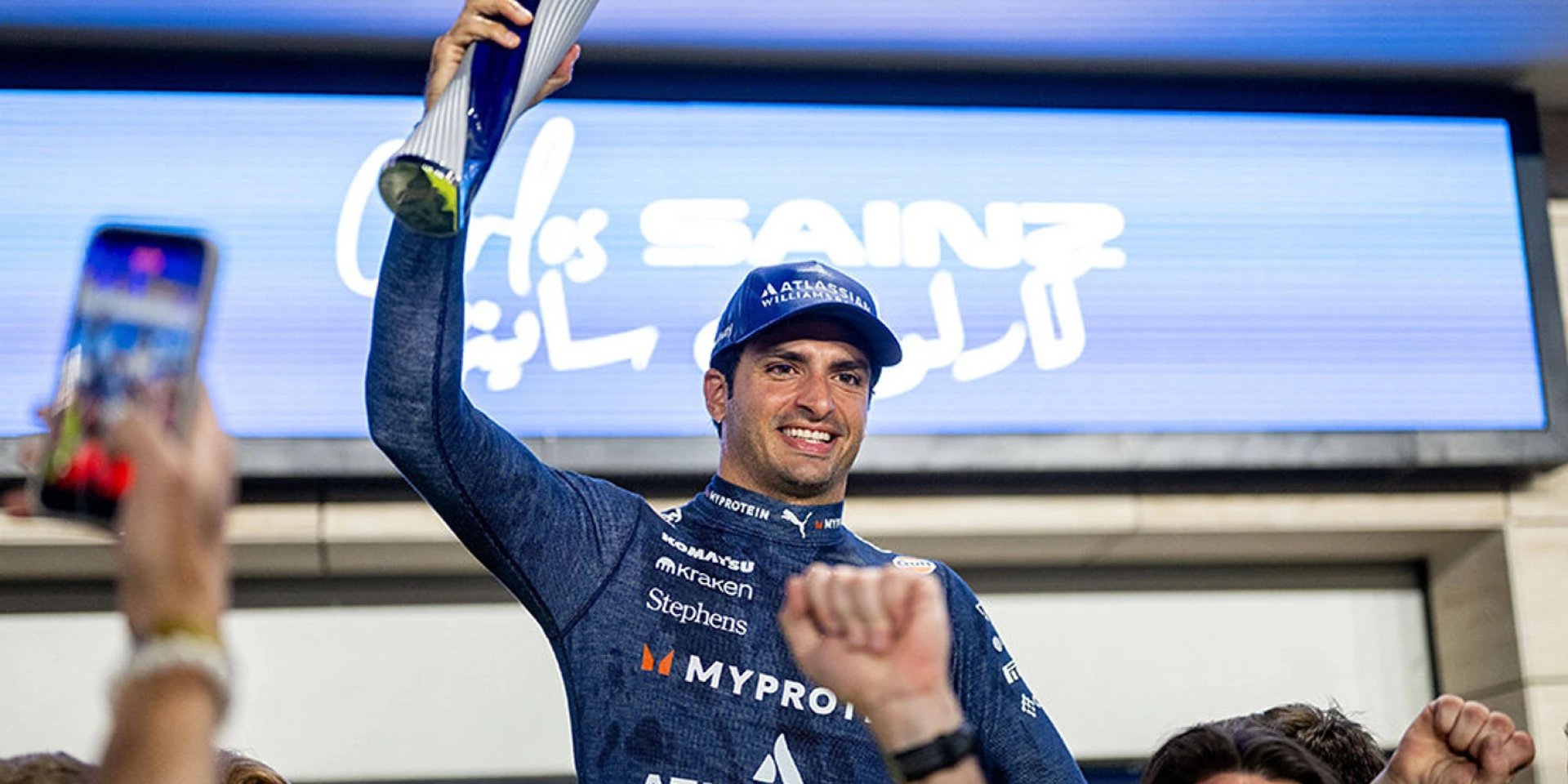
While fans were focused on the main intrigue of the Formula 1 season and calculating every scenario in the title fight, a very different, far less expected story unfolded almost beneath the radar. Carlos Sainz, who himself expected the Qatar round to be one of the toughest weekends of the year, suddenly became the leading character of the “sensation” market. The Spaniard fought his way up to third place, kept Lando Norris behind him all the way to the finish, delivered a second podium of the season for Williams and effectively locked in fifth place for the team in the Constructors' Championship. And all this despite the fact that, on the eve of the race, bookmakers were pricing his chances of a top-three finish at a purely symbolic 1% – odds of about 95.56 looked more like a decorative line in the market than a realistic option.
From the Baku Breakthrough to Qatari Skepticism
After the success in Baku, Sainz did not try to build any illusions. Back then he honestly admitted that, in the remaining part of the championship, they would most likely fail to reach the podium again and that result would probably remain the peak of his season. The logic was solid: the Baku podium was seen as a one-off flash rather than the start of a series.
Bookmakers thought the same way. In the Qatar line, Sainz's name was buried somewhere on the back pages – odds of 95.56 for a top-three finish clearly signaled that the markets did not believe in a repeat. Converted into probability, that is only around 1.05% – in other words, you would need to place this kind of bet a hundred times just to hit it once on mathematical expectation.
Carlos headed to Qatar fully aware that the track was tricky, the traffic would be heavy and the strategy would most likely have to be “realistic” rather than aggressive. In his own forecasts, a podium figured as a pleasant but unlikely fantasy.
The Qualifying Session That Forced the Line to Be Recalculated
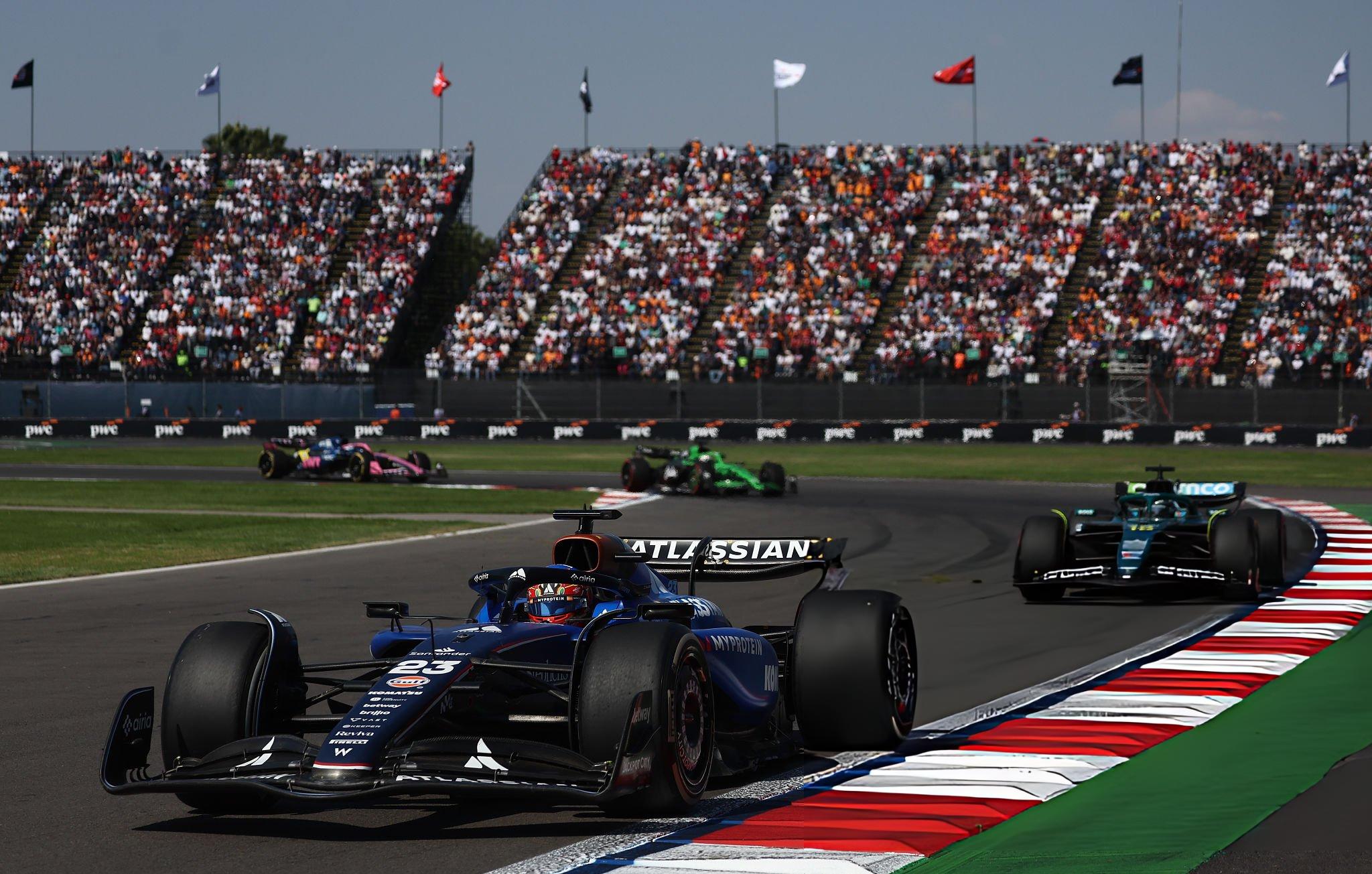
The turning point came on Saturday. Sainz suddenly exploded in qualifying and took seventh place on the starting grid – a result he himself greeted with more surprise than wild joy. But for those who look at Formula 1 through the prism of prices and lines, it was a crucial signal.
The market reacted instantly: probabilities were recalculated, odds shortened and the chances of a podium rose to around 7%. That was still not the level of the outright favourites, but no longer pure fantasy. For cautious bettors it remained too risky, yet for fans of long-shot accumulators and small-stake singles it became a perfectly playable option.
It was important to remember that a good starting position in itself guarantees nothing. In such a scenario, the driver has to nail the opening phase of the race, avoid getting stuck in traffic, manage the tyres and seize any opportunity offered by rival strategies or a safety car. The Qatar Grand Prix turned into a perfect test of the ability to squeeze the maximum out of a minimal base.
Start, Strategy and Failure: How 1% Survived to the Chequered Flag
The race itself added several more layers of drama to the story. Right at the start, Sainz launched a powerful attack and jumped into the top five, stayed clear of unnecessary midfield battles and slotted into the main pace group. Then strategy came into play: McLaren's alternative approach opened a window for the Spaniard to dive into the leading trio.
From that moment on, his podium was no longer just a theoretical construct on paper – it turned into a live bet you could track in-play. Any safety car, pit-lane error or extra stop could have flipped the entire script in a couple of laps. But as the laps ticked by, Sainz maintained his pace and kept fending off Lando Norris, who was literally “hanging” in his mirrors.
Five laps from the finish, the thing both drivers and those who had backed them fear most finally happened: the car started acting up. According to Carlos, a problem appeared somewhere around the front axle – perhaps a piece of someone else's front wing got lodged under the floor, and the front tyre began to behave strangely. In such moments, a single extra vibration or a loss of front downforce can cost you tens of seconds and any hope of a podium.
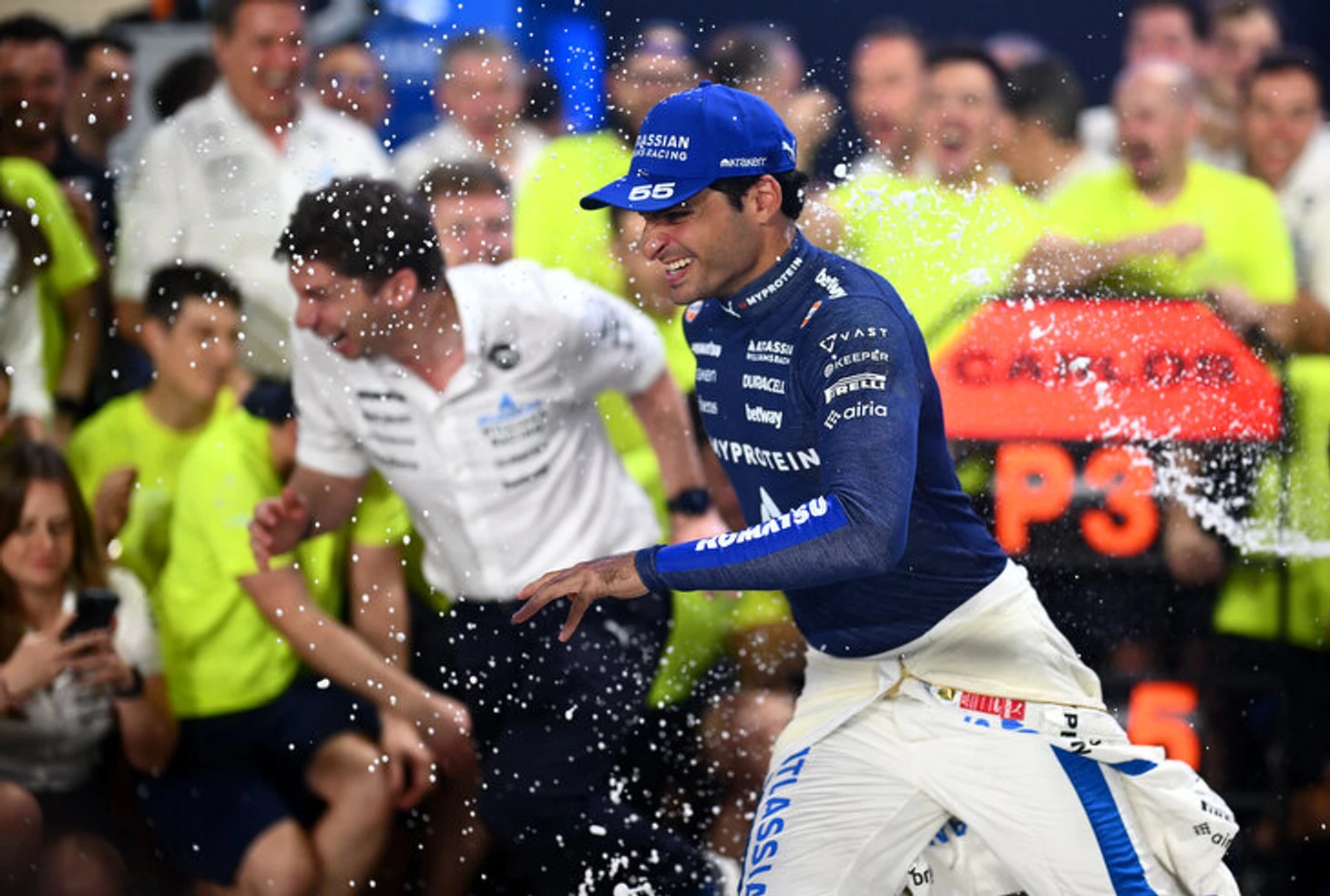
But the Spaniard held on – driving carefully, without taking unnecessary risks, yet fast enough to stay in the top three to the chequered flag. That is how the 1% from the line turned into reality, and the Williams garage erupted with emotion as if the team had just clinched the title.
What 1% Means in the World of Bookmakers and Pop Culture
To fully grasp the scale of what happened, it is worth looking at 1% through the lens of other markets. Today bookmakers take bets on virtually everything: match results, elections, awards, records and even game release dates. Roughly the same 1% band is where scenarios land that fans passionately debate but most analysts regard as borderline utopian.
In terms of probability, Sainz's podium in Qatar is in the same category as Galatasaray suddenly winning the Champions League or Aleksandr Sobolev unexpectedly becoming the top scorer of the Russian league season. The maths allows for such outcomes, but the market clearly shows that they sit at the outer edge of the probability spectrum.
A pop culture example is even more striking. Despite all the rumours and anticipation, the chances of seeing GTA VI released specifically in 2025 have been estimated by many entertainment betting analysts at roughly that same 1%. Fans keep believing, but for a long time the betting line treated it as a “beautiful but doubtful” dream. Against that backdrop, Sainz's Qatar podium looks almost like a living meme: something that felt close to “science fiction” suddenly became a historical fact.
After the finish, Carlos even found time to exchange a few words with Lewis Hamilton, who had taken his seat at Ferrari, and as if reminded both the Briton and the tifosi that this season the score in their personal mini-duels is already 2–0 in favour of car number 55.
How the Qatari Miracle Changed the Line for Abu Dhabi
Unsurprisingly, such a finale could not fail to affect how analysts view Sainz. Not so long ago his chances of making the podium were measured in symbolic single-digit percentages; before the Abu Dhabi Grand Prix, however, the market adopted a much more respectful tone. The price for a top-three finish dropped to 25.00, which corresponds to a probability of around 4%. Still not outright favourite status, but already that of a dangerous dark horse worth keeping a close eye on.
It is also interesting to see who inherited the symbolic 1% this time. The role of “miracle hero” passed to Nico Hulkenberg, who once finished in the top three at the British Grand Prix. His odds became a fresh reminder that even in a well-tuned and seemingly stable Formula 1 order, there is still room for the unbelievable.
For bettors, this is an important signal. The line is a living organism: a single “impossible” podium can completely change how a driver, a team and their potential for the remainder of the season are perceived. Those who learn to spot such shifts in perception in time gain an edge not only in terrace debates but also on real betting slips.
Why You Should Not Write Off Even 1% in Formula 1
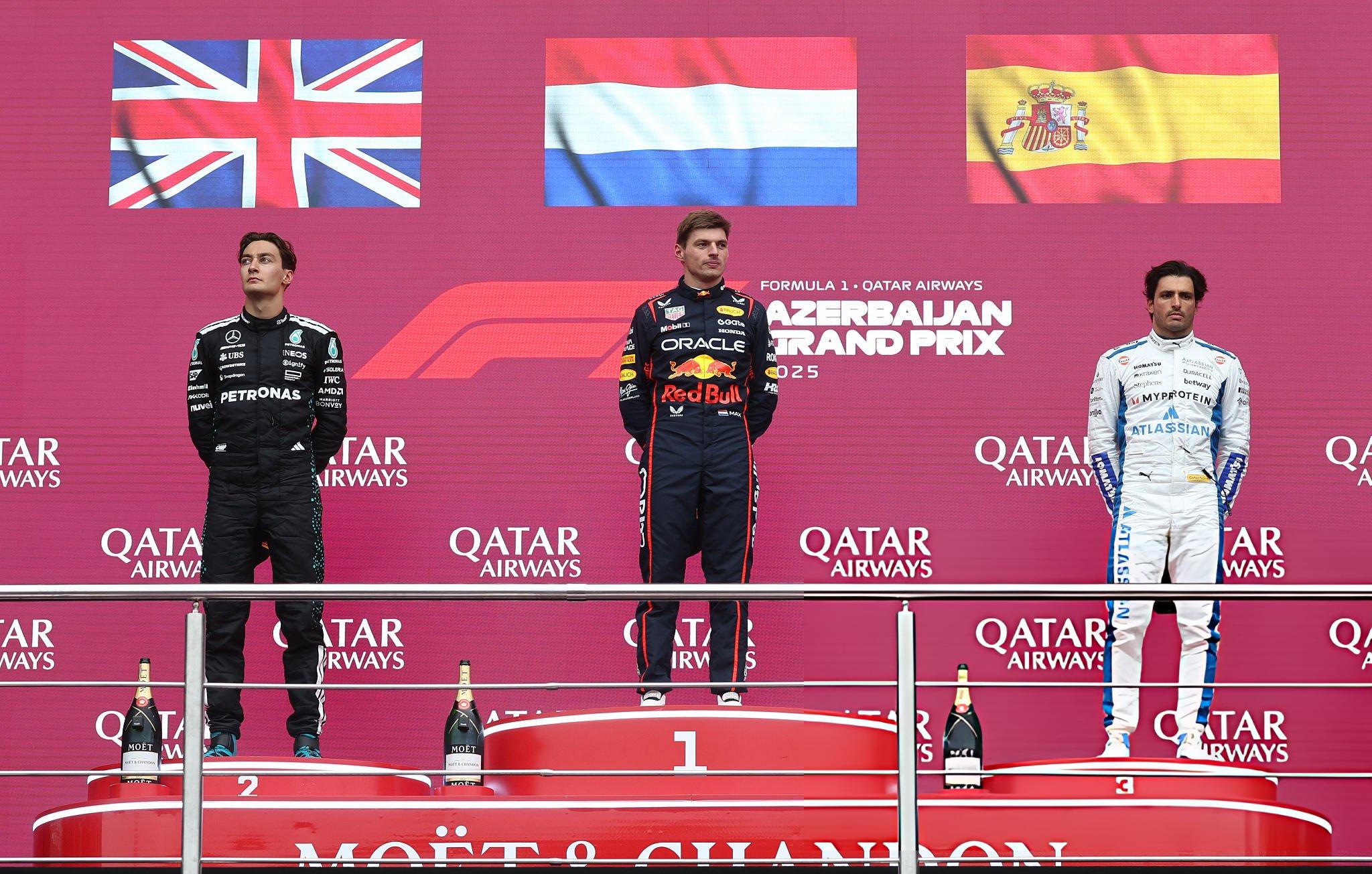
The story of Carlos Sainz's Qatar podium is a perfect example of the fact that in both Formula 1 and betting there are no completely dead options. Yes, a bet at 95.56 will most often remain just a single line on a coupon, but every now and then it is precisely such outcomes that become the calling card of a season.
For bookmakers, this is a reminder that probability models have to account not only for raw pace and statistics but also for the chaos of a race: strategies, safety cars, pit stop errors, weather quirks and the human factor. For bettors, it is a lesson in smart bankroll management: you cannot build a roll on miracles alone, but abandoning underdogs entirely means giving up a major source of value.
Qatar showed that a driver whose chances of a podium at the start of the weekend seemed almost laughable can, with a single flawless race, change both the balance of power in the championship and the way the lines are priced around him. And as long as Formula 1 has odds quoted to two decimal places, there will be people who believe in that 1% – and sometimes they are the ones who end up winning.