


Petr Yan's lopsided points win over Merab Dvalishvili was the kind of result almost no one believed in before the fight. The scorecards of 49–46, 49–46 and 48–47 already look convincing, but judging by how the bout played out, you could easily imagine a 50–45 in favor of the Russian as well. There was no knockout, no classic finish – Yan simply and methodically stripped his opponent of his strengths, round after round dismantling the Caucasian "cardio machine."
The Center of the Cage as a Fulcrum
The first and key element of the game plan was taking the center of the cage. From the opening seconds Yan occupied the advantageous position and hardly gave it up as long as the fight stayed on the feet. This is a crucial detail: Petr in general looks much better when he is pressing and moving forward. His footwork going backward is not perfect, but in pressure mode he is almost a textbook fighter in the UFC.
For Merab this turned into a serious problem. His optimal scenario is to impose pressure himself, bounce in and out, use level changes and feints to pull reactions and then accelerate into a takedown. Yan simply did not allow him to switch on that familiar rhythm.
Jab with a Duck: An Anti-Wrestling Key

An aggressive start is not the most typical element of Yan's style. But against Dvalishvili you could not just "give away" the early rounds to a fighter who almost never fades in the championship rounds. That is why right from the start of the bout Petr began actively using a stiff jab from southpaw with a follow-up duck.
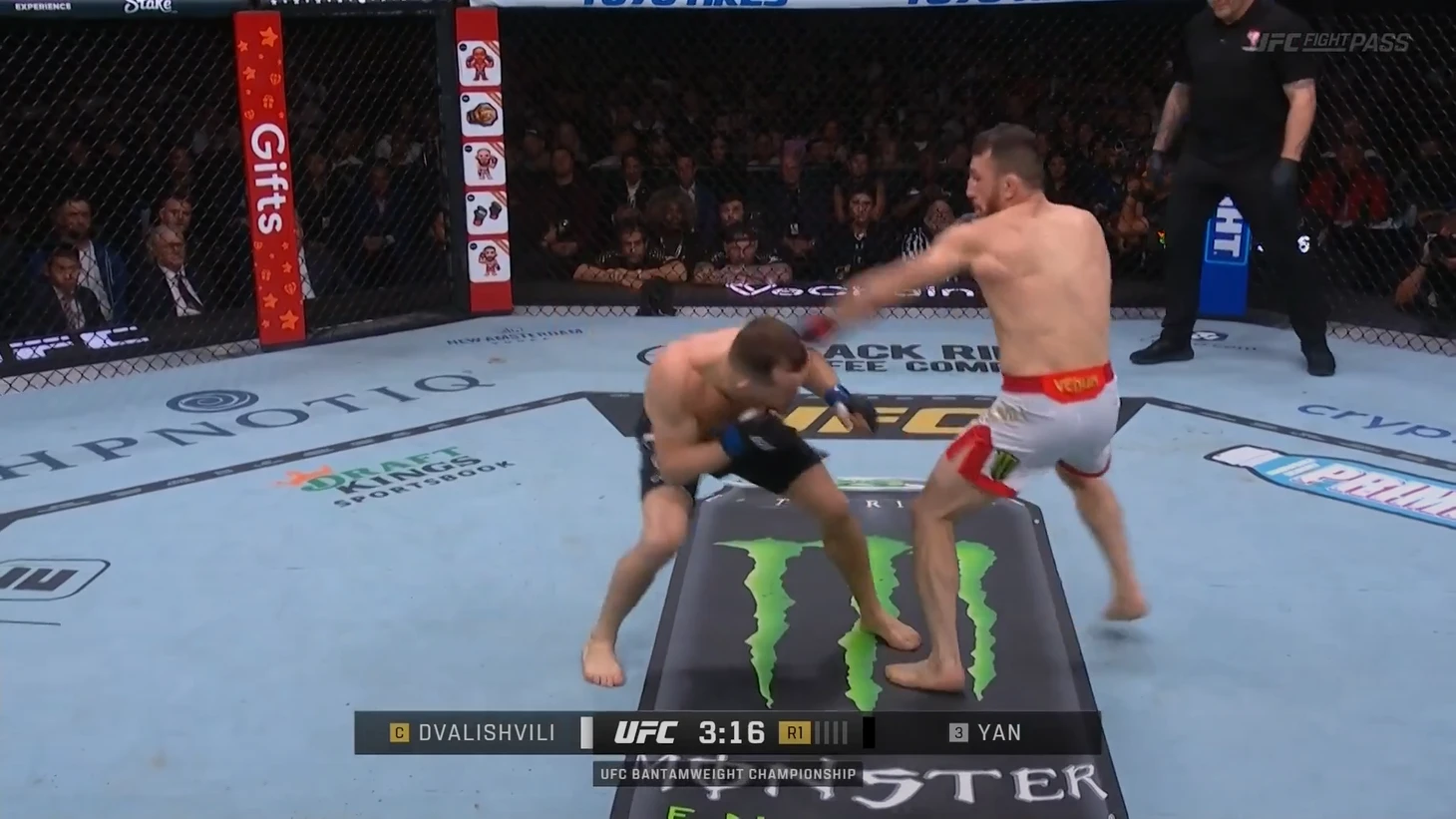
The pattern was both simple and brilliant: Yan threw the jab, whether it landed or not, and immediately changed level, dropping down and breaking the timing of single- and double-leg entries. A similar tool was used recently by Jack Della Maddalena against Belal Muhammad, shutting down many wrestling attempts with exactly this "jab + duck" combination. Yan's version worked as well – he was doing damage and at the same time chipping away at the Georgian's confidence in his own entries.
The Price of Every Entry
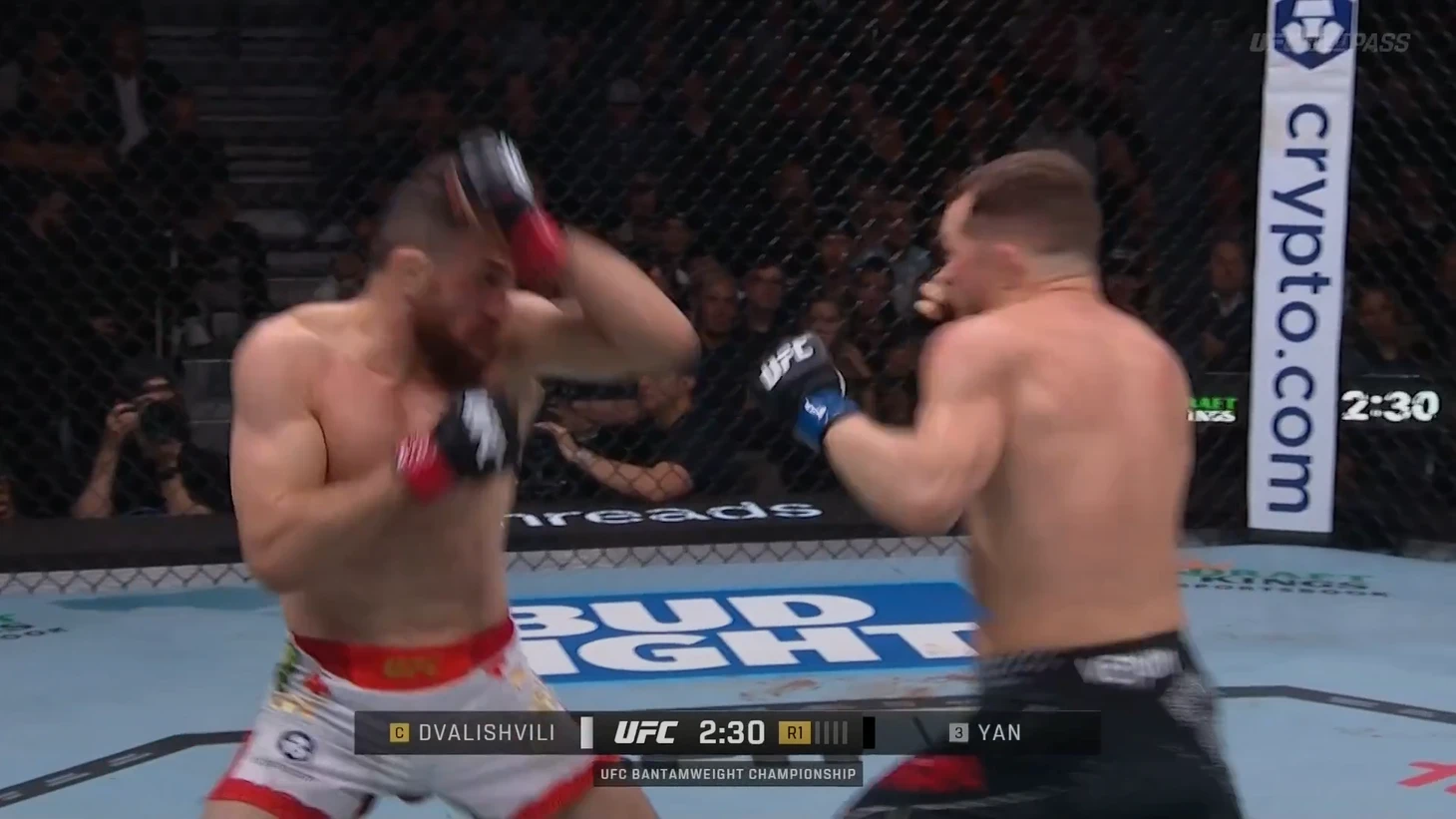
Merab's style implies constant closing of the distance. He marches forward, hiding behind a kind of "shield" formed by his lead hand, looking to get to contact or to a takedown. Against most opponents this works, but Petr managed to turn every such closing of the distance into a risk.
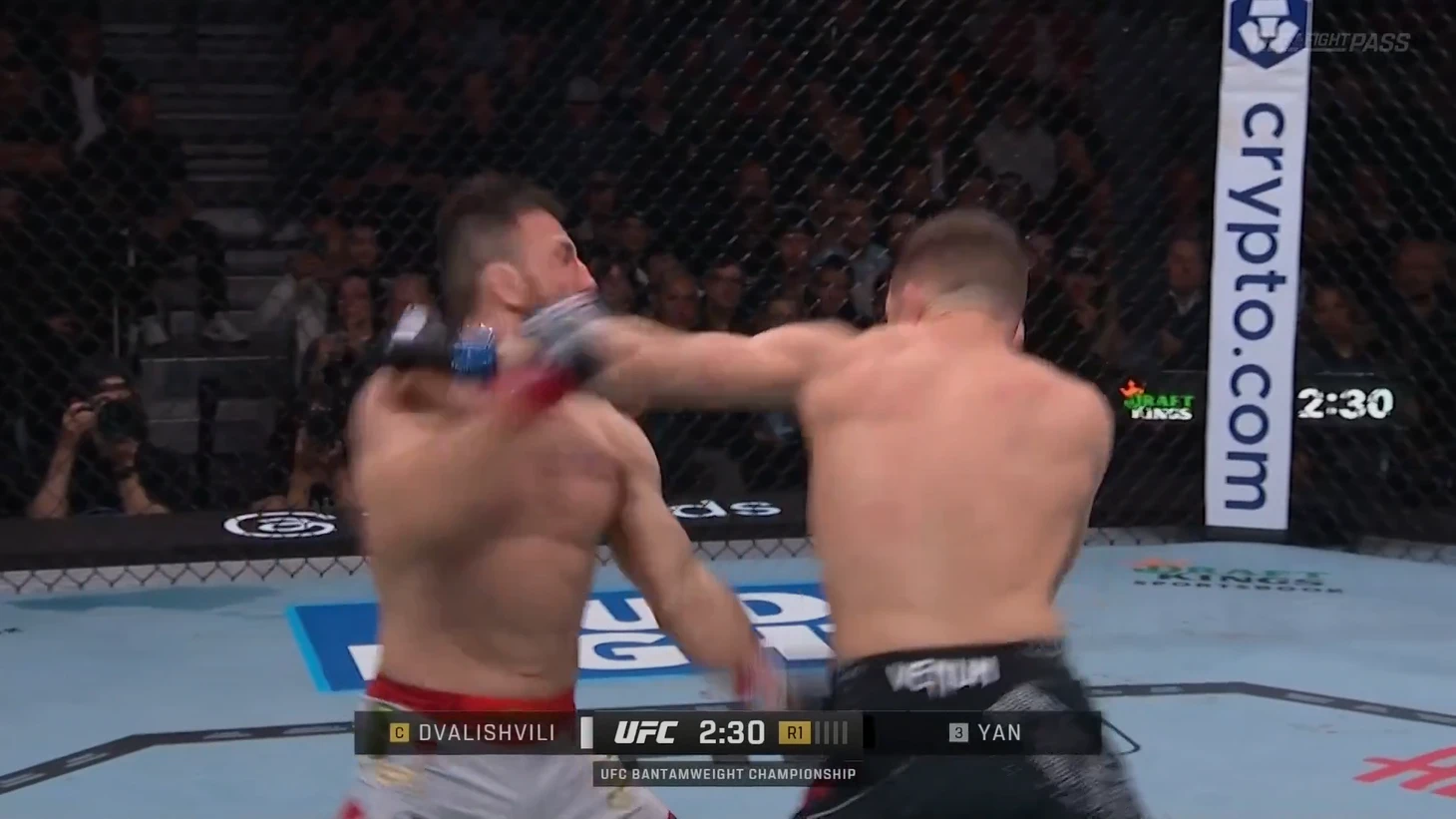
Yan calmly read the moments when Dvalishvili's defense opened up and fired back – most often exactly into the area the Georgian left exposed while hiding behind his lead hand. As a result, Merab almost always "paid" with a strike for every attempt to step into range.
An Uppercut Counter as a Pre-Loaded Trap
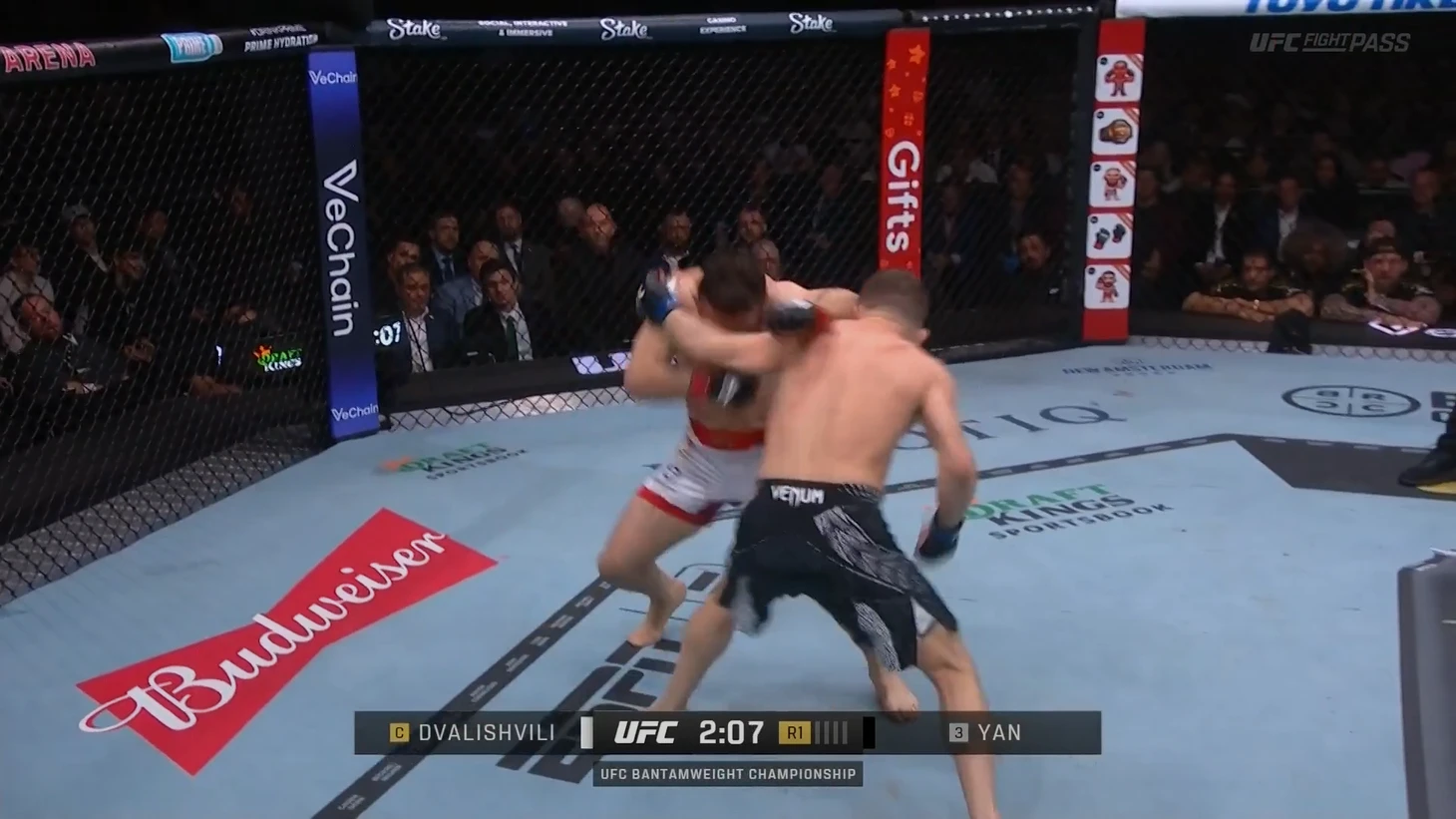
Even before the fight it was noticeable that Yan's team had been preparing a counter uppercut for the opponent's shots and level changes. In the bout this setup worked several times.
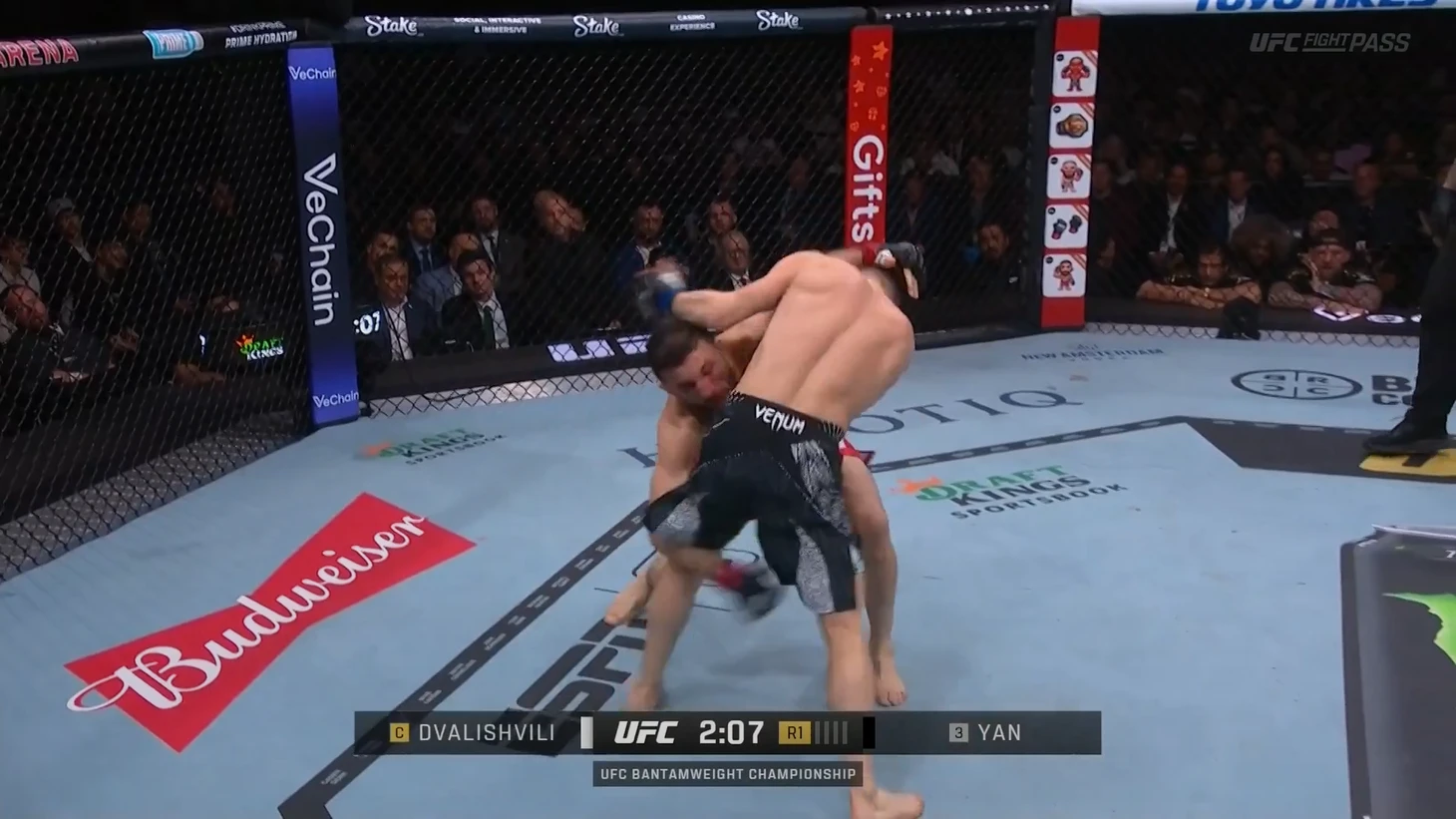
Every time Dvalishvili suddenly crashed the distance and tried to dive under the body, Petr met him with a short uppercut. It did not always look like a blow that should score a knockout, but it definitely stopped the shot, broke the rhythm and added to the cumulative damage.
Clinch at the Fence: The End of Dvalishvili's Dominance
In his previous fights Merab used cage control superbly, especially in his bout with Cory Sandhagen. He exhausted opponents by hanging on their back, controlling the torso and taking them down from the clinch along the fence.
Against Petr this scenario barely worked. Yan was well prepared for wrestling on the wall: he fought intelligently for torso control, did not allow his back to be taken, turned to face his opponent quickly and escaped the clinch. In the end, out of a large number of attempts, Dvalishvili managed to get Yan to the canvas from that position only once – far too little for his usual style.
The Single-Leg That Suddenly Disappeared

Yan's defense against single-leg takedowns deserves a separate mention. This is where his athleticism and sense of balance showed in full.
Dvalishvili pulled Petr's leg up and down, toward himself and to the sides, but Yan kept his balance again and again, found posts, leaned on the fence and slipped out of extremely uncomfortable positions. As a result, neither of Merab's two successful takedowns came from a classic single-leg: one looked more like a double-leg, the other came from back control in the clinch. The technique most familiar to the Georgian never really became a factor.
When the Wrestler Starts Hitting the Takedowns
One of the most unexpected outcomes of the fight was the takedown statistics. Yan more than doubled Dvalishvili in the number of successful takedowns. Before the fight it was hard to imagine such a picture, but that is exactly what happened.
These takedowns were important not only from the perspective of the scorecards, where they gave Petr extra points in close exchanges. They were also a psychological blow to an opponent used to dominating in the wrestling. When the "division's premier wrestler" finds himself on the mat, he has to redraw the picture of the fight on the fly while it is still going on.
The Clinch as Yan's Thai Territory

Every clinch exchange became another problem for Dvalishvili. Aggressive but not always neat in transitions, he often entered the clinch with an open guard. Yan, who spent years training in Thai gyms, feels completely at home at short range.
In one of the key episodes Petr first stuffs the shot, then turns his opponent on the fence, drives a knee into the head and adds a hook on the exit from the clinch. This is a typical Yan sequence: defense, turn, strike at the free target – all within a fraction of a second.
Investments in the Body and Legs

Visually, it may have seemed that Yan was doing most of his damage to the head, but his technical attacks to the body and legs should not be underestimated. Surgical left hooks to the liver forced Dvalishvili to slow down, while the leg kicks prevented him from freely switching on that famous in-and-out footwork and long chains of takedown attempts.
By the middle and the end of the fight it was these "investments" that started to pay off: Merab no longer looked like an endless engine, while Yan, on the contrary, was only shifting up through the gears.
In-Fight Adjustments and Beating the Cardio Machine

As the fight went on, the picture became more and more impressive. The "computer" in Petr's head kept loading new data: as he saw which entries and shots from his opponent were less dangerous, he boldly expanded his arsenal.
In the opening rounds Yan was relatively conservative – lots of punches, minimal risky kicks – but by the fourth and fifth he brought out all kinds of strikes: low kicks, middle kicks, hooks, straight shots, overhands and even rare fight techniques like spinning backfists. Yet he did not "burn out," maintained his work rate and, thanks to tactical economy, neutralized Dvalishvili's cardio advantage as well.
The Triumph of Game Plan and Discipline

In the end we saw one of the most mature and complete performances of the year in the UFC. Yan's coaching staff came up with a brilliant game plan: control of the center, breaking the timing of entries, punishing every approach, smart work in the clinch and investments to the body. Petr brought this plan into the octagon with rare discipline and concentration.
Without a knockout or a highlight-reel finish, Yan managed to do what seemed impossible – stripping Merab of his trademark pressure and wrestling, beating him in the very areas where the Georgian usually dominates. This was not just a points win, but a methodical, tactical dismantling of one of the division's most awkward opponents.