
In Miami, a fight that only recently sounded like a joke from a parallel universe actually happened: Anthony Joshua stepped in against Jake Paul — and ended the story with a brutal sixth-round knockout. What we got was a weird hybrid of show and sport: a blockbuster showcase, heavy promotion, a nervous start, and a very real finish, when the gap in class, size, and punching power could no longer be disguised by scripts and clinches.
How Netflix “Reshuffled the Deck” and Why Joshua Said Yes
This fight didn’t appear because it was “logical” for Joshua’s career, but because circumstances and money aligned. Originally, Paul was supposed to box Gervonta Davis in an exhibition format, but the bout fell apart — and the platform needed a replacement who could keep the card’s weight intact. Names like Ryan Garcia and Terence Crawford were floated, but each had prior commitments. In the end, the choice landed on Joshua: he was building a comeback after a knockout loss and was planning his return at an event in Ghana, with no “YouTuber challenges” on his mind.
Anthony’s yes looked risky: a slip here wouldn’t just be a reputational bruise — it could derail bigger plans outright. But the upside was clear — a massive audience, a fast deal, and a chance to “relaunch” the name in bright lights.
The Fight Terms: Not an Exhibition, Almost the Real Thing
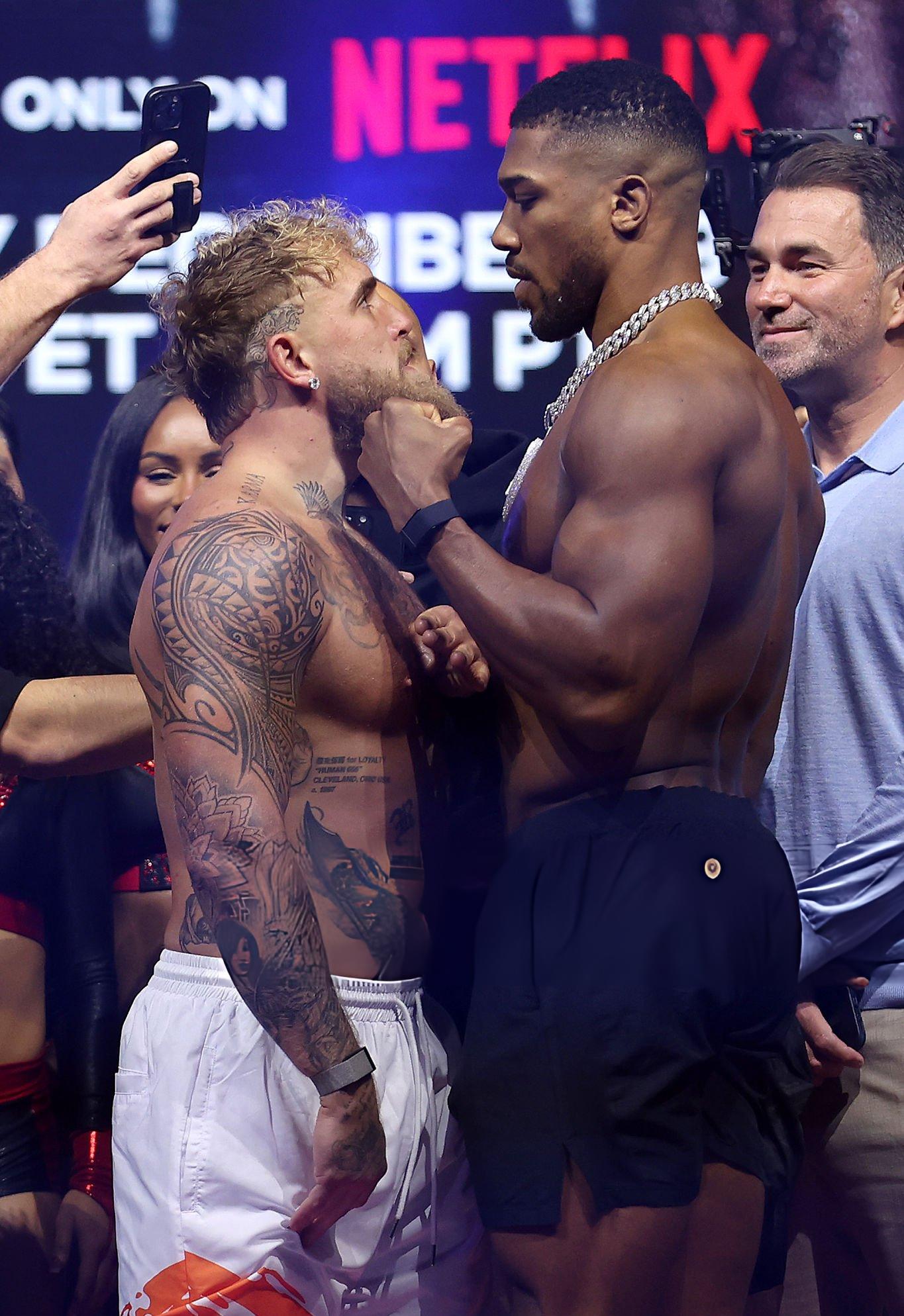
The biggest surprise was the format itself. The bout was announced as official, with 10-ounce gloves and a distance of eight rounds of three minutes. For comparison: Paul’s fight with Mike Tyson was held in softer 16-ounce gloves. Joshua also agreed to a weight cap of 111.1 kg — a line he’s comfortably made more than once; he’s come in around similar numbers ahead of top-level matchups.
On paper, it looked like “David vs. Goliath,” only without the romance: Joshua was taller, heavier, and had the longer reach. And at heavyweight, that often turns any argument into a matter of time.
Camp Notes: Joshua in Elite Company, Paul in a Sparring Gauntlet
Joshua started camp even before the Paul fight was announced and worked in a truly elite environment — there were reports he trained alongside Oleksandr Usyk’s team in Spain. Paul, surprisingly, didn’t treat it lightly either: he strengthened his camp and hunted for sparring that could at least partly replicate the physicality of bigger men. He even brought Daniel Dubois into the mix — the man who stopped Joshua last year.
But the gap between “trained with heavyweights” and “being a championship-level heavyweight” is a chasm. You can’t close it with motivation or media hype.
Trash Talk and Bets: From “Friendship” to Threats and a Million Pounds
The build-up started long before fight week: one moment Paul talked about mutual respect, the next he put Joshua in a list of the most “overrated” athletes, compared the bout to a movie storyline, and promised a knockout. At ceremonial events he even called his finish — the sixth or seventh round.
Joshua answered in the most heavyweight way possible: he’s respectful and well-mannered in everyday life, but the job description in the ring is different. Tyson Fury also chimed in — taking shots at Joshua and playing to the cameras with betting talk, saying he’d be willing to stake big money on Paul. The irony was especially sharp if you remember Fury once struggled with MMA fighter Francis Ngannou, while Joshua later showed what true heavyweight power looks like — knocking Ngannou out in the second round.
Act One: A Strange Stalemate and the Sense of the “Wrong Tempo”
The fight began as if both men were still looking for the right role. Paul circled along the ropes, avoided staying in the center, and repeatedly went into the clinch. Joshua, instead of cutting off the ring and establishing the jab, looked surprisingly inert: he threw wide, readable shots from long range, didn’t always sync up to the moving target, and at times seemed to be saving his pace.
The early rounds irritated the crowd: instead of a heavyweight imposing pressure and dominance, it was a choppy rhythm with pauses and occasional bursts. Paul landed here and there, but the punches didn’t look genuinely dangerous — more like marks than damage.
The Turning Point: Injury, Fatigue, and Knockdowns That Put Everything in Place
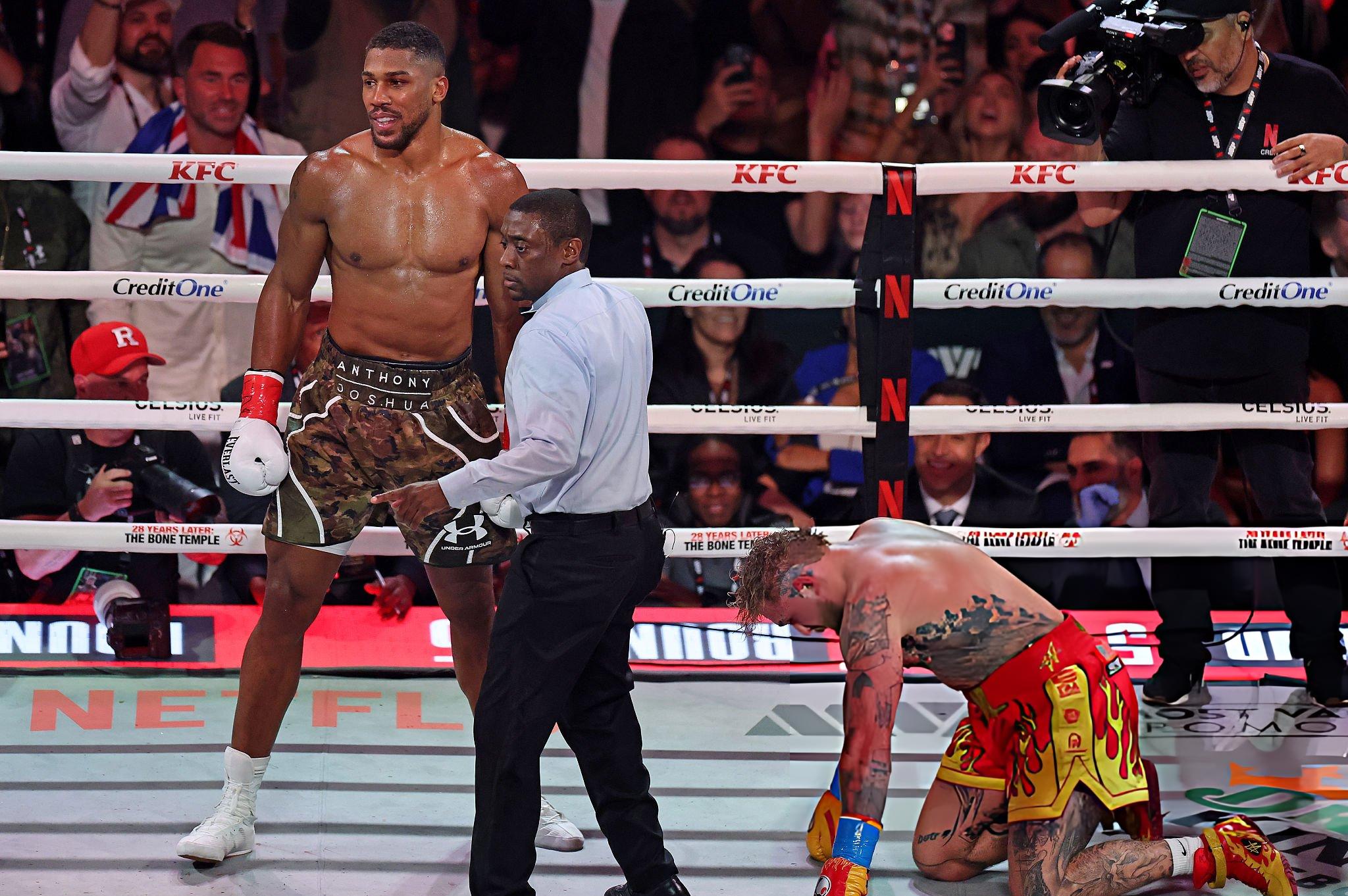
The key moment came around the middle: after one exchange, Paul looked as if he’d hurt his leg. He tried to keep the tempo, but by the fifth round the problem was obvious: his movement slowed, the clinches multiplied, while Joshua, on the contrary, picked up steam and began landing cleaner.
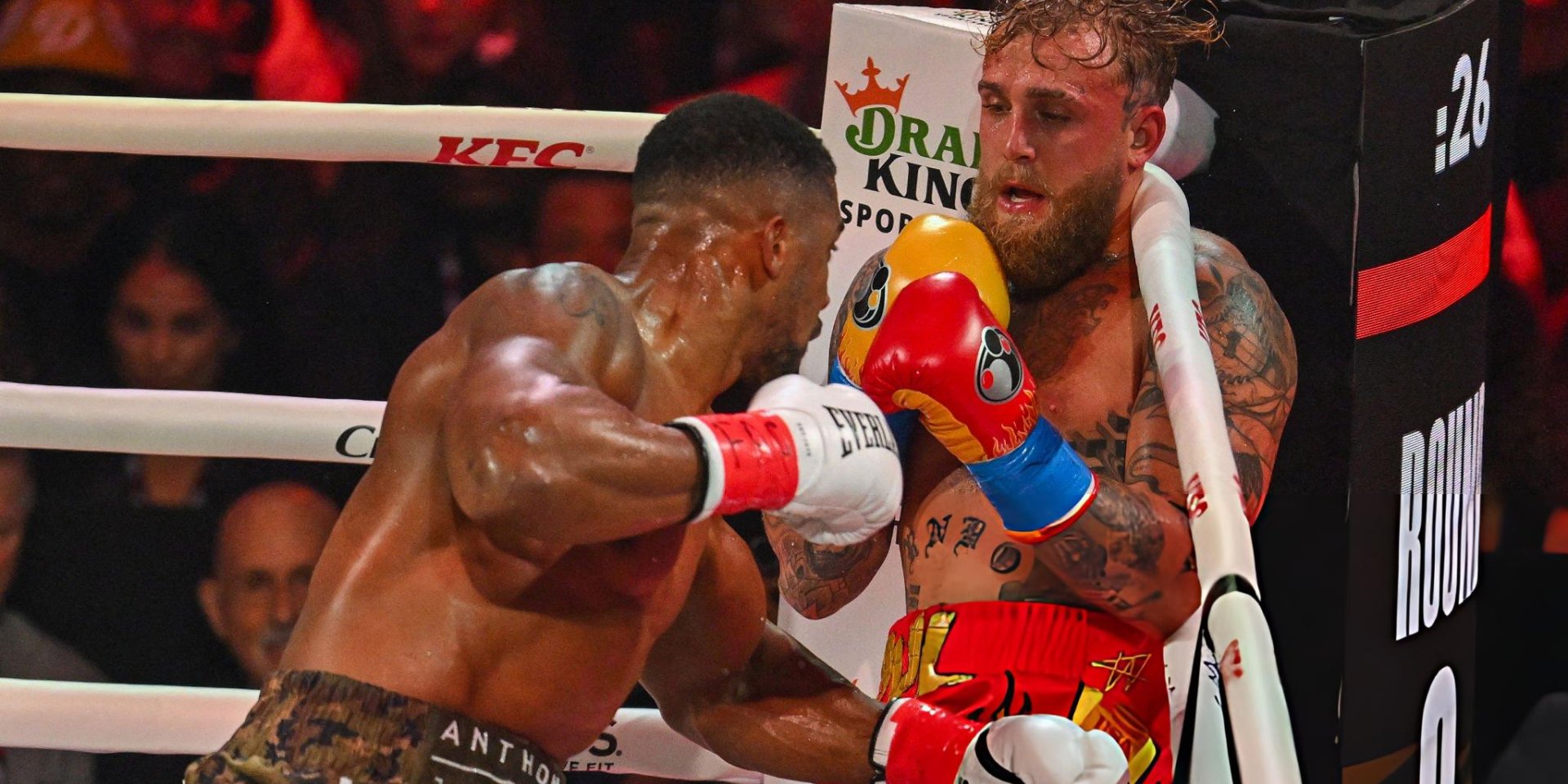
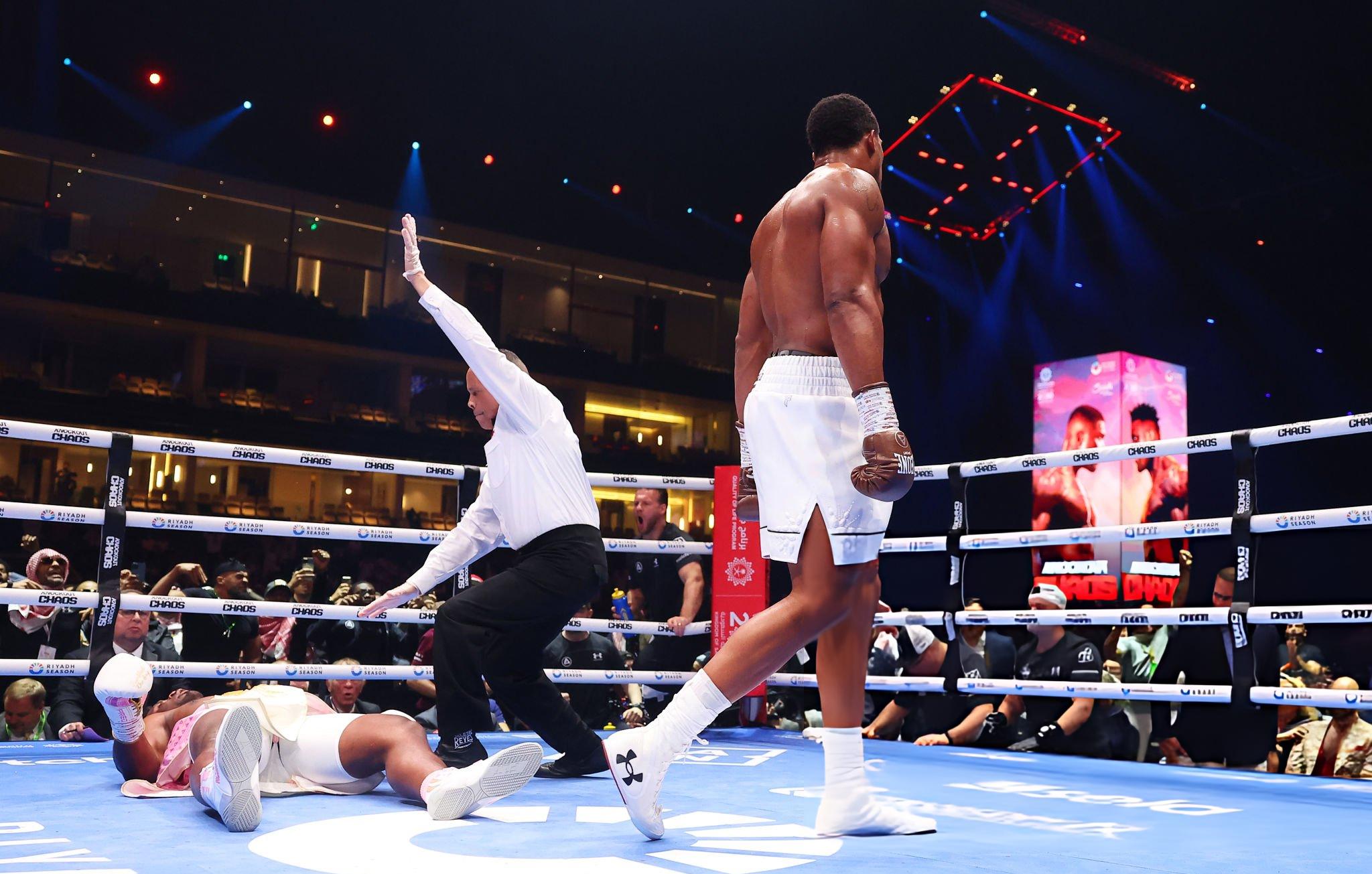
From there, heavyweight logic took over. First came the knockdowns, after which Paul no longer looked like a man controlling distance. Then came the finish: in the sixth round Joshua sent him to the canvas twice, and the final right overhand landed flush on the chin. Paul couldn’t beat the count — a knockout with no ambiguity.
What’s Next: Fury on the Horizon and a Stubborn Paul Chasing a Belt
Joshua didn’t pretend it was a flawless performance — he admitted he wasn’t perfect, but he did the only thing that mattered: he won, loudly and early. And, of course, he called out Tyson Fury — as if this night wasn’t only about Paul, but also about testing the route to a “mega-fight.”
Jake Paul, who said his jaw was broken, fell back into his favorite role: he lost — but didn’t collapse as a character. He said he did everything he could, thanked the fans, and promised he would become a world champion. It sounds bold after a knockout, but that’s the Paul phenomenon: he can turn even a defeat into fuel for the next poster.
The Night Surrealism Ended With a Right Hand
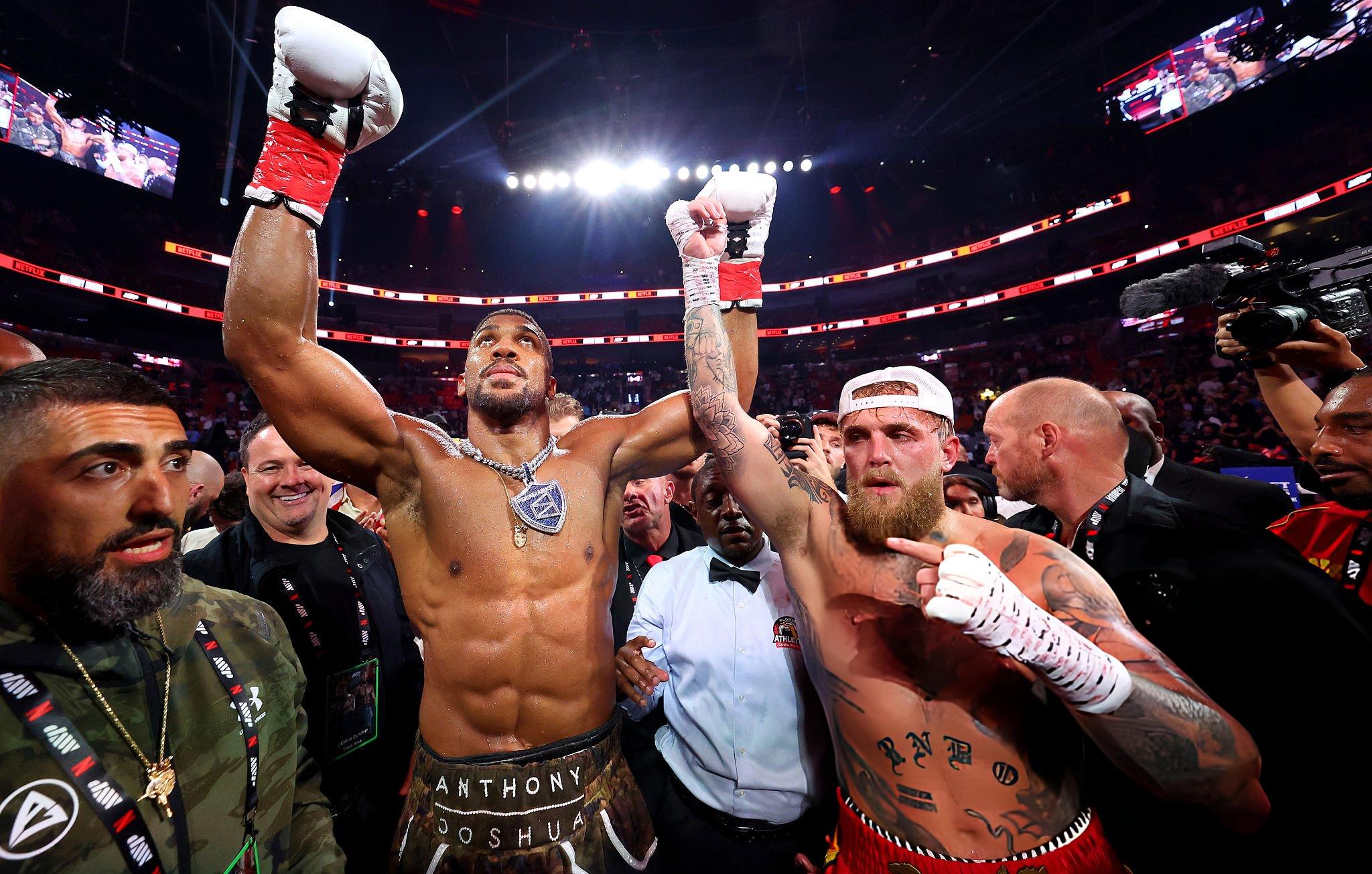
You can frame this fight as a media experiment, or as an argument about the boundary between sport and show. But at the decisive moment everything came down to a basic formula: a heavyweight with big-ring experience, once he found the rhythm, did what he was supposed to do. And Paul — no matter how prepared he was, no matter how loud the microphone — ended up exactly where the talk stops and real heavyweight power begins.